
How to Set Up a Stage Lighting System for Events
Setting up a stage lighting system involves more than installing fixtures; it requires proper planning of layout, control systems, and power distribution. For event-based applications, lighting must deliver consistent performance while adapting to different venue conditions.
In B2B scenarios such as weddings, concerts, and corporate events, system setup directly affects visual impact and operational efficiency. Poor configuration can lead to uneven lighting, control delays, or equipment overload.
This guide outlines the key steps and technical considerations for building a reliable stage lighting system.
What Are the Core Components of a Stage Lighting System?
A stage lighting system consists of fixtures, controllers, power systems, and signal distribution.
Lighting Fixtures
- Beam lights for dynamic effects
- Wash lights for coverage
- Profile lights for precision
Control System
Controllers such as DMX consoles manage lighting sequences and synchronization.
Power Distribution
Stable power ensures consistent performance and prevents equipment failure.
How Should Lighting Be Positioned for Events?
Lighting placement determines coverage, depth, and visual layering.
| Position | Function | Application |
|---|---|---|
| Front Lighting | Illumination | Speakers, performers |
| Back Lighting | Depth and separation | Stage effects |
| Side Lighting | Highlight contours | Dance, performance |
How to Ensure System Compatibility in Event Projects?
Compatibility ensures all devices communicate and operate smoothly.
- Use standardized DMX addressing
- Ensure fixture channel modes match controller setup
- Test signal distribution before events
What Are Common Setup Mistakes in Event Lighting?
Improper setup often results from rushed installation or lack of system testing.
- Incorrect DMX addressing
- Overloading power circuits
- Poor cable management
- Ignoring backup systems
How to Optimize Lighting for Different Event Scenarios?
Lighting setups must adapt to specific event environments.
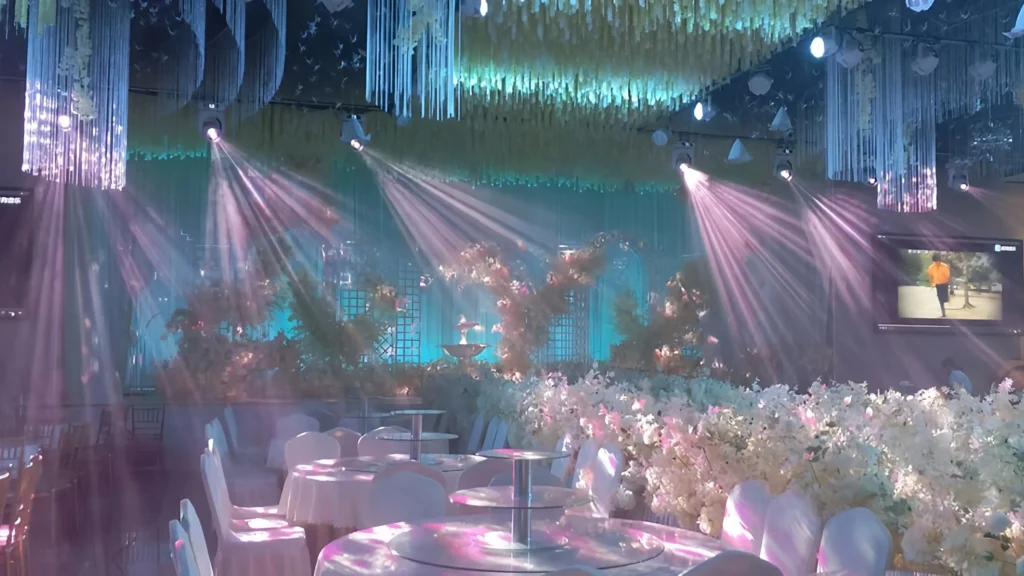
For example, outdoor weddings require weather-resistant fixtures and wider coverage, often aligned with wedding lighting solutions.
Professional Trust and Industry Insight
Effective stage lighting setup relies on structured planning, reliable equipment, and thorough testing. Experienced professionals prioritize system stability and adaptability to ensure consistent performance across events.
Stage Lighting Setup – FAQs
How do I prevent signal interference in DMX systems?
Use high-quality cables, proper termination, and avoid excessive cable lengths to maintain signal integrity. What is the ideal power setup for large events?
Distribute loads across multiple circuits and use backup power sources to prevent system failure. How can I ensure uniform lighting coverage?
Plan fixture placement based on beam angles and stage dimensions, and test before the event. Is it necessary to use backup lighting systems?
Yes, backup systems reduce risk and ensure continuity in case of equipment failure during events.
In conclusion, setting up a stage lighting system requires careful coordination of equipment, positioning, and control systems. A well-structured setup ensures reliable performance and consistent visual results across different event scenarios.
For procurement considerations, refer to how to choose stage lighting for wholesale and projects.