
How to Design Event Lighting Systems for Large Projects
Designing event lighting systems for large projects requires a structured approach that ensures scalability, system stability, and consistent visual performance. In large-scale applications such as outdoor weddings, concerts, and corporate events, lighting must function reliably across complex environments.
For B2B buyers such as contractors, planners, and distributors, lighting design involves not only fixture selection but also system integration, power management, and long-term operational reliability. Poor design can lead to uneven lighting, system overload, or control instability.
This guide explains how to design event lighting systems for large projects with a focus on real-world applications and technical decision-making.
What Are the Core Components of Event Lighting Systems?
Event lighting systems are composed of fixtures, control systems, and power distribution.
Lighting Fixtures
- Beam lights for dynamic effects
- Wash lights for coverage
- Profile lights for precision
Control Systems
- DMX controllers for synchronization
- Signal splitters for multi-fixture setups
What Is the Standard Event Lighting System Structure?
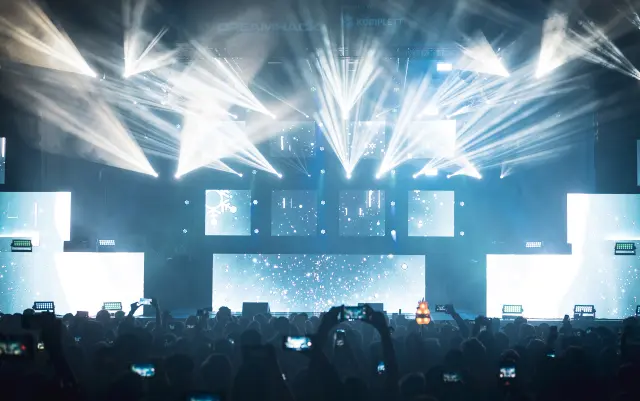
A typical large-scale lighting system follows a structured layout.
- Controller → DMX splitter → fixtures
- Power distribution → load balancing
- Rigging system → secure installation
These systems are widely applied in wedding lighting solutions projects where reliability and scalability are critical.
How to Design Event Lighting Systems Step by Step?
Designing event lighting systems requires a structured workflow.
- Analyze venue size and layout
- Select fixture types based on application
- Plan fixture positioning and beam coverage
- Design control and power systems
| Design Step | Focus | Risk |
|---|---|---|
| Layout Planning | Coverage | Uneven lighting |
| Fixture Selection | Performance | Incompatible systems |
| System Integration | Stability | Signal conflicts |
How to Choose the Right Lighting Setup for Large Events?
The setup depends on project scale and environment.
- Outdoor weddings: wide coverage wash lighting
- Concert events: high-output beam and effect lighting
- Banquet halls: balanced lighting for ambiance and visibility
In many cases, systems are designed around wedding ballroom lighting requirements where both aesthetics and functional lighting are essential.
Stage Lighting Design by Scenario
Lighting design varies depending on event type.
| Scenario | Design Strategy | Key Focus |
|---|---|---|
| Wedding Event | Wash + ambient lighting | Atmosphere |
| Concert | Beam + effects | Intensity |
| Corporate Event | Balanced lighting | Clarity |
Real-World Design Issues in Large Projects
Design challenges often arise from system complexity and environment.
- Power overload due to incorrect load calculation
- Signal delay in long DMX chains
- Uneven lighting caused by incorrect beam angles
- Limited flexibility in multi-purpose venues
Event Lighting Design Checklist
A checklist ensures reliable and scalable design.
- Verify fixture coverage and positioning
- Confirm system compatibility
- Evaluate power requirements
- Test full system integration
Professional Trust and Industry Insight
In large-scale event lighting projects, system stability and flexibility are more critical than maximum output. Experienced designers prioritize structured configurations that adapt to different environments.
Event Lighting Design – FAQs
What is the most important factor in large-scale lighting design?
System stability and coverage are the most critical factors for consistent performance.
How to avoid uneven lighting in large events?
Use appropriate beam angles and ensure proper fixture positioning.
What lighting is best for outdoor weddings?
Wide-angle wash lighting combined with ambient effects is commonly used.
How to ensure system reliability?
Plan power distribution carefully and test all systems before deployment.
In conclusion, designing event lighting systems for large projects requires structured planning, correct equipment selection, and real-world validation.
For a complete design framework, refer to event lighting system design guide.