
How to Improve Stage Lighting for Churches and Venues
Improving stage lighting for churches and venues requires balancing visual clarity, atmosphere, and system efficiency. Unlike entertainment-focused environments, these spaces often prioritize uniform illumination, natural color rendering, and minimal visual distraction.
For B2B buyers such as integrators, contractors, and distributors, upgrading lighting systems involves evaluating fixture performance, control flexibility, and long-term reliability. Poor lighting design can result in uneven coverage, glare, or insufficient visibility for audiences and recordings.
This guide explains how to improve stage lighting systems in churches and multi-purpose venues with a focus on practical configuration and procurement decisions.
What Factors Affect Stage Lighting Quality in Churches and Venues?
Lighting quality is determined by color accuracy, beam distribution, and fixture positioning.
Color Rendering and Temperature
- CRI >90 recommended for natural skin tones
- Color temperature: 3200K–5600K depending on environment
Beam Angle and Coverage
- Wide beam (30°–60°) for even coverage
- Avoid narrow beams that create hotspots
What Is the Standard Lighting System Structure for Venues?
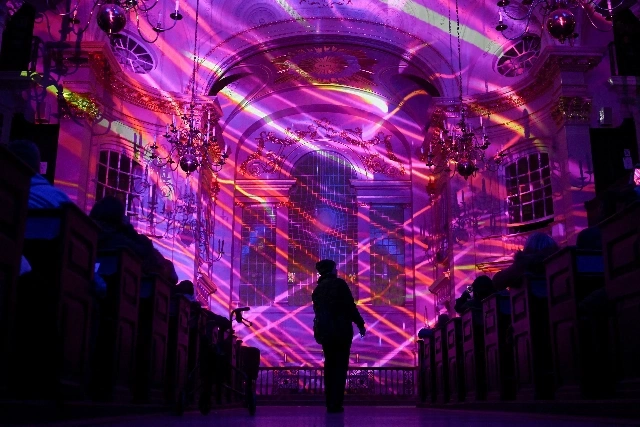
A typical venue lighting system follows a structured layout to ensure consistent illumination.
- Front wash lighting → main subject visibility
- Back lighting → depth and separation
- Control system → DMX controller and signal distribution
These configurations are widely used in theatre and auditorium lighting environments.
How to Improve Lighting Performance Step by Step?
Improving stage lighting requires systematic adjustments and upgrades.
- Upgrade to high-CRI LED fixtures
- Adjust beam angles for even coverage
- Optimize fixture positioning and mounting height
- Calibrate brightness levels to avoid glare
| Parameter | Recommended Range | Impact |
|---|---|---|
| CRI | >90 | Natural color rendering |
| Beam Angle | 30°–60° | Coverage |
| Color Temperature | 3200K–5600K | Visual comfort |
How to Choose the Right Lighting Upgrade for Your Venue?
The best upgrade strategy depends on venue size and usage.
- Small church: LED wash lighting with simple DMX control
- Medium venue: wash + profile lighting for flexibility
- Large auditorium: multi-layer system with advanced control
Common Lighting Issues in Churches and Venues
Many lighting problems result from poor design or outdated fixtures.
- Uneven lighting due to incorrect fixture placement
- Low CRI causing unnatural skin tones
- Overexposure from excessive brightness
- Insufficient backlighting leading to flat visuals
Lighting Improvement Checklist
A checklist helps ensure effective system upgrades.
- Verify coverage and beam angles
- Check color consistency across fixtures
- Evaluate control system compatibility
- Test lighting performance in real conditions
Professional Trust and Industry Insight
In venue lighting projects, consistent illumination and visual comfort are often prioritized over dynamic effects. Professional systems focus on reliability, accurate color rendering, and adaptable configuration.
Stage Lighting for Churches – FAQs
What is the best lighting type for churches?
LED wash lights with high CRI are commonly used to provide even and natural illumination.
How to avoid glare in stage lighting?
Adjust beam angles and reduce direct exposure to the audience to improve visual comfort.
What color temperature is recommended?
3200K–4000K for warm environments, and up to 5600K for brighter venues.
How to improve lighting for live streaming?
Use high-CRI fixtures and balanced front lighting to ensure accurate color reproduction on camera.
In summary, improving stage lighting for churches and venues requires optimizing fixture selection, positioning, and system configuration to achieve consistent and comfortable illumination.
For large-scale installation guidance, refer to how to install stage lighting for large-scale projects.