
Best Club Lighting Setup for DJs and Nightclub Venues
The best club lighting setup for DJs and nightclub venues is not simply the setup with the largest number of fixtures. It is the setup that creates the right balance between movement, atmosphere, booth focus, room depth, and operational reliability. In nightlife venues, the lighting setup influences how premium the room feels, how strongly the audience reacts to the music, and how effectively the venue can maintain a consistent identity across repeated nights of operation.
For professional buyers such as venue operators, nightlife investors, project contractors, and lighting professionals, the best club lighting setup should be evaluated by how well it performs in a real venue. That means looking at fixture composition, dance-floor coverage, booth support, rig layout, DMX structure, service practicality, and future expandability. A setup that looks strong in a showroom can still fail in a nightclub if it is not designed around the real room.
This guide explains what makes a club lighting setup effective for DJs and nightclub venues, what fixture combinations typically work best, and how professional buyers can identify the right setup strategy for different venue sizes and operating models.
What Makes a Club Lighting Setup Effective for DJs and Nightclubs?
An effective club lighting setup combines movement, atmosphere, and focus in a way that supports both the room and the performer.
The DJ needs to remain visually present. The dance floor needs to feel active. The room needs enough wash support to avoid looking empty. Accent effects should create peaks, but not dominate the full experience. Above all, the system should remain reliable during long operating hours and repeated scene changes.
- movement gives the room energy
- wash lighting gives the room visual continuity
- booth lighting creates performer focus
- accent fixtures support drops and transitions
- control structure keeps all layers working together
That is why the best setups are usually built around one coherent nightlife concept such as dj lights rather than random product mixing.
What Fixture Types Are Usually Included in the Best Club Lighting Setups?
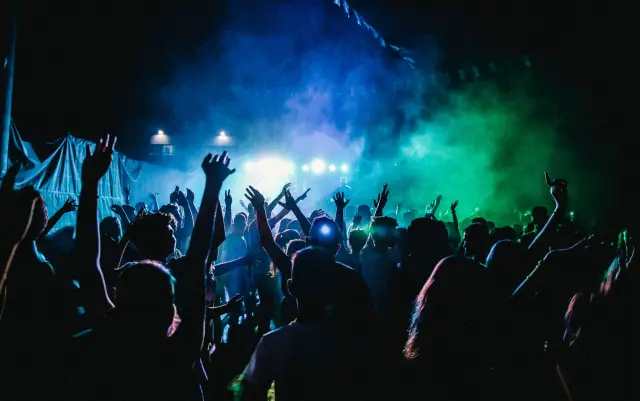
The best nightclub setups usually combine several fixture categories, each with a defined role in the room.
- moving beam fixtures for aerial motion and intensity
- wash fixtures for room color and continuity
- laser fixtures for high-energy atmosphere
- booth background lighting for focal identity
- accent or strobe fixtures for musical peaks
In many successful venue projects, these setups rely on products and categories such as dj moving head lights, dj led lights, dj laser lights, and background matrix light.
How Should a Club Lighting Setup Be Divided Across the Venue?
The best setups divide the venue into visual zones so that each part of the room supports the whole experience.
A common and effective setup strategy includes:
- dance floor zone for movement and energy
- DJ booth zone for focus and branding
- rear or ceiling zone for depth and crossing effects
- perimeter zone for color wash and atmosphere
- accent points for peaks and rhythm moments
This zoning approach makes it easier to create clear scenes and prevents the common problem of all fixtures trying to do everything from a single position.
What Club Lighting Setup Works Best for Small, Medium, and Large Venues?
The best setup depends on the actual room, not on copying another venue blindly.
Small nightclub venues usually work best with a compact but efficient system. A setup with 4 to 6 moving heads, 4 to 6 wash fixtures, and a simple booth background layer often gives better results than a crowded fixture layout.
Medium nightclub venues usually benefit from 6 to 10 moving heads, 6 to 10 wash fixtures, a developed booth layer, and selective accent fixtures. This scale often provides the best balance between cost and visual richness.
Large nightclub venues usually need a multi-zone setup with front, rear, booth, and perimeter structure. In these cases, the setup must be designed around visual hierarchy, not only fixture count.
| Venue Size | Recommended Setup | Main Priority |
|---|---|---|
| Small Club | compact moving heads + wash + booth support | clarity and controlled energy |
| Medium Club | beam + wash + booth + selective effects | balanced premium atmosphere |
| Large Venue | multi-zone layered nightclub system | immersion and programming flexibility |
Why Do Some Club Lighting Setups Feel Stronger Than Others?
The best club lighting setup is usually the one with clearer design logic, not necessarily the one with more wattage.
Many venues feel stronger because the setup creates contrast. Strong rooms know when to use intensity and when to reduce it. They use booth focus correctly, maintain enough wash support, and avoid constant visual overload. This allows drops, transitions, and feature moments to feel more powerful.
By contrast, a venue with too many aggressive fixtures running at once often feels visually tiring rather than premium.
What Are the Most Common Club Lighting Setup Mistakes?
Professional buyers should avoid several common mistakes when specifying nightclub lighting setups.
- putting too much budget into moving beams and not enough into wash coverage
- ignoring the DJ booth as a focal point
- using a flat overhead fixture line with no room depth
- failing to plan DMX segmentation for larger systems
- choosing fixtures that are hard to service in fixed installations
- building a setup that looks exciting in demos but exhausting in real nightlife operation
One of the most frequent problems is a setup that produces impressive short moments but lacks the visual stability required for a full operating night.
How Should Professional Buyers Think About Cost Versus Performance?
The best club lighting setup is not always the most expensive. It is the one that produces the strongest result for the venue’s actual size and use case.
In many projects, a better setup is achieved not by buying more fixtures, but by improving fixture balance and zoning. Adding the correct wash layer or booth background support may improve the room more than adding another row of moving beams.
Professional buyers should therefore ask:
- does this fixture add a new layer or only duplicate an existing one?
- does the room need more energy or more continuity?
- does the booth already have enough visual definition?
- will this setup be easy to maintain and expand?
Real Project Example: Upgrading a Medium Nightclub Setup
In one medium-sized venue, the original lighting setup focused heavily on moving beam fixtures above the dance floor. The room had energy, but it lacked atmosphere and visual depth. The booth also felt isolated because there was no real background structure behind it.
The revised setup did not double the fixture count. Instead, the project added wash support to the room perimeter, a booth background layer, and improved beam zoning across the ceiling. The venue immediately felt more complete. The dance floor remained energetic, but the room now had continuity, stronger identity, and more programming flexibility.
What Should Professional Buyers Verify Before Approving a Club Lighting Setup?
Before approving a lighting setup, professional buyers should confirm that the system is complete from both a visual and operational perspective.
- does the setup include movement, wash, booth, and background logic?
- does the fixture quantity match the room scale realistically?
- is there enough structural and service access for maintenance?
- does the control system support scene complexity?
- can the venue run both low-energy and peak-energy scenes well?
In some mixed-use nightlife spaces, the venue may also require softer modes similar to wedding banquet lighting for private events, receptions, or lounge-oriented operation outside of full club nights.
Best Club Lighting Setup – FAQs
What is the best club lighting setup for DJs and nightclub venues?
The best setup usually combines moving beam fixtures, wash lighting, booth background support, and selective accent effects in a layered and zoned structure.
How many fixtures are usually needed for a nightclub lighting setup?
The number depends on venue size, but most professional systems include multiple moving heads, wash fixtures, and at least one booth or background layer.
What is the biggest mistake when planning a club lighting setup?
The biggest mistake is overinvesting in one fixture type, especially moving beams, without enough wash support or booth focus.
What should professional buyers review before finalizing a nightclub lighting setup?
They should review fixture balance, zoning logic, DMX structure, maintenance access, and whether the setup truly matches the venue’s operating style and audience expectations.
In conclusion, the best club lighting setup for DJs and nightclub venues is one that balances movement, atmosphere, performer focus, and operational reliability. Strong nightlife systems are built around layered logic and real venue needs, not product quantity alone.
For wider room planning and layered nightlife structure, refer to lighting design.


Leave a Reply