
Wireless Event Lighting Systems for Stage and Events
Wireless event lighting systems are increasingly used in modern stage production and event environments where flexibility, fast deployment, and reduced cabling complexity are critical. In concerts, corporate events, outdoor shows, and temporary installations, wireless event lighting systems enable faster setup while maintaining control accuracy and system performance.
For B2B buyers such as rental companies, system integrators, and event contractors, adopting wireless event lighting is not only a technical upgrade but also a strategic decision. It impacts installation time, labor cost, system scalability, and overall operational efficiency.
This guide explains how wireless event lighting systems work, how to deploy them effectively, and what to consider when selecting wireless lighting solutions for stage and event applications.
What Is a Wireless Event Lighting System?
A wireless event lighting system is a lighting control and fixture system that uses wireless DMX or signal transmission instead of traditional cabling.
- Wireless DMX transmitters and receivers replace signal cables
- Battery-powered fixtures eliminate power cabling in some cases
- Systems allow flexible fixture placement without physical constraints
These systems are widely used in wedding and event lighting where rapid deployment is essential.
How Do Wireless Event Lighting Systems Work?
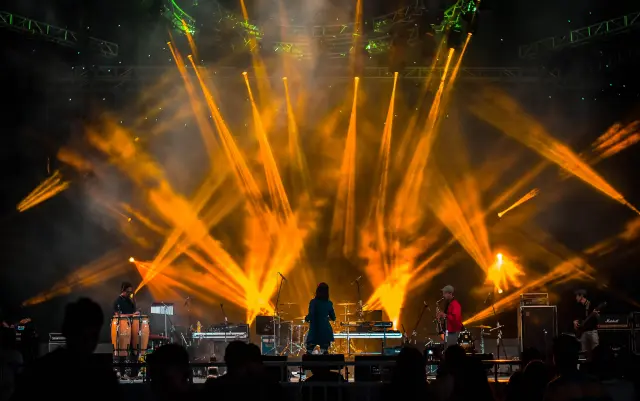
Wireless lighting systems rely on signal transmission between control consoles and fixtures.
- DMX signal is transmitted wirelessly from controller
- Receivers convert signal for fixtures
- Fixtures operate as part of the same synchronized system
This eliminates long cable runs and reduces setup complexity.
What Are the Advantages of Wireless Event Lighting Systems?
Wireless lighting systems offer several advantages over traditional wired systems.
- Faster installation and teardown
- Reduced cabling cost and labor
- Flexible fixture positioning
- Cleaner stage appearance
| Feature | Wireless System | Wired System |
|---|---|---|
| Installation Time | Fast | Slow |
| Flexibility | High | Limited |
| Cable Requirement | Minimal | Extensive |
What Equipment Is Required for Wireless Event Lighting?
A complete wireless lighting system requires multiple components.
- Wireless DMX transmitter
- Wireless DMX receiver
- Compatible lighting fixtures
- Control console
In many projects, these systems are integrated with event hall lighting configurations.
What Are the Limitations of Wireless Event Lighting Systems?
While wireless lighting systems offer flexibility, they also have limitations.
- Signal interference in crowded environments
- Limited transmission range
- Potential latency in large systems
- Battery dependency for some fixtures
In large productions, wireless systems are often combined with wired systems for stability.
How to Design a Reliable Wireless Lighting Setup?
A reliable wireless system requires careful planning.
- Limit number of fixtures per wireless universe
- Use high-quality transmitters and receivers
- Avoid signal interference sources
- Test system before live events
Real Project Example: Wireless Lighting Deployment
In an outdoor wedding project, wireless lighting systems reduced installation time by more than 40% compared to wired setups. The system provided flexible positioning and clean visual presentation.
What Should B2B Buyers Consider When Choosing Wireless Lighting?
Buyers should evaluate reliability, compatibility, and scalability.
- Signal stability and range
- Compatibility with existing systems
- Battery performance
- Supplier reliability
Wireless Event Lighting – FAQs
Is wireless event lighting reliable for large events?
Yes, but it is often combined with wired systems for maximum stability.
What is the biggest advantage of wireless lighting?
Faster setup and flexible positioning without extensive cabling.
What are the risks of wireless lighting systems?
Signal interference and limited range are the main risks.
How to ensure stable wireless lighting performance?
Use high-quality equipment and test the system before events.
In conclusion, wireless event lighting systems provide flexibility and efficiency, but require proper planning and system design to ensure stable performance.
For outdoor applications, refer to wireless event lighting.


Leave a Reply