
How to Install Event Lighting Systems for Large Venues
Installing event lighting systems for large venues requires structured planning, accurate load calculation, and reliable system integration. In environments such as outdoor events, banquet halls, and large performance venues, installation quality directly affects lighting performance and operational safety.
For B2B buyers including contractors and system integrators, proper installation ensures stable signal transmission, balanced power distribution, and consistent fixture performance. Poor installation can lead to signal delays, uneven lighting, or system failure during events.
This guide explains how to install event lighting systems for large venues using a practical, system-based approach.
What Are the Key Components in Large Venue Lighting Installation?
A complete installation involves fixtures, control systems, and power infrastructure.
- Lighting fixtures: beam, wash, and effect lights
- Control systems: DMX controllers and signal splitters
- Power distribution: load balancing and circuit protection
- Rigging systems: truss and mounting structures
What Is the Standard Installation Structure?
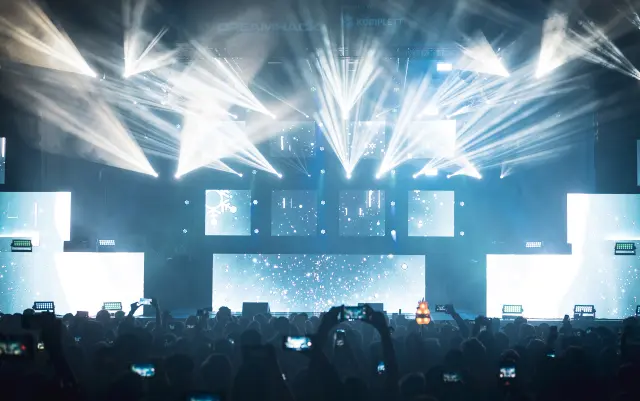
A structured installation layout ensures system stability and scalability.
- Controller → DMX splitter → fixtures
- Power distribution → circuit allocation → fixtures
- Rigging system → secure mounting
These systems are widely used in event lighting for weddings where large coverage and reliability are required.
How to Install Event Lighting Systems Step by Step?
Installation should follow a systematic workflow to reduce risk.
- Plan fixture layout based on venue size
- Install rigging and mounting structures
- Connect DMX signal lines and addressing
- Set up power distribution and load balancing
- Test full system operation
| Step | Focus | Risk |
|---|---|---|
| Rigging | Safety | Improper mounting |
| Wiring | Signal stability | Signal interference |
| Testing | System reliability | Undetected faults |
How to Choose the Right Installation Setup?
The installation approach depends on venue type and event scale.
- Outdoor venues: IP-rated fixtures and reinforced rigging
- Banquet halls: balanced lighting and clean cable routing
- Concert venues: high-output fixtures and advanced control systems
In many large venues, systems are built around wedding hall lighting requirements where both aesthetics and functional lighting are essential.
Real-World Installation Issues in Large Venues
Installation problems often arise from system complexity and poor planning.
- Power overload due to incorrect load calculation
- Signal delay in long DMX chains
- Fixture misalignment during rigging
- Environmental impact on outdoor systems
Installation Checklist for Event Lighting Systems
A checklist ensures efficient and safe installation.
- Verify rigging safety and load capacity
- Check DMX signal integrity
- Balance power distribution
- Test full system before operation
Professional Trust and Industry Insight
In large venue lighting installations, system reliability and safety are more critical than maximum output. Experienced teams prioritize structured planning, proper load distribution, and full-system testing.
Event Lighting Installation – FAQs
What is the biggest risk in lighting installation?
Power overload and improper rigging are the most common risks affecting safety and performance.
How to ensure stable DMX signal in large venues?
Use signal splitters and proper cable management to maintain signal integrity.
Are IP-rated fixtures necessary for outdoor events?
Yes, IP-rated fixtures are essential to protect against weather conditions.
Why is system testing important?
Testing ensures all components function correctly and reduces the risk of failure during events.
In conclusion, installing event lighting systems for large venues requires structured planning, correct system integration, and thorough testing.
For system construction strategies, refer to build.