
Club Lighting Design Guide for Nightclubs and Dance Floors
Club lighting design for nightclubs and dance floors is not only about creating bright effects or filling a room with moving beams. A successful club lighting design must shape atmosphere, support audience energy, guide visual attention, and maintain a clear relationship between the DJ booth, dance floor, and surrounding venue zones. In professional nightlife environments, the lighting system is part of the venue identity. It influences how premium the space feels, how immersive the crowd experience becomes, and how effectively the room responds to music.
For professional buyers such as nightclub owners, project contractors, venue designers, and lighting integrators, club lighting design should be treated as a structured system decision rather than a product selection exercise. The most effective nightclub projects do not begin with the question of which fixture is brightest. They begin with questions about dance floor coverage, ceiling height, booth focus, room depth, programming flexibility, and long-term maintenance. When those design questions are answered correctly, fixture selection becomes much more accurate and the final system performs better in real operation.
This club lighting design guide explains how to design nightclub and dance floor lighting systems using practical venue logic, layered fixture planning, and real project considerations. It is intended for professional buyers who need a reliable and scalable nightlife system rather than a visually attractive but poorly structured setup.
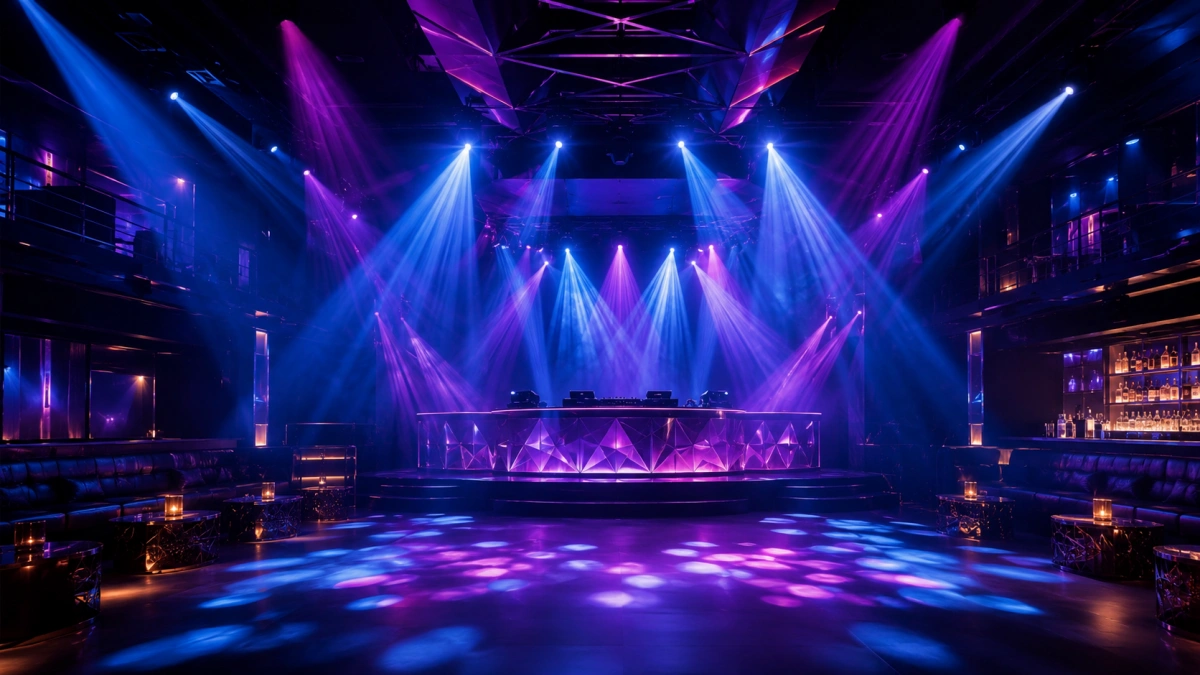
What Makes Club Lighting Design Different from General Event Lighting?
Club lighting design is different because it must support repeated nightlife operation, music-driven visual rhythm, and a strong immersive atmosphere across long operating hours.
Unlike general event lighting, a nightclub system is usually used several nights per week and must remain visually effective across extended sessions. It also needs to create emotional variation throughout the night. Early-evening ambience, peak dance-floor intensity, DJ drop moments, and transition scenes all require different lighting behavior. This means club lighting design must balance movement, color, atmosphere, visibility, and control precision at the same time.
- the dance floor must feel energetic without becoming visually chaotic
- the booth must remain a clear visual focus
- walls and ceiling should support atmosphere rather than disappear into darkness
- fixture layers must work together across both low-energy and peak scenes
- maintenance and runtime reliability matter because the venue operates repeatedly
That is why serious nightlife projects often build around one core topical structure such as club lighting rather than copying temporary event lighting logic.
What Are the Main Lighting Layers in Nightclubs and Dance Floors?
A strong club lighting design is usually built in layers. Each layer has a different visual job, and the system works best when these jobs are clearly separated.
- movement layer creates aerial motion and directional energy above the crowd
- wash layer gives the room color, body, and continuity
- booth layer defines the DJ zone as a visual anchor
- accent layer adds punch during drops, transitions, and special moments
- background layer gives walls, ceiling, and rear surfaces visual depth
In many professional projects, the movement layer is built using beam moving head fixtures, while the wash and background layers are supported by products such as led wash moving head and background matrix light.
Which Lighting Systems Are Recommended for Nightclub DJs?
The most effective lighting system for a nightclub DJ is not one fixture type. It is a coordinated package that combines movement, color coverage, musical accents, booth focus and flexible control. The exact configuration depends on the venue size, ceiling height, music format and expected operating schedule.
A professional DJ-focused system commonly includes:
- beam moving heads for fast aerial movement and long visible beams
- LED wash moving heads for continuous color coverage across the dance floor
- laser lights for high-impact peak scenes and electronic music effects
- LED strobes or blinders for drops, transitions and audience interaction
- pixel bars or matrix fixtures for booth backgrounds and visual texture
- haze equipment to make aerial beams visible without overwhelming the room
- a professional DMX or Art-Net console for scene programming and synchronized playback
| Fixture Type | Best Use | Buyer Should Check | System Role |
|---|---|---|---|
| Beam Moving Head | Aerial movement above the dance floor | Beam angle, output, prism, pan and tilt speed | Movement layer |
| LED Wash Light | Color coverage for the crowd and room | Zoom range, color mixing and pixel control | Wash layer |
| Laser Light | Peak-energy effects and long aerial lines | Output, scanning control and safety planning | Accent layer |
| LED Strobe | Drops, transitions and audience accents | Output, segment control and flicker performance | Impact layer |
| DMX Console | Programming, playback and synchronization | Universes, fixture support, backup and operator workflow | Control layer |
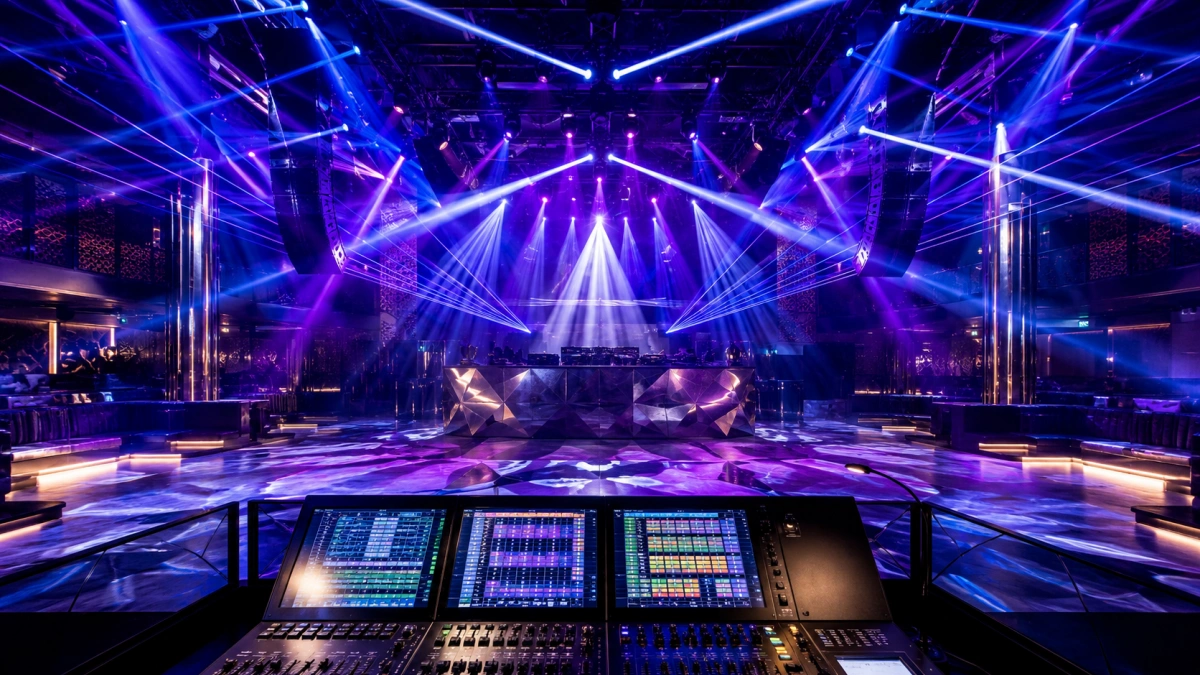
For venues comparing a complete package, JC LIGHT provides professional nightclub lighting solutions that connect fixture selection with venue layout, control planning and installation requirements.
How Should the Dance Floor Be Lit?
The dance floor is usually the most active zone in the room, so it should receive the strongest movement logic and the most consistent atmospheric support.
The most common design mistake is placing strong beam fixtures above the dance floor without enough supporting wash coverage. This creates bright movement in the air but leaves the room feeling visually thin. A better design uses beam fixtures for motion and directional energy while wash fixtures maintain room color and consistency. The dance floor should feel alive at all times, not only during high-intensity drops.
- use crossing beam paths to create depth instead of one-direction sweeps only
- maintain enough wash coverage so the crowd space stays connected
- reserve strobes or effect peaks for rhythm accents, not continuous use
- keep beam angles clear of uncomfortable audience glare
Where stronger dynamic atmosphere is needed, a supporting laser light layer can intensify peak scenes without replacing the core movement and wash structure.
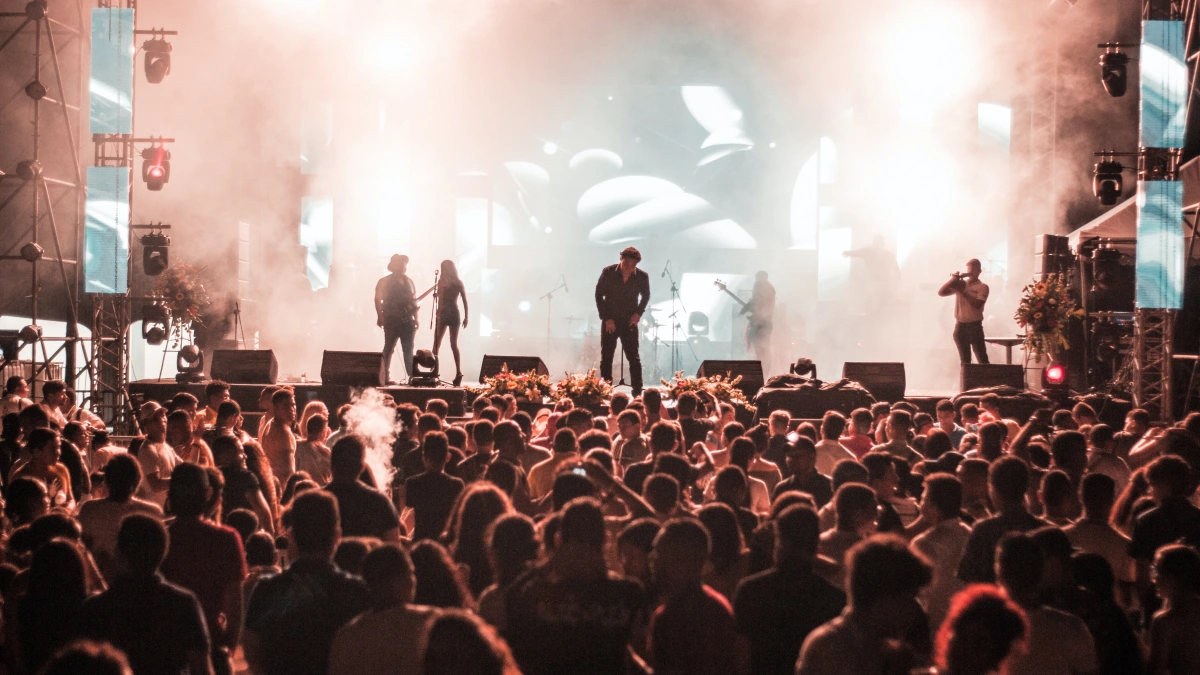
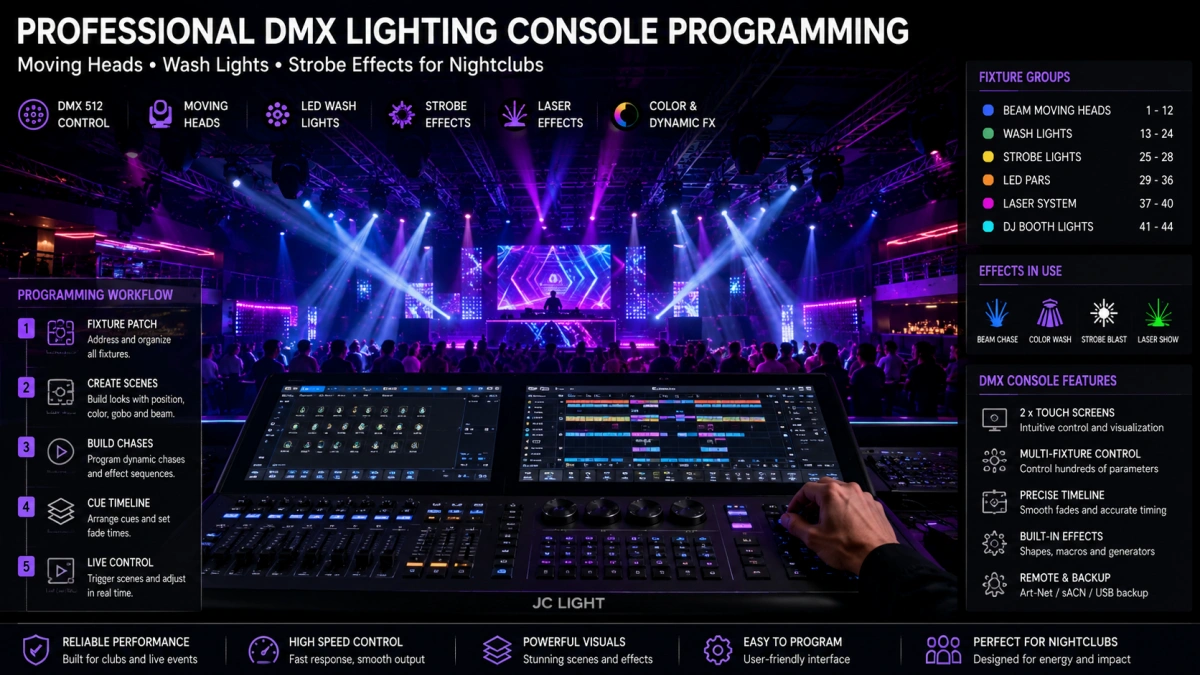
Example Club Lighting Setup for Medium Nightclubs
A medium-sized nightclub with a 300–500 person capacity typically uses a layered lighting system combining moving head beam lights, LED wash fixtures, booth background lighting and synchronized strobe effects.
A common professional setup may include 8–12 moving beam fixtures above the dance floor, 6–8 LED wash fixtures for room atmosphere, 2–4 booth background fixtures and several strobe units for peak-energy scenes. Fixtures are usually divided across multiple truss positions to improve room depth and audience immersion.
Professional nightclub lighting systems also rely on DMX or Art-Net control consoles to synchronize lighting movement, color transitions and music-driven scene programming.
How Should the DJ Booth Relate to the Dance Floor?
The DJ booth should work as the visual center of the room, but it should not overpower the dance floor. A good relationship between booth and floor is one of the key differences between average club lighting design and professional nightclub systems.
The booth needs its own readable layer so the performer remains visually important. At the same time, the booth should still feel connected to the wider room. That usually means the booth color palette should follow the main room logic, while booth brightness and visual texture are controlled separately. If the booth is too weak, the room lacks focus. If the booth is too dominant, the dance floor loses immersive depth.
This is why many projects use LED bar or matrix support around the booth while leaving the strongest motion to the dance floor and upper zones.
What Fixture Configuration Works Best for Different Nightclub Sizes?
The right club lighting design depends on room scale, ceiling height, and how the venue operates.
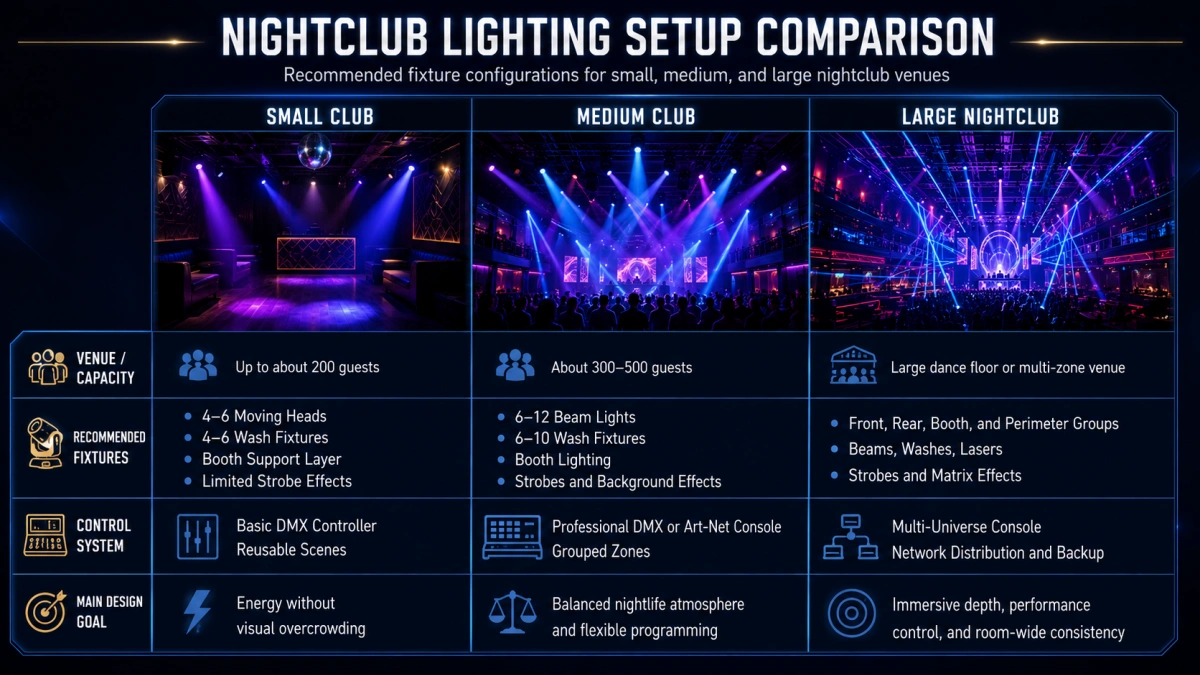
Small nightclubs usually benefit from a compact but efficient system: 4 to 6 moving heads, 4 to 6 wash fixtures, one booth support layer, and limited accent effects. In these spaces, restraint matters as much as power.
Medium nightclubs often require 6 to 10 moving heads, 6 to 10 wash fixtures, a more developed booth layer, and at least one background or accent system to support transitions and room identity.
Large dance-floor venues usually require front, rear, booth, and perimeter zones, along with more structured signal segmentation and rig planning. These systems must be designed as multiple visual layers rather than one overhead fixture line.
| Venue Type | Recommended Lighting Structure | Control Requirement | Main Design Goal |
|---|---|---|---|
| Small Club Up to about 200 guests | 4 to 6 compact moving heads, 4 to 6 wash fixtures, booth support and limited strobe effects | Basic DMX controller with reusable scenes | Energy without visual overcrowding |
| Medium Club About 300 to 500 guests | 6 to 12 beams, 6 to 10 wash fixtures, booth lighting, strobes and background effects | Professional DMX or Art-Net console with grouped zones | Balanced nightlife atmosphere and flexible programming |
| Large Nightclub Large dance floor or multi-zone venue | Front, rear, booth and perimeter groups with beams, washes, lasers, strobes and matrix effects | Multi-universe console, network distribution and backup planning | Immersive depth, performance control and room-wide consistency |
How Professional Club Lighting Creates Audience Impact
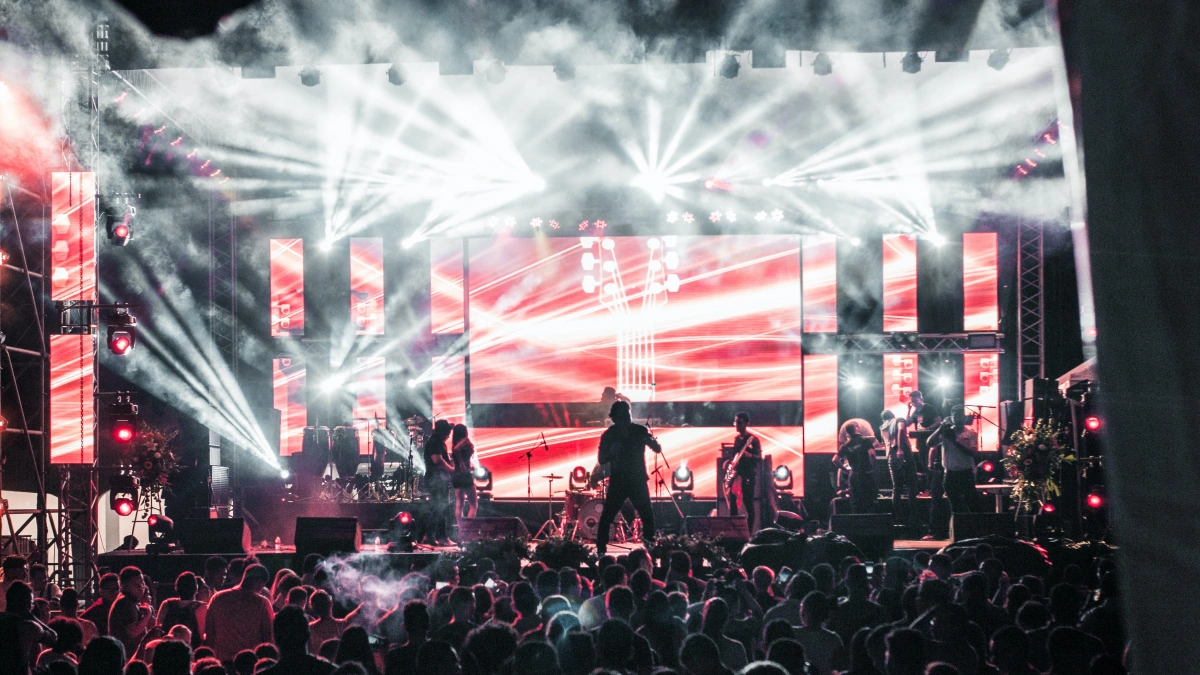
Professional nightclub lighting is designed to guide audience attention, enhance performance energy and create immersive visual experiences. Lighting designers use beam direction, color transitions and synchronized movement to build atmosphere during DJ performances and nightlife events.
Large-scale nightclub venues often combine haze effects, audience blinders and layered fixture positioning to create cinematic dance floor visuals. Proper lighting design can significantly improve crowd interaction and nightlife atmosphere.
As modern club productions become increasingly visual, professional nightclub lighting systems continue to play a major role in entertainment venue design and audience engagement.
What Are the Most Common Club Lighting Design Mistakes?
Most nightclub systems underperform because the design focuses on fixture quantity instead of spatial logic.
- too many moving beam fixtures with not enough wash support
- poor fixture spacing that causes beam conflicts
- weak booth identity that leaves the performer visually lost
- no real perimeter or ceiling support, which reduces room depth
- excessive effect density that becomes tiring over a full night
- control planning that does not match the intended scene structure
One common mistake in dance-floor-oriented venues is putting all major fixtures on one truss line and expecting that single line to create a full immersive room. It rarely does. Better systems use depth, separation, and distributed visual zones.
How Does Lighting Design Affect Commercial Performance?
Lighting design affects how premium the venue feels and how memorable the room becomes. It also influences the customer’s willingness to stay longer, film content, and associate the venue with a stronger nightlife identity.
In practical terms, a better lighting design can:
- make the venue feel more immersive without increasing fixture count excessively
- improve social media visibility because the room photographs better
- support flexible programming for different nights and event formats
- reduce rework costs because the system is correct from the beginning
For professional buyers, this means club lighting design is not just a technical concern. It is a commercial one.
Real Project Example: Rebalancing a Dance Floor System
In one medium nightclub project, the original design used strong beam fixtures above the dance floor but almost no wash coverage around the room. The result was visually energetic during drops but weak in transitional scenes. The room looked incomplete on camera, and the audience area often felt darker than intended.
After redesigning the system, the venue added wash fixtures to the perimeter and behind the booth, while keeping the same number of moving heads. The system immediately felt more balanced. The dance floor retained its energy, but the room gained depth, stronger color continuity, and better overall atmosphere. The improvement came from design correction, not from dramatically increasing equipment count.
What Should Professional Buyers Check Before Approving a Club Lighting Design?
Before approving a nightclub or dance floor lighting system, professional buyers should check whether the design answers real operating needs.
- does the design include beam, wash, booth, and background logic?
- does the fixture count match the venue scale?
- does the rig layout support correct beam angles and service access?
- does the DMX structure match the complexity of the system?
- can the venue shift between lower-energy and peak scenes effectively?
For venue operators who also host private functions or flexible room uses, it can also be useful to maintain a softer operational mode closer to wedding banquet lighting when the nightclub is not running at full performance intensity.
How to Choose a Professional Club Lighting Supplier
A professional club lighting supplier should be able to support the complete project rather than only provide individual fixtures. For distributors, contractors and venue owners, the supplier’s ability to coordinate products, control requirements, accessories and after-sales support can be as important as the fixture specification.
Before approving a supplier, professional buyers should evaluate:
- complete fixture coverage across beam, wash, laser, strobe, matrix and control categories
- DMX compatibility and clear channel documentation for mixed systems
- batch consistency for color, movement and firmware behavior across repeat orders
- OEM and ODM capability for branding, plugs, manuals, packaging and channel modes
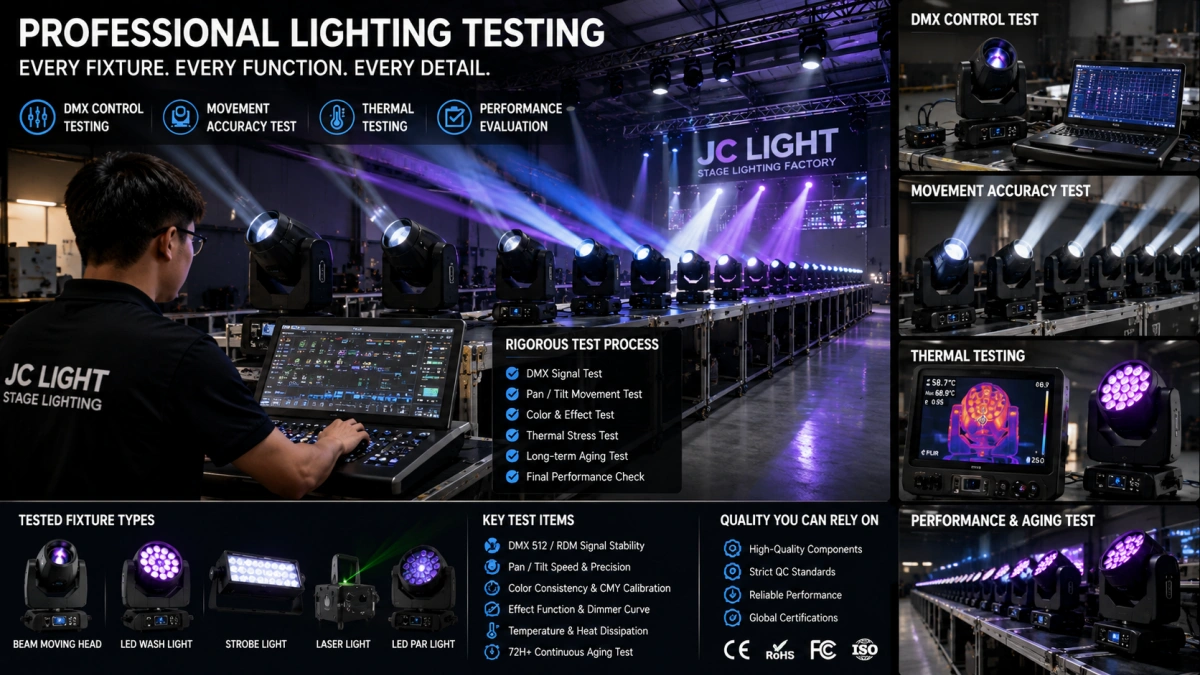
- product testing for movement calibration, thermal operation and control response
- spare-parts support for fans, motors, power supplies, control boards and optical components
- project configuration support based on venue dimensions and operating goals
- international shipping coordination for cartons, flight cases and mixed product orders
Information to Prepare Before Requesting a Quote
A quotation becomes more accurate when the supplier receives project information instead of only a general request for a nightclub lighting price list.
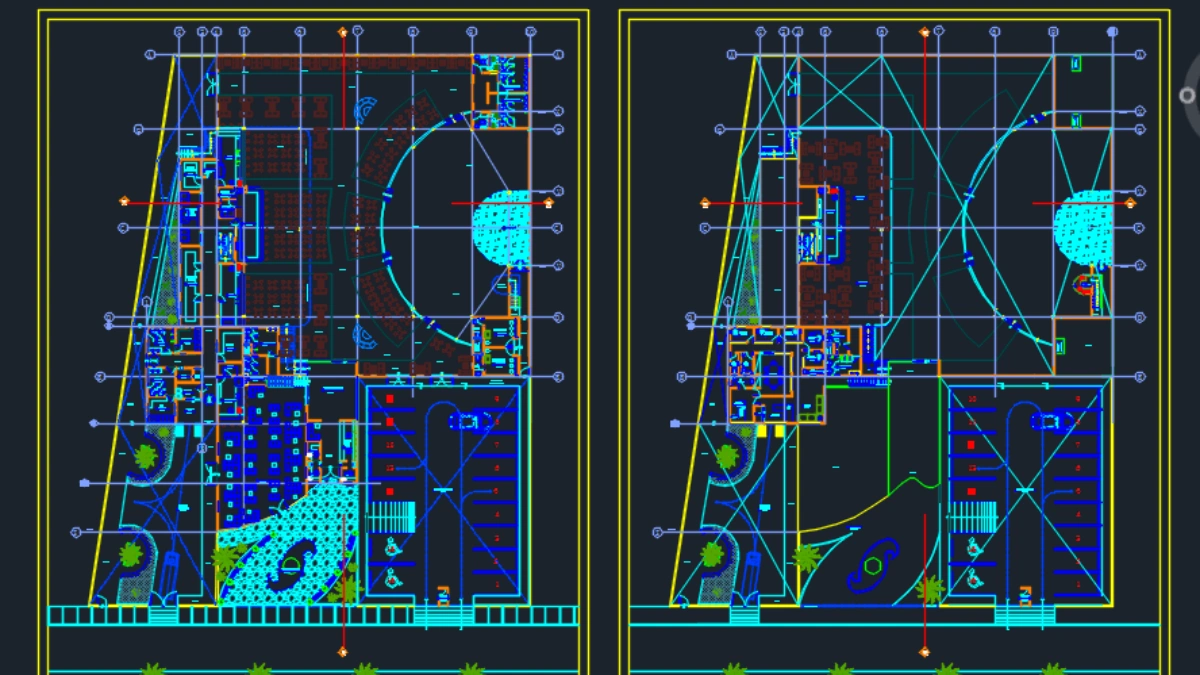
- venue floor plan and approximate room dimensions
- ceiling height, truss height and available mounting positions
- dance-floor dimensions and expected audience capacity
- DJ booth position and desired visual priority
- preferred beam, wash, laser, strobe or pixel effects
- required control method, DMX universes or existing console model
- input voltage, plug type and installation country
- project budget range and expected delivery date
This information helps the supplier recommend a structured club lighting setup and prevents unnecessary equipment from being added only to increase fixture quantity.
Need a Professional Club Lighting Solution?
JC LIGHT provides professional nightclub lighting solutions for DJs, bars, dance floors and entertainment venues worldwide.
Our team helps venue owners and lighting contractors design practical systems based on venue size, ceiling structure and nightlife operation requirements.
From beam and wash fixture planning to DMX system integration and nightclub lighting design support, we help create immersive nightlife environments with professional stage lighting systems.
Professional Stage Lighting Solutions for Modern Venues
Concerts, nightclubs, churches, theaters, weddings and live events. Get professional lighting fixture recommendations, layout planning and fast quotation support from JC LIGHT.
💬 Get Lighting Solution on WhatsApp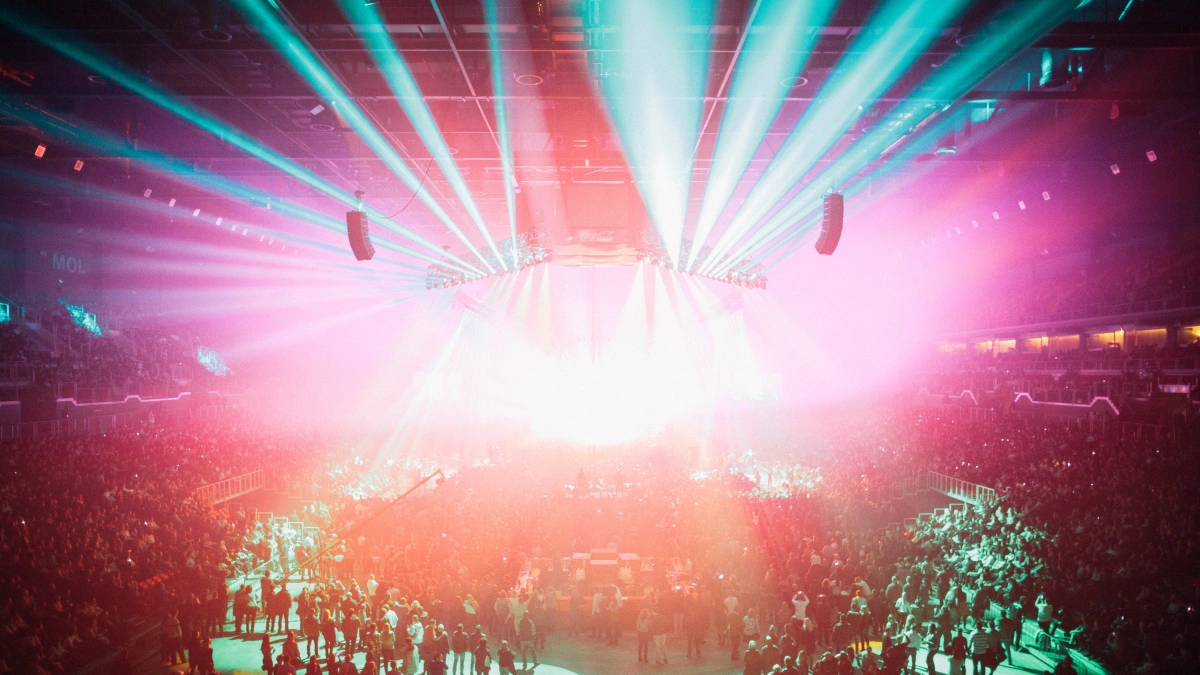
Club Lighting Design FAQs
Which lighting systems are recommended for nightclub DJs?
What lights are commonly used in nightclubs?
How should a dance floor be lit?
How many lights are needed for a nightclub?
What is the best club lighting setup?
How is nightclub lighting controlled?
How much does a professional club lighting system cost?
Can club lighting be customized for different venues?
In conclusion, club lighting design for nightclubs and dance floors works best when the system is layered, balanced, and planned around real venue operation. The strongest rooms are not the brightest rooms. They are the rooms where movement, atmosphere, and focus are designed to work together.
For project-specific configuration and venue-level planning, refer to setup.