
Concert Stage Lighting Setup for Touring Performances
Concert stage lighting setup for touring performances requires a very different design mindset than fixed venue lighting installations. Touring productions must move quickly between cities, adapt to changing venue sizes, maintain consistent visual quality across every performance, and allow rapid installation under tight production schedules. A touring concert lighting system must therefore balance portability, scalability, speed, and repeatable programming precision.
For professional buyers such as touring production companies, live event rental firms, concert engineers, and stage contractors, the biggest challenge is designing systems that remain visually powerful while minimizing transport complexity and setup labor. Touring rigs that are too heavy, too inconsistent in fixture types, or too difficult to reconfigure create expensive delays and operational inefficiencies.
This guide explains how to set up concert stage lighting for touring performances, including modular rigging strategy, transport-friendly fixture selection, scalable truss design, touring DMX logic, and what professional buyers should evaluate when choosing touring-ready lighting systems.
What Makes Touring Concert Lighting Different?
Touring systems must deliver repeatable performance across constantly changing environments.
Unlike permanent venue installations, touring lighting systems must adapt to different:
- stage widths and heights
- ceiling rigging points
- load capacities
- venue audience layouts
- setup time windows
That is why touring productions often begin with a flexible concert stage light framework that can scale up or down without redesigning the full show.
How Should Touring Lighting Rigs Be Structured?
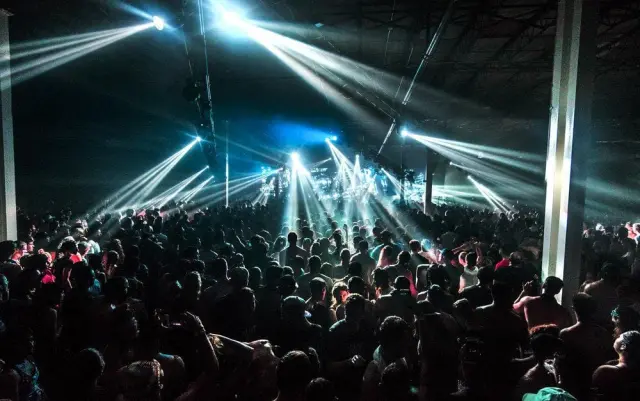
The best touring systems use modular truss segmentation so rigs can be reassembled quickly.
- front truss module for wash and profiles
- mid truss module for beam movement
- rear truss module for depth and silhouette
- side ladder modules for angled coverage
- floor package modules for low-angle effects
Modular rigging reduces setup time and makes transport logistics far more efficient.
| Module Type | Main Purpose | Touring Benefit |
|---|---|---|
| Front Truss | key wash coverage | consistent performer visibility |
| Mid Truss | beam effects | main show energy |
| Rear Truss | depth layer | visual stage dimension |
What Fixtures Are Best for Touring Performances?
Touring fixtures must combine strong output with transport practicality.
- compact beam moving heads with high output efficiency
- wash hybrids for flexible scene coverage
- profile units for sharp key lighting
- lightweight strobes for impact sequences
- selected laser systems for major arena shows
Many touring productions choose standardized fixture families such as concert moving head light systems to simplify spare parts management and programming consistency.
How Important Is Fixture Standardization on Tour?
Standardization is critical in touring production because inconsistent fixture families create programming delays and maintenance complexity.
When the same fixture models are repeated across tours:
- programming templates remain reusable
- DMX patching becomes faster
- spare part inventory is simpler
- crew troubleshooting becomes faster
This is one reason professional touring systems avoid mixing too many incompatible brands unless absolutely necessary.
How Should DMX and Control Be Managed on Tour?
Touring shows require repeatable control architecture that can survive frequent rig rebuilds.
- assign fixed DMX address blocks by module type
- maintain repeatable universe mapping
- use timecode where setlists remain consistent
- build backup console redundancy for emergencies
Reliable touring DMX architecture is often more valuable than adding additional fixtures.
What Transport Factors Matter Most?
Transport design directly affects cost efficiency in touring productions.
Buyers should consider:
- fixture weight per road case
- truss breakdown dimensions
- truck loading efficiency
- power cable consolidation
- spare fixture storage space
Efficient transport planning reduces labor cost and protects equipment lifespan.
Common Touring Lighting Setup Mistakes
- choosing oversized fixtures that slow load-in
- too many fixture models causing programming complexity
- inconsistent truss segmentation
- poor cable labeling systems
- ignoring venue ceiling variations
One of the most expensive touring mistakes is over-designing rigs that cannot fit smaller regional venues efficiently.
Real Project Example: Touring Pop Concert Optimization
In one touring pop concert project, the original rig required over six hours of lighting load-in due to inconsistent truss segmentation and mixed fixture models. After redesigning the system into standardized modular truss sections with uniform beam fixtures, setup time dropped significantly while maintaining the same visual show quality.
What Should Professional Buyers Verify Before Approval?
Before approving touring concert lighting systems, buyers should verify:
- whether the rig scales across multiple venue sizes
- whether fixtures are standardized enough for touring support
- whether transport dimensions match logistics limits
- whether DMX architecture remains repeatable across rebuilds
- whether supplier service support is available across tour regions
Touring Concert Lighting Setup – FAQs
What is the most important factor in touring concert lighting setup?
The most important factor is balancing portability, modular rigging, repeatable programming, and consistent visual output across changing venues.
Why is modular truss design important in touring shows?
Modular truss design reduces setup time, improves transport efficiency, and makes rigs easier to scale for different venue sizes.
What fixtures are best for touring concert systems?
Compact high-output beam heads, wash hybrids, profile fixtures, strobes, and selected laser units are ideal for most touring productions.
What should buyers review before purchasing touring systems?
They should review scalability, fixture standardization, transport efficiency, DMX repeatability, and supplier support reliability.
In conclusion, concert stage lighting setup for touring performances must prioritize modularity, speed, transport practicality, and repeatable show consistency. The strongest touring systems are those that remain flexible without sacrificing visual impact.
For large venue fixed-installation design strategy, refer to build concert stage lighting.