
What Is a Lighting Console and How It Works in Stage Lighting
A lighting console is the core control system used in modern stage lighting to manage, program, and synchronize lighting fixtures. In professional productions, lighting is no longer operated manually fixture by fixture. Instead, all lights are controlled through a centralized system that allows precise control over intensity, color, movement, and timing.
For professional buyers, understanding how a lighting control console works is essential when building scalable and reliable lighting systems. A well-configured console system not only improves efficiency but also determines the overall performance quality of a stage lighting setup.
The Role of Lighting Consoles in Modern Stage Lighting Systems
Lighting consoles act as the central brain of any lighting system. Instead of operating individual fixtures manually, operators use the console to send control signals that coordinate multiple lights simultaneously. This allows for complex lighting effects that would be impossible to achieve manually.
In professional stage environments, lighting consoles are used to create structured cue sequences. Each cue defines how lights behave at a specific moment in a performance. These cues can include intensity changes, color transitions, and movement patterns. By organizing cues into timelines, operators can deliver consistent and repeatable lighting effects.
This level of control is especially important in concerts, theater productions, and large events where lighting must be synchronized with music and performance elements.
How Lighting Consoles Work with DMX Control Systems
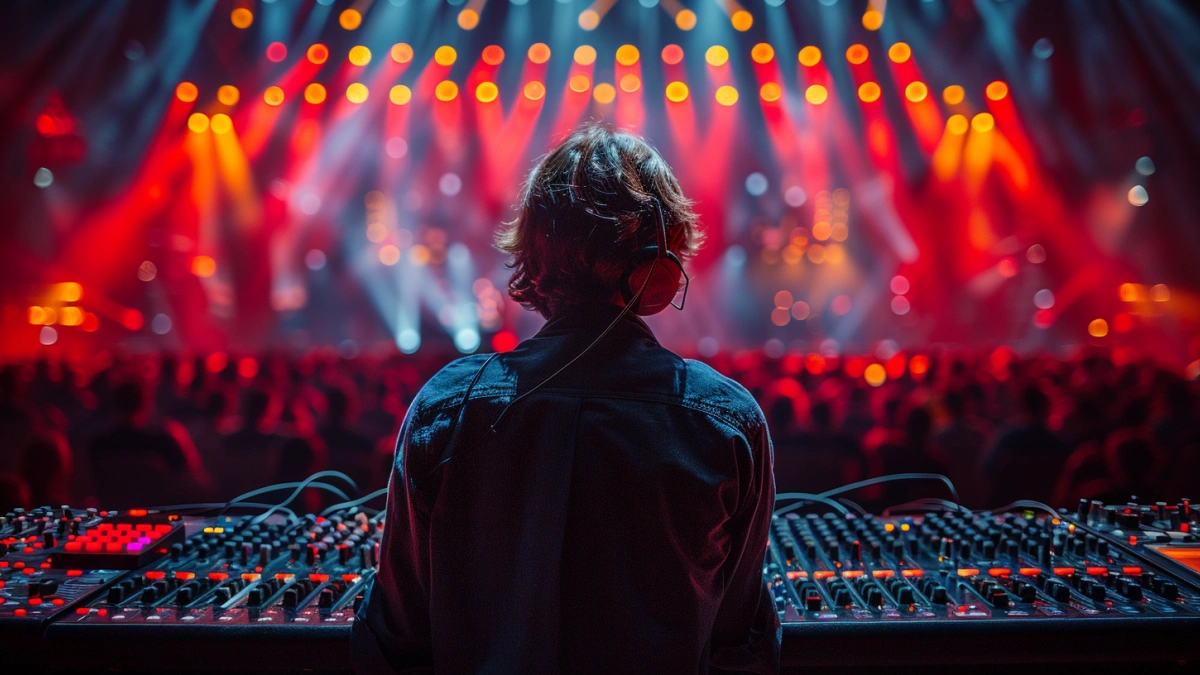
Most lighting consoles operate using DMX (Digital Multiplex) protocols, which allow a single console to control hundreds of lighting fixtures. Each fixture is assigned a DMX address, and the console sends data signals to control its parameters.
For example, a typical concert moving head light may use 16–24 DMX channels to control pan, tilt, color, gobo, and other functions. When multiple fixtures are used, these channels are organized into DMX universes, each capable of handling 512 channels.
In a medium-sized stage setup, it is common to use 2–4 DMX universes. Larger productions may require 8 or more universes to handle complex lighting systems. This structure allows lighting consoles to manage large numbers of fixtures efficiently.
Example Lighting Console Setup for Stage Productions
To better understand how lighting consoles are used in real projects, it is helpful to look at a typical system configuration. A medium-scale stage lighting system might include a central console connected to multiple types of fixtures through DMX networks.
A typical setup may include 1 professional console controlling 40–80 fixtures. This could consist of 24 beam fixtures for dynamic effects, 16 wash moving head fixtures for coverage, and 8–12 concert strobe light units for impact effects.
Additional effects may be created using concert laser light systems, which are also controlled through the console. All fixtures are connected through DMX distribution systems, ensuring stable communication.
This type of setup demonstrates how a lighting console serves as the central hub that connects and controls all elements of a lighting system.
Key Functions of a Professional Lighting Console
A professional lighting console provides several essential functions that enable advanced lighting control. One of the most important is cue programming, which allows operators to define lighting behavior over time.
Another key function is real-time control. Operators can adjust lighting parameters during a live performance, providing flexibility and responsiveness. This is particularly important in live events where conditions may change unexpectedly.
Advanced consoles also support effects engines, enabling automated patterns such as movement sequences and color changes. These features allow designers to create dynamic and engaging lighting effects.
Types of Lighting Consoles for Different Applications
Lighting consoles are available in different types depending on the scale and complexity of the application. Small portable consoles are often used for events and smaller stages, while large consoles are designed for complex productions.
High-end consoles offer advanced features such as multi-universe control, network integration, and detailed programming capabilities. These systems are commonly used in concerts, touring productions, and large-scale events.
Choosing the right type of console depends on the number of fixtures, the complexity of the lighting design, and the level of control required.
Common Mistakes When Using Lighting Consoles
One of the most common mistakes is underestimating the required DMX capacity. Using too few universes can limit the number of fixtures that can be controlled, reducing system flexibility.
Another issue is poor cue organization. Without a clear structure, operators may struggle to manage lighting during live performances. This can lead to inconsistent results and operational difficulties.
Insufficient training is also a common problem. Lighting consoles are powerful tools, but they require proper knowledge to use effectively. Investing in training can significantly improve system performance.
What Professional Buyers Should Consider
When selecting a lighting console, professional buyers should focus on scalability, compatibility, and ease of use. The console must support the required number of fixtures and offer features that match the complexity of the production.
Reliability is also critical. In large productions, any failure in the console can disrupt the entire lighting system. Choosing a reliable and well-supported system is essential for long-term success.
Finally, buyers should consider future expansion. A scalable system allows for upgrades and additional fixtures, ensuring that the investment remains valuable over time.
FAQs
How many fixtures can one lighting console control?
It depends on the number of DMX universes supported. Each universe controls up to 512 channels.
What is a DMX universe?
A DMX universe is a group of 512 control channels used to manage lighting fixtures.
How do you choose a lighting console for stage projects?
Consider the number of fixtures, required features, and scalability of the system.
What is the biggest mistake in console setup?
Underestimating channel requirements and poor system planning.
For full system guide, see lighting control console guide.