
Stage Lighting Console Systems for Professional Productions
Stage lighting console systems are the core control infrastructure behind modern professional productions. Whether in concerts, theaters, or large-scale events, lighting consoles are responsible for coordinating hundreds of fixtures into a synchronized visual experience. Without a properly designed console system, even high-end lighting equipment cannot deliver its full performance potential.
For professional buyers, understanding how a stage lighting console system works is essential when planning lighting solutions for complex productions. A well-designed system ensures scalability, reliability, and seamless integration with other stage technologies.
The Role of Lighting Console Systems in Stage Production
Lighting console systems act as the central command center of a stage lighting setup. Instead of controlling fixtures individually, operators use the console to manage all lighting elements from a unified interface. This allows precise control over intensity, color, movement, and timing.
In professional productions, console systems are used to create structured cue sequences that define how lighting changes throughout a performance. These cues are synchronized with music, video, and stage actions, creating a cohesive visual experience.
This centralized control approach significantly improves efficiency and allows complex lighting designs to be executed consistently across multiple performances.
System Architecture of Professional Lighting Console Systems
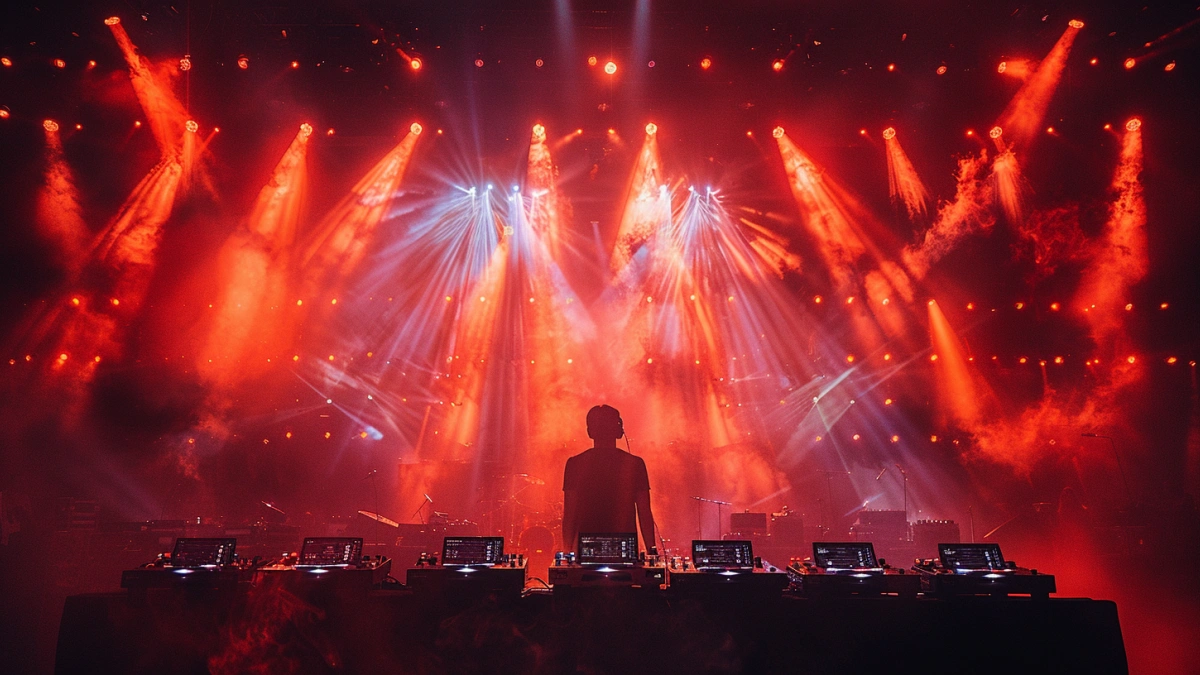
A professional lighting console system typically consists of a central console, DMX or network distribution units, and multiple lighting fixtures. The console sends control signals through DMX or network protocols such as Art-Net or sACN.
Each fixture is assigned a DMX address, allowing the console to control its parameters individually. For example, a concert moving head light may require 20–30 DMX channels, depending on its features.
In medium-sized productions, systems often use 3–6 DMX universes. Large-scale productions may require 10 or more universes to handle hundreds of fixtures. This modular architecture allows systems to scale according to production requirements.
Example Lighting Console System for Stage Productions
To understand how these systems are applied in real projects, consider a typical mid-to-large stage setup. A professional production may use one primary console with backup redundancy to ensure reliability.
The system may include 48–96 beam fixtures for dynamic effects, 24–48 wash moving head units for coverage, and 12–24 concert strobe light systems for impact.
Additional visual effects may be created using concert laser light systems. All fixtures are distributed across multiple DMX universes, ensuring stable and flexible control.
This type of configuration demonstrates how a lighting console system integrates various components into a cohesive structure.
Integration with Audio and Stage Systems
Modern lighting console systems are designed to integrate with other stage technologies. This includes audio systems, video systems, and stage automation. Synchronization is often achieved through timecode, allowing lighting to match music and performance elements precisely.
This level of integration is essential for large productions, where multiple systems must work together seamlessly. It also allows for more advanced visual effects and coordinated performances.
Common Challenges in Lighting Console Systems
One of the main challenges is system complexity. As the number of fixtures increases, managing DMX channels and universes becomes more difficult. Proper planning and system design are essential to avoid limitations.
Another challenge is signal distribution. Without proper network design, signal loss can occur, affecting system performance. Using DMX splitters and network switches helps ensure stable communication.
Reliability is also a concern, especially for live events. Backup systems and redundancy are often used to minimize risks.
What Professional Buyers Should Consider
When selecting a stage lighting console system, buyers should focus on scalability, compatibility, and reliability. The system must support current requirements while allowing for future expansion.
Ease of use is another important factor. A user-friendly console reduces training time and improves efficiency. Integration with other systems should also be considered to ensure seamless operation.
FAQs
How many DMX universes are needed for stage lighting systems?
Medium systems use 3–6 universes, while large productions may require 8–12 or more.
What is the role of a lighting console in stage production?
It controls and synchronizes all lighting fixtures.
How do lighting consoles integrate with other systems?
Through timecode and network protocols.
What should buyers consider?
Scalability, reliability, and compatibility.
For setup details, see console setup.