
What Is Church Stage Lighting and How It Works for Worship
Church stage lighting is no longer just about visibility. In modern worship environments, lighting plays a critical role in guiding attention, creating atmosphere, and supporting live streaming quality. However, many churches struggle with poor lighting setups that result in flat visuals, shadows on speakers, or inconsistent camera exposure.
If you are planning or upgrading your church stage lighting, understanding how lighting systems actually work in real worship environments is essential — not just in theory, but in practical application.
What Church Stage Lighting Really Means in Modern Worship
In real church environments, lighting is not just a single fixture or spotlight. It is a complete system designed to support three core goals:
- Clear visibility for in-person congregation
- Balanced exposure for live streaming cameras
- Atmosphere that supports worship experience
Unlike concerts, church lighting must be soft, consistent, and non-distracting — while still being visually engaging.
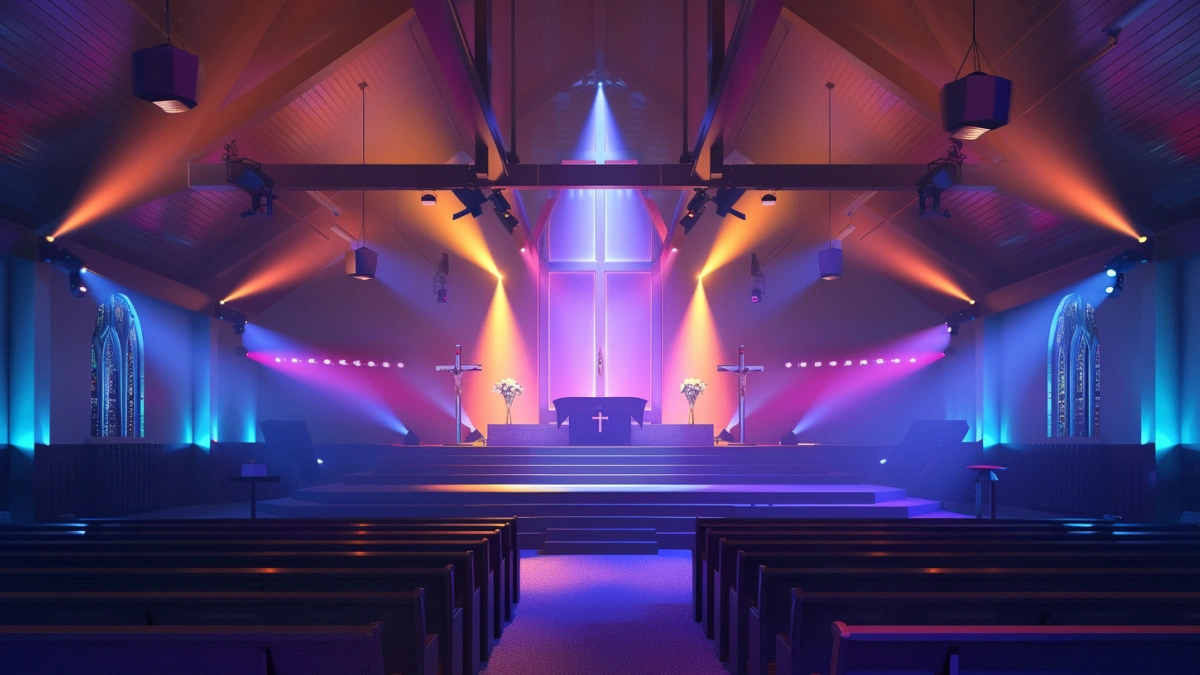
How Church Stage Lighting Systems Actually Work
A functional lighting system is built as a structured workflow rather than random fixture placement. A typical system follows this architecture:
Lighting Console → DMX Signal → Fixtures → Visual Output
Each component plays a specific role:
- The console controls intensity, color, and movement
- DMX distributes signals to fixtures
- Fixtures produce the final lighting effect
Without proper coordination between these elements, even high-end equipment will not perform correctly.
Key Lighting Types Used in Church Stage Design
Understanding fixture roles is critical for building a balanced system.
1. Front Lighting (Visibility)
This is the most important layer. It ensures speakers are clearly visible without harsh shadows.
2. Wash Lighting (Stage Coverage)
wash moving head fixtures provide even coverage across the stage.
3. Effect Lighting (Atmosphere)
Subtle effects using concert moving head light can enhance worship moments without distraction.
4. Accent Lighting
Background lighting adds depth and separates subjects from the backdrop.
Common Problems in Church Lighting (And Why They Happen)
1. Dark Faces on Stage
Cause: Incorrect front light angles or insufficient brightness.
Solution: Position lights at 45° angles and adjust intensity evenly.
2. Overexposed Live Stream
Cause: Lighting designed for human eyes, not cameras.
Solution: Balance brightness levels and test with camera output.
3. Flat and Boring Stage Look
Cause: Lack of depth lighting.
Solution: Add background and side lighting layers.
Real Setup Example (Small to Medium Church)
A practical system for a small to medium church may include:
- 6–12 wash lights for stage coverage
- 4–6 front lights for visibility
- 2–4 effect lights for atmosphere
- 1 lighting control system
This setup provides balanced lighting for both live audience and streaming.
How Lighting Changes Worship Experience
Lighting is not just technical — it influences how people feel during worship.
- Warm lighting creates a welcoming atmosphere
- Dynamic lighting supports music transitions
- Balanced lighting improves focus on speakers
When properly designed, lighting enhances engagement without becoming distracting.
Professional Workflow Used in Real Churches
Churches that achieve consistent results follow structured workflows:
- Plan lighting based on stage layout
- Test lighting with camera systems
- Adjust brightness for different service types
- Use simple presets for volunteers
This approach ensures repeatable and reliable performance every week.
When Your Current Lighting Setup Is Not Working
Many churches face these issues:
- Uneven lighting across stage
- Poor video quality in live streams
- Difficulty controlling lighting system
In most cases, the problem is not the equipment — it is the system design.
If you are unsure how to improve your setup, this guide explains practical solutions for beginners: stage lighting for church services setup guide for beginners .
👉 How to Build a Reliable Church Lighting System
The key is not buying more lights — it is building the right system.
You need:
- Correct fixture types
- Proper positioning
- Balanced intensity
- Simple control system
With the right setup, even a small church can achieve professional results.
FAQs
What is church stage lighting?
It is a lighting system designed to support worship services and live streaming.
Why is lighting important in church?
It improves visibility, atmosphere, and video quality.
What lights are used in church stage lighting?
Wash lights, front lights, and effect lights are commonly used.
How many lights does a church need?
Small churches may need 8–20 fixtures depending on stage size.
Can church lighting improve live streaming?
Yes, proper lighting significantly enhances video quality.
What is the biggest lighting mistake?
Ignoring front lighting and camera exposure.