
Event Lighting for Stage Shows and Live Productions Use
Event lighting for stage shows and live productions requires a balance between technical performance and visual presentation. In live productions, lighting systems must operate reliably while delivering dynamic effects and consistent illumination.
For B2B buyers and lighting professionals, designing lighting systems for stage shows involves selecting the right equipment, ensuring compatibility, and building scalable systems that can adapt to different production requirements.
This guide explains how to design event lighting systems for stage shows and live productions using practical strategies and real-world insights.
What Makes Stage Lighting Different from Other Event Lighting?
Stage lighting requires precision, flexibility, and dynamic control.
- Higher control accuracy
- More complex lighting effects
- Integration with performance timing
These systems are commonly used in wedding and event lighting and live production environments.
What Equipment Is Used in Stage Shows and Live Productions?
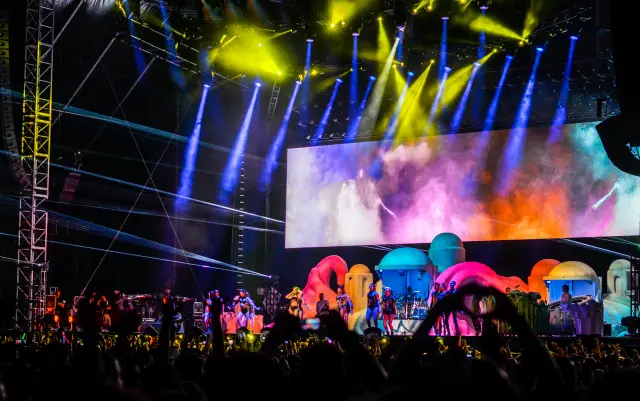
Stage lighting systems use multiple fixture types.
- Beam lighting for dynamic movement
- Wash lighting for coverage
- Profile lighting for focus
- Effect lighting for atmosphere
How to Design Lighting for Stage Shows?
Designing stage lighting requires a structured approach.
1. Define Visual Goals
- Determine mood and atmosphere
- Identify key performance elements
2. Plan Lighting Layers
- Front lighting for visibility
- Back lighting for depth
- Side lighting for movement
3. Configure Control System
- Use DMX control systems
- Program synchronized effects
4. Optimize Fixture Placement
- Ensure coverage across stage
- Avoid dark zones
| Design Element | Correct Approach | Common Mistake |
|---|---|---|
| Layering | Multi-layer design | Flat lighting |
| Placement | Even coverage | Dark zones |
| Control | Structured system | Inconsistent output |
What Configuration Works Best for Live Productions?
Live productions require flexible and scalable systems.
- Beam lights for effects
- Wash lights for coverage
- Profile lights for precision
These setups are often used in wedding hall lighting applications.
Real Project Example: Stage Lighting Adjustment
In a live production, insufficient back lighting reduced visual depth. After adding back lighting, the stage achieved better contrast and visual quality.
What Should Buyers Consider for Stage Lighting Systems?
B2B buyers should evaluate system performance and flexibility.
- Compatibility with existing systems
- Scalability for different productions
- Ease of installation
- Supplier reliability
Stage Lighting for Live Shows – FAQs
What lighting is best for stage shows?
Beam, wash, and profile lighting provide balanced performance.
How to design lighting for live productions?
Use layered lighting, structured control systems, and proper fixture placement.
What is the biggest mistake in stage lighting?
Ignoring lighting layers and using only one type of fixture.
How to ensure reliable lighting systems?
Use compatible equipment and test systems before events.
In conclusion, event lighting for stage shows requires structured design, proper configuration, and real-world testing.
For concert setup strategies, refer to concert event lighting.


Leave a Reply