
How to Choose DJ Lighting Equipment for Club Projects
Choosing DJ lighting equipment for club projects is one of the most important decisions in nightclub system planning. In a professional venue, DJ lighting equipment is not only responsible for visual impact. It also affects installation efficiency, control stability, maintenance cost, customer experience, and the long-term commercial value of the venue. A club may invest in premium fixtures, but if the equipment selection is not matched to the space, the lighting system will still feel weak, uneven, or difficult to operate.
For B2B buyers such as nightclub owners, lighting contractors, venue integrators, rental companies, and distributors, the process of choosing DJ lighting equipment should be based on project logic rather than product appearance alone. Beam strength, wash coverage, fixture quantity, DMX compatibility, rigging conditions, and future expandability all matter. In real projects, equipment selection mistakes usually come from choosing too many similar fixtures, ignoring control requirements, or failing to match lighting output to venue size.
This guide explains how to choose DJ lighting equipment for club projects using practical design logic, equipment comparison, real project thinking, and nightclub-specific system planning. It is written for buyers who want reliable dj lighting equipment that performs well in real entertainment venues.
What Should Be Considered Before Choosing DJ Lighting Equipment?
The first step is to understand the venue, the audience experience target, and the role of the lighting system inside the club.
Before selecting any fixture, buyers should ask a few practical questions. Is the venue focused on high-energy nightclub scenes, premium bottle-service atmosphere, live DJ performance, or mixed-use event operation? Is the dance floor large or compact? Does the venue need strong beam effects, more ambient wash, or both? Will the lighting be synchronized with music and operated by a professional console, or will the club rely on pre-programmed automatic scenes?
- Venue size and ceiling height
- Dance floor size and DJ booth position
- Visual style of the club
- Fixture mounting and truss limitations
- Control system level and operator skill
- Expected runtime and maintenance frequency
These questions help define whether the project needs more beam moving head fixtures, more wash coverage, more laser atmosphere, or a balanced layered system.
What Types of DJ Lighting Equipment Are Commonly Used in Club Projects?
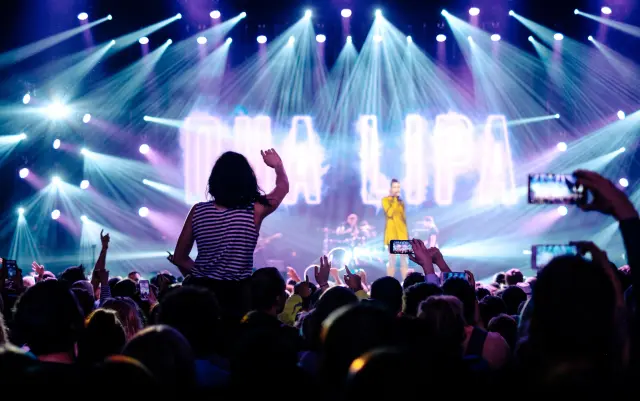
Most professional club projects use several lighting categories together rather than relying on a single fixture type.
- Moving head beam lights for sharp aerial effects and long throw output
- LED wash fixtures for general color coverage and spatial atmosphere
- Laser fixtures for strong nightlife impact and music-driven visual energy
- Strobe and matrix effects for rhythm accents and high-energy moments
- Background and booth fixtures for layering behind the DJ and dance floor
In many nightclub projects, buyers combine laser light, led wash moving head, and background matrix light products to create a more complete visual system.
How to Choose DJ Lighting Equipment Based on Club Project Type?
Different club projects require different fixture priorities.
Small Club Projects
Small clubs usually benefit from a compact but efficient fixture mix. Too many fixtures in a small room create visual clutter, excessive brightness, and limited beam movement. In these venues, the goal is to create energy without overwhelming the space.
- 4–6 moving head fixtures for motion and beam effects
- 4–8 wash fixtures for ambient coverage
- 1–2 laser fixtures for dynamic accents
- Optional LED bar or matrix fixture for booth background
Medium Club Projects
Medium-sized venues need more defined zones. The dance floor, DJ booth, VIP area, and background walls often require separate layers.
- 6–10 moving heads for beam layering
- 6–10 wash fixtures for color and fill
- 2–4 laser or effect fixtures for atmosphere
- Additional booth lighting or matrix backline
Large Nightclub Projects
Larger projects require a true layered system. A balanced combination of beam, wash, laser, effect, and architectural support lighting is often necessary.
- 10+ moving heads distributed by zone
- 10+ wash fixtures for spatial consistency
- Multiple laser and strobe units for dynamic peaks
- Defined booth, stage, and audience effect layers
| Project Type | Recommended Core Fixtures | Main Goal |
|---|---|---|
| Small Club | Beam + wash + compact effects | Energy in limited space |
| Medium Club | Beam + wash + laser + booth lighting | Balanced atmosphere and motion |
| Large Nightclub | Full layered system | Immersive professional nightlife effect |
How Should Buyers Evaluate Beam Lights, Wash Lights, and Laser Fixtures?
Each fixture type solves a different visual problem, so buyers should evaluate them by function rather than specification alone.
Beam Lights
Beam fixtures are usually the visual engine of nightclub systems. They create movement, aerial effects, and sharp long-distance lines. Buyers should check beam sharpness, movement speed, brightness consistency, and long-term thermal stability.
Wash Lights
Wash fixtures give the room color, body, and visual continuity. Without wash coverage, many clubs look visually empty between beam moments. Buyers should evaluate beam angle, color mixing consistency, dimming smoothness, and whether the fixture is suitable for ceiling height and room width.
Laser Fixtures
Laser fixtures can dramatically increase nightlife atmosphere, but they should not replace the full lighting system. Buyers should evaluate projection quality, safety design, control compatibility, and whether the room actually benefits from strong laser effects.
This balance is central to professional club lighting design. A system with only beam fixtures often feels aggressive but incomplete. A system with only wash lighting may feel soft but lacks movement and nightclub character.
What Equipment Configuration Works Best for Club Projects?
A strong nightclub system usually combines movement, atmosphere, and spatial coverage.
| Zone | Recommended Fixture Type | Purpose |
|---|---|---|
| Dance Floor | Moving heads + wash lights | Motion and immersive coverage |
| DJ Booth | Background matrix + LED bars | Visual identity and focus |
| Ceiling / Rear Layer | Beam lights + laser fixtures | Depth and aerial effects |
| Accent Areas | Strobe / effect lights | Energy peaks and rhythm accents |
In mixed-use venues or event-driven nightlife spaces, some buyers also build systems that can shift between nightlife scenes and more balanced wedding ballroom lighting style looks for private events.
Why Do Club Projects Make Equipment Selection Mistakes?
The most common mistake is choosing fixtures based on trend, price, or brightness only, instead of matching them to the venue and operating model.
- Too many similar fixtures with no functional layering
- Not enough wash coverage for the size of the venue
- Over-investing in effect fixtures and under-investing in core lighting
- Ignoring ceiling height and beam spread limitations
- Choosing fixtures that do not match the control system
In many real nightclub projects, the biggest weakness is not fixture quality but poor system composition. The room may have enough brightness, but the lighting still feels flat because it lacks layering and focus.
What Design Logic Helps Buyers Choose Better DJ Lighting Equipment?
Better equipment selection follows a design logic built around movement, depth, and audience perspective.
- Use beam fixtures to create direction and motion
- Use wash fixtures to connect the room visually
- Use laser and strobe selectively for dynamic emphasis
- Light the DJ booth as a focal point, not as an afterthought
- Keep different visual zones working together instead of competing
This is why experienced buyers often prioritize system composition over maximum fixture count. A well-balanced dj moving head light and wash combination often outperforms a larger but poorly planned system.
Real Project Example: Equipment Selection Adjustment in a Nightclub
In one medium nightclub project, the original buying plan focused almost entirely on beam fixtures. The result was strong motion in the air, but the dance floor and side areas felt visually disconnected. After revising the project to include more wash lighting and a background matrix layer behind the booth, the venue gained stronger color continuity, a more premium visual atmosphere, and better camera-friendly scenes for social content.
The upgrade did not require replacing every fixture. It required correcting the equipment mix.
What Should B2B Buyers Check Before Ordering DJ Lighting Equipment?
For B2B buyers, product specification sheets are not enough. Commercial value depends on how the system performs after installation.
- Batch consistency across fixture units
- Availability of spare parts and service support
- Compatibility with existing lighting console and DMX layout
- Long-term reliability in continuous nightlife operation
- Whether the supplier understands dj lighting packages and club applications
Buyers who treat nightclub projects as system projects instead of simple product purchases usually achieve better ROI and fewer maintenance issues.
Why Reliable Equipment Selection Matters for Commercial Clubs?
Reliable equipment selection reduces downtime, improves visual consistency, and makes it easier to maintain a premium nightlife experience over time. In a nightclub business, visual atmosphere directly affects customer perception, dwell time, and the venue’s ability to differentiate itself.
That is why choosing the right DJ lighting equipment is not just a technical task. It is also a commercial decision.
DJ Lighting Equipment Selection – FAQs
How do buyers choose DJ lighting equipment for club projects?
They should evaluate venue size, lighting goals, fixture layering, DMX compatibility, and long-term reliability rather than focusing only on brightness or visual trend.
What is the best fixture combination for a nightclub lighting project?
A balanced combination of moving head beam lights, wash fixtures, laser effects, and booth background lighting usually delivers the best nightclub result.
What is the biggest mistake when choosing DJ lighting equipment?
The biggest mistake is buying too many similar fixtures without building a layered system that includes movement, wash coverage, and visual focus zones.
How can distributors and contractors reduce risk in club lighting equipment orders?
They should verify fixture compatibility, batch consistency, spare parts availability, and whether the system composition matches the actual venue layout and operating style.
In conclusion, choosing DJ lighting equipment for club projects requires more than selecting attractive fixtures. It requires a structured system approach based on venue needs, layered visual design, control compatibility, and commercial reliability.
For fixture classification and functional comparison, refer to types.


Leave a Reply