
Affordable Church Stage Lighting Solutions for Budget Projects
Many churches believe professional stage lighting requires massive budgets, complicated equipment, and large technical teams. In reality, the biggest difference between a successful church lighting project and a failed one is not money — it is planning.
Countless churches overspend on unnecessary fixtures while still struggling with dark stages, poor live streaming quality, and difficult volunteer operation. Meanwhile, well-designed budget systems often achieve better worship production results because they focus on the right priorities.
If you are planning an affordable church stage lighting project, this guide explains how to build cost-effective lighting systems that still look professional, support live streaming, and remain scalable for future growth.
What “Affordable Church Lighting” Actually Means
Affordable lighting does not mean buying the cheapest fixtures available.
A professional budget lighting system should still deliver:
- Clear visibility for worship leaders
- Balanced stage coverage
- Reliable weekly operation
- Basic live streaming compatibility
- Simple volunteer operation
Common mistake: spending too much on atmosphere fixtures while ignoring front visibility lighting.
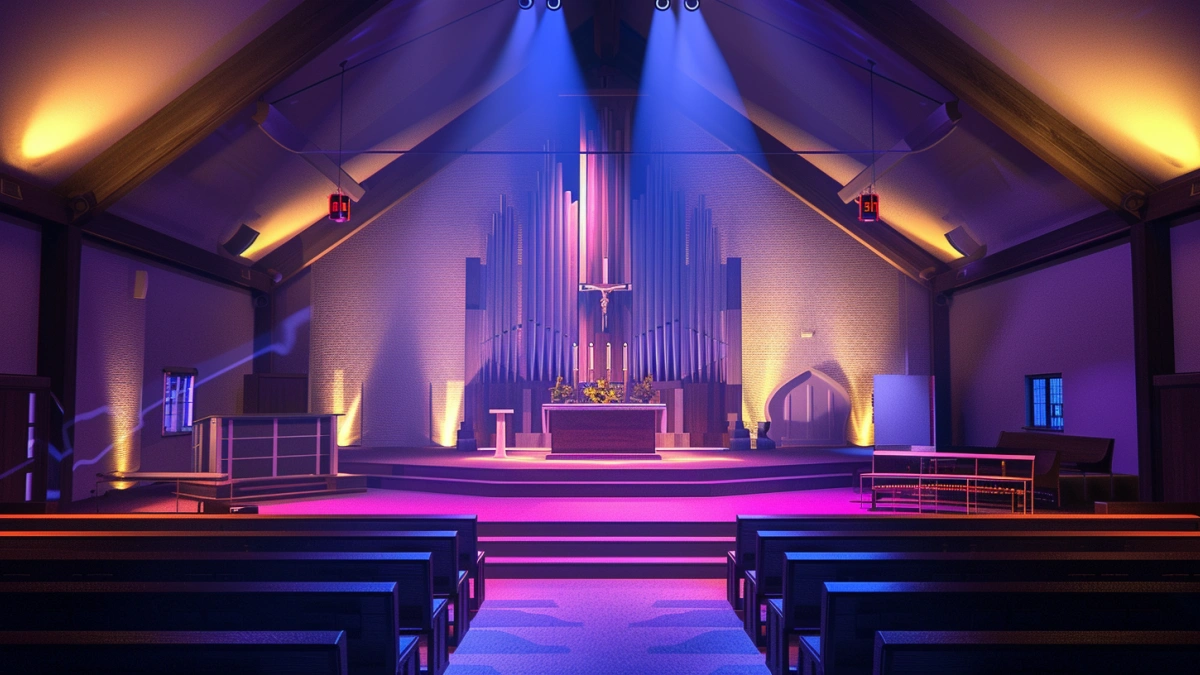
The Smart Budget Strategy Used by Professional Churches
Professional churches usually prioritize lighting investments in phases instead of trying to build everything at once.
Best budget structure:
- Front visibility lighting
- Wash coverage lighting
- Background depth lighting
- Atmosphere and effects
- Advanced programming and upgrades
This prevents wasted budget and creates a scalable system.
The 4 Essential Lighting Layers for Budget Church Projects
1. Front Lighting (Highest Priority)
Front lighting is the most important investment in any affordable church setup.
Purpose:
- Illuminate speakers clearly
- Improve camera exposure
- Reduce harsh shadows
Professional recommendation:
- Use soft beam LED fixtures
- Install at 30°–45° angles
- Balance left/right intensity evenly
Most common mistake: relying only on overhead lighting.
Result: dark eyes, harsh shadows, and poor streaming visuals.
2. Wash Lighting (Stage Coverage Layer)
Wash lighting creates smooth stage coverage and balanced brightness.
Fixtures such as wash moving head are ideal because they combine:
- Wide beam spread
- Color flexibility
- Efficient power consumption
Budget tip: fewer high-quality wash fixtures often perform better than many low-quality lights.
3. Background Lighting (Depth Layer)
Many churches ignore background lighting because of budget concerns, but this is one of the cheapest ways to dramatically improve stage appearance.
Affordable solutions:
- LED wall wash fixtures
- Simple LED bars
- Soft static color backgrounds
Background lighting improves:
- Visual depth
- Streaming appearance
- Overall worship atmosphere
4. Atmosphere Lighting (Optional Upgrade Layer)
Atmosphere fixtures should be the final stage of budget expansion.
Fixtures such as concert moving head light can create modern worship visuals, but they should not replace core visibility lighting.
Professional advice: build stable basics first before investing in effects.
Affordable Lighting Solutions by Church Size
Small Church Budget Setup
- 4 wash fixtures
- 2 front lights
- Basic DMX controller
Budget range: low-cost entry system
Best for: small worship spaces and volunteer operation
Medium Church Budget Setup
- 6–8 wash fixtures
- 4 front fixtures
- Simple background lighting
Budget range: balanced scalable system
Best for: modern worship and streaming environments
Large Church Budget Strategy
Large churches should expand in phases instead of attempting full-scale installation immediately.
Recommended approach:
- Build visibility and wash coverage first
- Add background layers second
- Expand atmosphere lighting later
This strategy reduces long-term replacement costs.
How to Reduce Costs Without Sacrificing Quality
1. Prioritize Fixture Quality Over Quantity
Cheap fixtures often create:
- Flickering on camera
- Weak dimming quality
- Short lifespan
Fewer reliable fixtures usually outperform larger low-quality systems.
2. Use Simple DMX Infrastructure
Complex control systems increase both cost and operational difficulty.
Budget-friendly approach:
- Use simplified preset systems
- Build expandable DMX layouts
- Avoid unnecessary complexity
3. Focus on Streaming-Friendly Lighting
Churches increasingly rely on live streaming, so lighting systems must work on camera.
Budget-friendly streaming priorities:
- Soft front lighting
- Balanced stage exposure
- Basic background depth lighting
These improvements often matter more than advanced effects.
The Biggest Budget Lighting Mistakes Churches Make
1. Buying Too Many Effect Fixtures
Result: impressive movement but poor worship visibility
Fix: prioritize front and wash lighting first
2. Ignoring Long-Term Scalability
Result: systems that require complete replacement later
Fix: choose expandable control and DMX systems
3. Choosing Equipment Only by Price
Result: poor reliability and inconsistent lighting
Fix: focus on performance and long-term value
4. Overcomplicated Systems for Volunteers
Result: inconsistent operation every week
Fix: simplify workflows and use preset scenes
How Professional Churches Build Budget-Friendly Systems That Grow Over Time
Successful churches treat lighting as a scalable infrastructure project.
Professional strategy:
- Build a reliable core system first
- Expand gradually over time
- Keep DMX and power systems upgrade-friendly
- Choose fixtures that integrate well together
This prevents unnecessary future rebuilding.
Why Affordable Lighting Still Needs Proper Design
Even low-budget systems can look professional when designed correctly.
Good design improves:
- Visual balance
- Streaming quality
- Worship atmosphere
- Volunteer workflow efficiency
Planning matters more than expensive equipment.
👉 Build an Affordable Church Lighting System That Actually Works
The best affordable lighting systems are not the cheapest — they are the systems that create reliable worship production while remaining scalable for future growth.
Focus on:
- Front visibility first
- Balanced wash coverage
- Simple streaming-friendly setups
- Expandable control systems
- Long-term scalability
If your church needs help planning cost-efficient upgrades and scalable workflows, this guide explains the next step in detail: budget planning .
FAQs
What is the most important budget lighting investment?
Front visibility lighting and wash coverage.
Can churches build good lighting systems on a small budget?
Yes, with proper planning and scalable design.
Should churches buy moving head fixtures first?
No, visibility and wash lighting should come first.
How can churches improve streaming quality affordably?
By using balanced front lighting and simple background depth lighting.
What is the biggest budget mistake?
Buying too many effects before building a stable lighting foundation.
How do churches avoid rebuilding systems later?
By using scalable DMX and control infrastructure from the beginning.