
How to Plan Church Stage Lighting on a Budget Without Compromise
Planning church stage lighting on a budget is one of the biggest challenges many worship spaces face today. Churches want professional-looking worship environments and high-quality live streaming, but often work with limited budgets, volunteer teams, and existing infrastructure that was never designed for modern production.
The good news is that professional church lighting is not about buying the most expensive equipment. The real difference between a successful lighting project and a failed one is proper planning.
Many churches waste budget on effect fixtures, random upgrades, or systems that cannot scale in the future. Meanwhile, churches with smart planning often achieve better worship production results with smaller budgets because they focus on structure instead of impulse purchasing.
If you are planning a church stage lighting systems upgrade, this guide explains how to build a scalable and professional lighting plan without unnecessary spending.
Why Most Church Lighting Budgets Fail
Most budget problems are not caused by limited money — they are caused by poor priorities.
Common church lighting mistakes:
- Buying effect lights before solving visibility
- Ignoring live streaming requirements
- Using non-scalable systems
- Building overly complex setups for volunteers
- Replacing equipment repeatedly instead of planning long-term
Professional churches take a different approach:
- Build core lighting first
- Expand systems gradually
- Prioritize long-term scalability
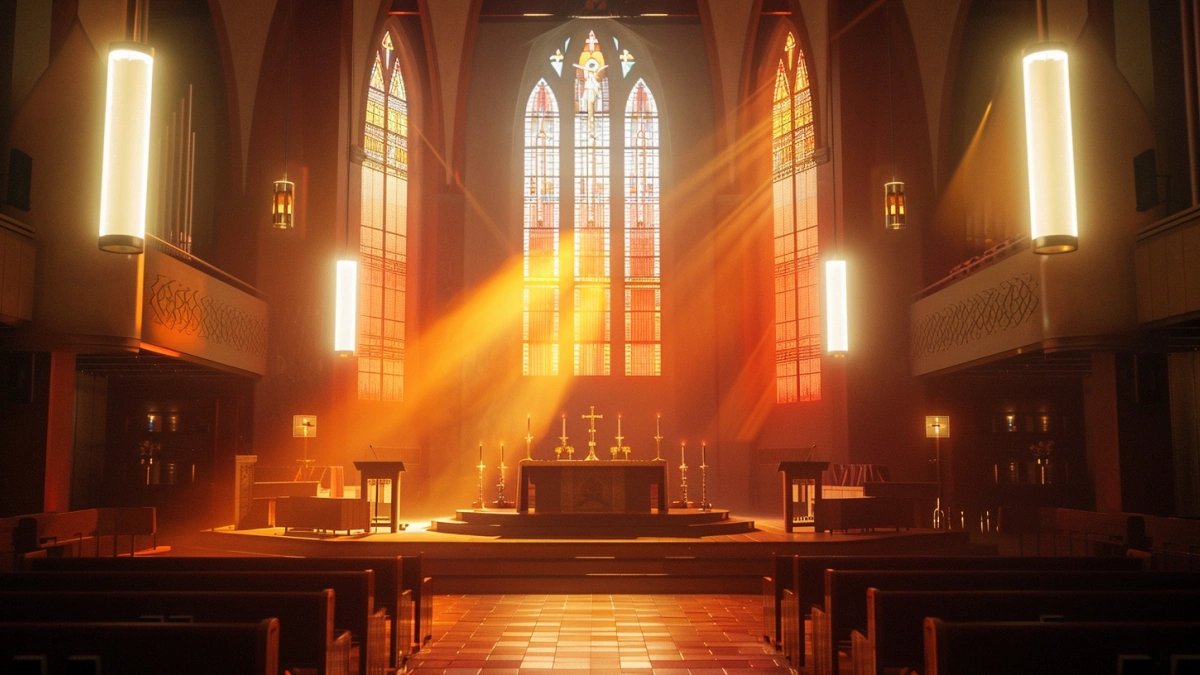
The 5-Step Budget Planning Strategy Used in Professional Churches
Step 1: Define Your Real Worship Needs
Before buying any lighting equipment, churches should evaluate:
- Stage size
- Worship style
- Streaming requirements
- Volunteer operation level
- Future expansion plans
Common mistake: copying lighting setups from large churches with completely different needs.
Better approach: design specifically for your own worship environment.
Step 2: Prioritize Visibility Before Effects
The biggest mistake in budget planning is spending too much on visual effects before building proper visibility lighting.
Priority order:
- Front visibility lighting
- Wash coverage
- Background depth lighting
- Atmosphere and movement effects
This structure creates the biggest visual improvement with the lowest budget waste.
Step 3: Build a Scalable Infrastructure
Professional churches do not plan only for today — they plan for future expansion.
Scalable planning includes:
- Expandable DMX systems
- Flexible power distribution
- Additional fixture capacity
- Upgrade-friendly control systems
Without scalability, churches often end up rebuilding entire systems later.
Step 4: Focus on Lighting Layers Instead of Fixture Quantity
Good lighting comes from balanced layers, not from adding random fixtures.
The four essential lighting layers are:
- Front key lighting
- Wash coverage lighting
- Background depth lighting
- Atmosphere lighting
Even small systems can look professional when these layers are balanced correctly.
Step 5: Simplify Operation for Volunteers
Many churches overlook operational simplicity during planning.
Common problem: complex systems that volunteers struggle to operate consistently.
Professional solution:
- Preset-based workflows
- Simple scene programming
- Clear control layouts
The easier the system is to operate, the more reliable it becomes weekly.
Budget Planning Recommendations by Church Size
Small Church Budget Plan
- 4 wash fixtures
- 2 front visibility fixtures
- Simple controller
- Basic background lighting
Focus: affordable and clean worship visuals
Medium Church Budget Plan
- 6–10 wash fixtures
- 4–6 front fixtures
- Layered background lighting
- Expandable DMX control system
Focus: streaming-friendly worship production
Large Church Budget Strategy
Large churches should avoid attempting complete production systems immediately.
Best approach:
- Build visibility infrastructure first
- Expand background and atmosphere layers gradually
- Scale control systems over time
This prevents large-scale replacement costs later.
How to Save Budget Without Sacrificing Worship Quality
1. Invest in Reliable Core Fixtures
Fixtures such as wash moving head are more valuable long-term than large numbers of low-cost fixtures.
Why?
- Better dimming quality
- More consistent color output
- Longer lifespan
- Improved streaming performance
2. Avoid Overbuying Atmosphere Fixtures
Fixtures such as concert moving head light should support worship production, not replace visibility lighting.
Common mistake: churches buying impressive movement effects while speakers remain poorly lit.
3. Use Lighting Design to Improve Visual Impact
Good design often matters more than expensive equipment.
Low-cost improvements:
- Background color gradients
- Balanced front lighting angles
- Layered stage depth lighting
These changes can dramatically improve visual quality without major spending.
How Budget Planning Affects Live Streaming Quality
Streaming is now one of the biggest reasons churches upgrade lighting systems.
Professional streaming priorities:
- Soft front key lighting
- Balanced background exposure
- Flicker-free fixtures
- Consistent color temperature
Many churches waste budget on effects while ignoring the lighting layers that actually improve streaming quality.
The Biggest Long-Term Budget Mistakes Churches Make
1. Building Non-Scalable Systems
Result: complete replacement costs later
Fix: use expandable DMX and power infrastructure
2. Ignoring Volunteer Workflow
Result: inconsistent operation every week
Fix: simplify programming and controls
3. Purchasing Random Fixtures Over Time
Result: inconsistent system performance
Fix: follow a structured upgrade roadmap
4. Prioritizing Appearance Over Functionality
Result: visually impressive systems with poor worship usability
Fix: design for worship first, effects second
How Professional Churches Build Budget-Friendly Systems That Grow
Professional worship environments usually evolve in stages.
Recommended growth strategy:
- Build core visibility lighting
- Add wash and depth layers
- Improve streaming quality
- Expand atmosphere lighting
- Upgrade control systems gradually
This creates sustainable long-term growth without overwhelming budgets.
Why Smart Planning Matters More Than Expensive Equipment
Some churches achieve excellent worship production with relatively small budgets because they focus on planning and balance instead of chasing trends.
Good planning improves:
- Worship atmosphere
- Streaming quality
- Volunteer workflow
- Long-term system reliability
Professional results come from structure, not from randomly adding more fixtures.
👉 Build a Church Lighting Plan That Supports Worship for Years
The best budget lighting plan is not the cheapest one — it is the one that creates stable worship production while remaining flexible for future expansion.
Focus on:
- Visibility before effects
- Balanced lighting layers
- Streaming-friendly design
- Volunteer-friendly operation
- Scalable infrastructure
Churches that plan strategically almost always spend less long-term while achieving better worship production quality.
If you are evaluating complete equipment structures before purchasing, this guide explains the full professional hardware system in detail: affordable lighting solutions .
FAQs
How can churches build lighting systems on a budget?
By prioritizing visibility, wash coverage, and scalable infrastructure first.
What is the biggest church lighting budget mistake?
Buying atmosphere fixtures before building proper visibility lighting.
Should churches plan for future expansion?
Yes, scalable systems reduce long-term replacement costs.
How do churches improve streaming affordably?
By focusing on soft front lighting and balanced stage exposure.
Why is volunteer-friendly operation important?
Simple systems create more consistent weekly worship production.
What matters more: equipment or planning?
Planning and balanced system design matter more long-term.