
Lighting Console Buying Guide for Event and Stage Applications
Buying a lighting console is one of the most critical decisions in any stage or event lighting project. The console determines how efficiently lighting systems operate, how flexible the design can be, and how easily the system can scale for future expansion.
For professional buyers, selecting the right lighting control console is not just about choosing a device. It is about building a control system that matches project size, fixture requirements, and long-term business goals.
Key Factors When Buying a Lighting Console
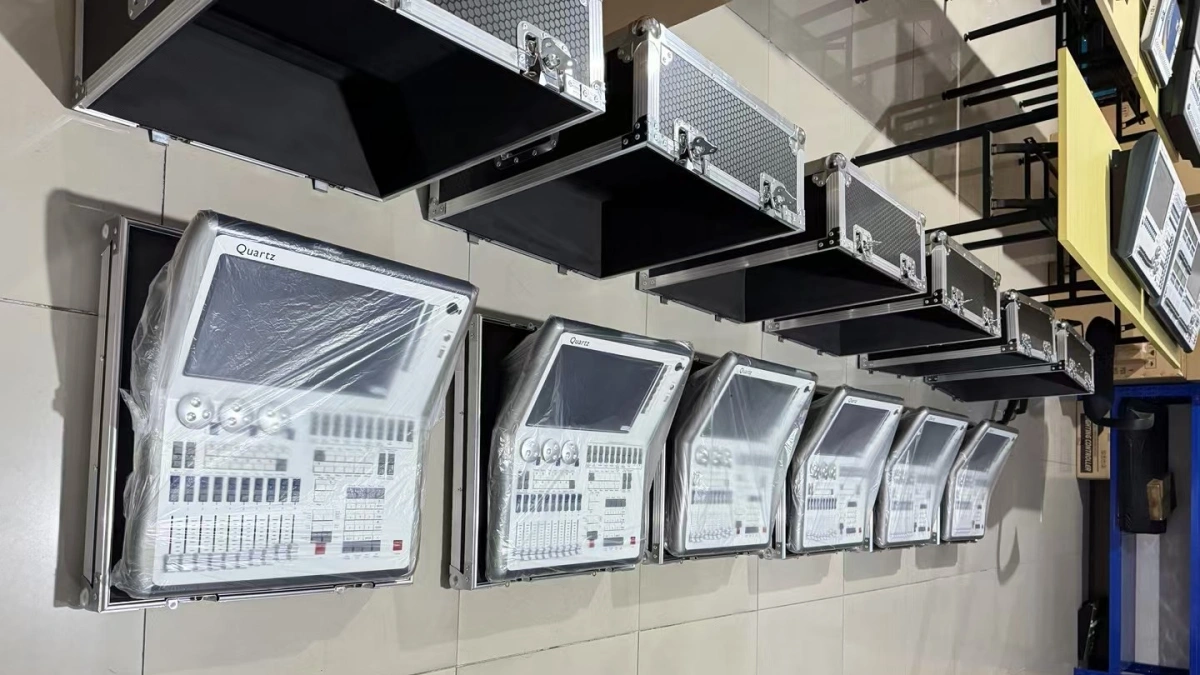
Several factors determine the right console choice. The most important is DMX capacity, which defines how many fixtures the console can control. Each fixture consumes DMX channels, and the total determines how many universes are required.
System compatibility is another key factor. The console must integrate with fixtures such as concert moving head light units and wash moving head systems.
Ease of operation is also critical. A user-friendly interface reduces training time and improves efficiency during live events.
Budget vs Performance: How to Choose the Right Level
Lighting consoles are available at different price levels, each suited to specific applications. Understanding budget versus performance helps buyers make better decisions.
Entry-level systems: Suitable for small events with 1–2 universes. These systems are cost-effective but limited in scalability.
Mid-range systems: Designed for medium productions with 4–8 universes. They offer better flexibility and basic effects capabilities.
High-end systems: Used in concerts and touring productions, supporting 10–20+ universes with advanced programming features and network integration.
Choosing the right level depends on project requirements and expected future growth.
Matching Console with Lighting System Requirements
A lighting console must match the overall system configuration. For example, a system using 80 fixtures requires significantly more capacity than one with 30 fixtures.
Fixtures such as concert strobe light systems and concert laser light setups require precise timing and integration.
Buyers should ensure that the console supports all required fixture types and control features.
Example Buying Scenarios for Different Projects
Small event setup: 20–40 fixtures, 1–2 universes, portable console.
Medium stage production: 60–100 fixtures, 4–8 universes, mid-range console.
Large concert production: 150–300 fixtures, 10–20 universes, high-end console with backup system.
These scenarios provide a practical reference for selecting the right console.
Return on Investment (ROI) Considerations
For professional buyers, ROI is a key factor in purchasing decisions. A higher-end console may have a higher initial cost but can deliver better performance, reduce setup time, and support larger projects.
Investing in scalable systems allows businesses to take on more complex projects, increasing revenue potential over time.
In contrast, choosing a low-cost system with limited capacity may result in additional costs later when upgrades are required.
Common Buying Mistakes to Avoid
One common mistake is focusing only on price. This often leads to selecting consoles that cannot meet future requirements.
Another issue is ignoring system compatibility. A console that does not integrate well with existing equipment can create operational challenges.
Over-specifying is also a problem, where buyers choose systems that are too complex for their needs, increasing costs unnecessarily.
What Professional Buyers Should Focus On
Professional buyers should focus on scalability, compatibility, and long-term value. The console should support current projects while allowing for future expansion.
Ease of use and reliability are also critical factors. Systems that are easy to operate reduce training time and improve performance.
Finally, buyers should consider supplier support, as this can impact system performance and maintenance.
FAQs
How do I choose the right lighting console?
Based on fixture count, DMX universes, and project size.
What budget should I allocate?
Small: entry-level, Medium: mid-range, Large: high-end systems.
Is a high-end console worth it?
Yes, for large productions and long-term scalability.
What is the biggest buying mistake?
Choosing a console with insufficient capacity.
For system selection strategy, see choose lighting console.