
Concert Moving Head Lights for Large Scale Stage Events
Concert moving head lights are one of the most important fixture categories in large scale stage events because they combine movement, brightness, precision, and flexibility in a way that static fixtures cannot. In arena concerts, outdoor festivals, touring music events, and large indoor productions, moving head fixtures are often the main tools used to create aerial effects, rhythm-driven sweeps, stage transitions, and visual energy across long throw distances.
For professional buyers such as concert contractors, touring production teams, venue operators, and stage lighting planners, selecting concert moving head lights is not just about choosing a fixture with strong output. The decision affects rigging strategy, cue design, stage zoning, transport efficiency, maintenance cost, and visual consistency across the whole show. In many real projects, poor moving head selection leads to weak beam definition, slow response, unreliable operation, or visual imbalance between movement and stage coverage.
This guide explains how concert moving head lights are used in large scale stage events, how to compare the main fixture types, what system logic creates stronger results, and what professional buyers should verify before specifying moving head fixtures for large productions.
Why Moving Head Lights Matter in Large Stage Productions
Moving head lights matter because they create the motion language of the show.
In large concert environments, audiences expect lighting to react to music, support drops, follow transitions, and extend visual energy beyond the stage itself. Moving head fixtures make that possible by combining pan and tilt motion with beam shaping, color changes, dimming, gobo effects, and zoom behavior. When these fixtures are used correctly, they give the stage direction, rhythm, and scale.
- they create long-distance beam movement for large audience spaces
- they add vertical and horizontal visual motion across stage zones
- they support dramatic transitions between songs or musical sections
- they help define the visual identity of a large live production
This is why most large productions are built around a wider concert moving head light strategy instead of treating moving heads as optional upgrades.
What Types of Concert Moving Head Lights Are Used Most Often?
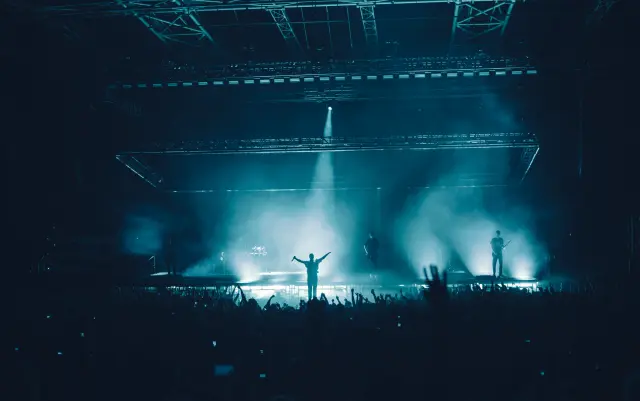
Concert moving head fixtures are usually divided into three main types, and each serves a different role in stage design.
- beam moving heads for sharp aerial effects and long throw visibility
- wash moving heads for wide coverage and color atmosphere
- profile moving heads for precision focus, pattern projection, and controlled framing
In many large stage systems, the visual foundation starts with beam moving head fixtures, which are then balanced by led wash moving head units and more targeted profile layers.
How Do Beam, Wash, and Profile Moving Heads Work Together?
They work together by dividing the visual workload of the stage instead of forcing one fixture type to solve every problem.
Beam fixtures create the strongest large-scale aerial effects and audience sweeps. Wash moving heads provide room color, stage mood, and performer environment. Profile moving heads define precision, sharp edging, and visual framing. In a strong system, these layers complement each other. In a weak system, one layer dominates while the others are missing, which creates imbalance.
| Fixture Type | Main Strength | Most Useful Application |
|---|---|---|
| Beam Moving Head | long throw and sharp aerial energy | drops, sweeps, large crowd effects |
| Wash Moving Head | coverage and color atmosphere | stage depth and visual continuity |
| Profile Moving Head | precision and sharp focus | performer isolation and scenic detail |
When the system also needs more impact during musical peaks, selective support from strobe light fixtures can add rhythm emphasis without replacing the moving head structure.
What Makes a Moving Head Fixture Suitable for Large Stage Events?
A fixture suitable for large stage events must do more than move quickly. It must perform reliably over long distances and long show durations.
- strong output that holds up across large venues
- consistent beam definition even at extended throw distances
- fast and accurate pan/tilt movement
- stable color and dimming behavior under show conditions
- reliable thermal management for long operation hours
For touring and arena-scale projects, durability and repeatability matter as much as raw visual intensity.
How Should Moving Head Lights Be Positioned on Large Stages?
Moving head positioning should follow stage zoning and beam geometry, not only visual symmetry.
Large-scale stage events usually benefit from a layered rig that includes front truss, mid truss, rear truss, side ladders, and sometimes floor packages. Each position creates a different kind of motion language. Front positions are better for key focus and controlled sweeps. Mid and rear positions create depth and crossing beam structure. Floor positions add dramatic low-angle energy.
- front positions support visible performer framing
- mid truss positions create central movement architecture
- rear positions create silhouette and stage depth
- side ladders expand the stage horizontally
- floor packages support impact scenes and dramatic tension
A strong position plan allows moving heads to work with the stage instead of fighting the stage geometry.
How Many Moving Head Lights Are Usually Needed?
The correct number depends on stage scale, venue depth, and the complexity of the performance design.
Small theater-scale concerts may use a limited number of beam and wash moving heads effectively if the stage design is compact. Medium touring productions usually require more layered movement structure. Arena-scale events often need multiple rows of movement fixtures across different truss lines to preserve visual scale from all audience angles.
| Production Scale | Typical Moving Head Strategy | Main Goal |
|---|---|---|
| Theater / Medium Hall | compact beam + wash combination | clarity and controlled depth |
| Touring Stage | layered beam + wash + profile setup | flexibility and repeatability |
| Arena / Festival Stage | multi-line moving head architecture | maximum visual scale and audience coverage |
What Are the Most Common Mistakes with Concert Moving Head Lights?
Most mistakes happen when buyers focus on power or quantity without enough attention to system balance.
- too many beam fixtures and not enough wash support
- choosing moving heads that are too weak for the throw distance
- using profile units where beam impact is required, or the reverse
- poor rigging layout that limits pan/tilt effectiveness
- ignoring fixture weight and maintenance practicality in touring systems
One common failure is building a rig that looks aggressive in previsualization but feels visually narrow when seen from real audience angles in a large venue.
Real Project Example: Fixing a Large Stage Moving Head Design
In one large outdoor stage project, the original design used a large number of beam fixtures but very limited wash support. The aerial looks were strong during drops, but the stage felt visually thin between high-energy moments. The production team revised the system by adding more wash moving heads across the rear and side positions while keeping the beam architecture largely intact. The result was a fuller stage image, better continuity between songs, and stronger camera visuals without rebuilding the whole rig.
What Should Professional Buyers Verify Before Ordering?
Before ordering concert moving head lights, professional buyers should verify:
- whether output and throw match the venue scale
- whether the fixture type matches its intended role
- whether the rigging plan supports effective movement angles
- whether the fixtures are practical for touring or repeated operation
- whether control and maintenance workflows remain manageable
Concert Moving Head Lights – FAQs
What are concert moving head lights used for in large stage events?
They are used to create aerial movement, directional sweeps, musical transitions, and large-scale visual energy across the stage and audience space.
Which moving head type is most important for concert stages?
Beam moving heads are often the most visually dominant, but wash and profile moving heads are also essential for creating balance, coverage, and precision.
What is the biggest mistake when choosing moving head lights for concerts?
The biggest mistake is overinvesting in one moving head type, usually beams, without enough support from wash or profile layers.
What should professional buyers check before specifying moving head fixtures?
They should check throw distance performance, rigging suitability, fixture role, long-term reliability, and how the fixtures fit into the full concert lighting system.
In conclusion, concert moving head lights for large scale stage events should be selected as part of a layered system, not as isolated power tools. The best results come from matching fixture type, stage role, throw requirements, and visual balance across the whole production.
For touring fixture selection and project-level comparison, refer to touring stage lights.
How to Choose Concert Stage Lights for Touring Projects
Word Count: 1708 words
Choosing concert stage lights for touring projects requires a very different decision process from choosing fixtures for fixed venue installations. Touring systems must perform consistently across changing venues, survive transport stress, fit into strict loading schedules, and still deliver a strong visual show every night. A touring lighting rig that looks powerful on paper can quickly become inefficient if it is too heavy, too inconsistent in fixture types, or too difficult to service on the road.
For professional buyers such as touring production managers, rental companies, stage contractors, and event lighting planners, the goal is not only to buy strong fixtures. The goal is to choose concert stage lights that balance performance, portability, standardization, and programming efficiency. Touring success depends on how well the system can adapt to different truss heights, stage widths, truck space limits, and show formats without losing visual quality.
This guide explains how to choose concert stage lights for touring projects, including how to evaluate fixture categories, how to balance power with transport practicality, and what professional buyers should verify before committing to a touring lighting package.
What Makes Touring Lighting Different from Fixed Concert Lighting?
Touring lighting must be strong enough for professional concerts while remaining practical enough to move from venue to venue.
In a fixed installation, fixtures can be optimized for one room and remain in position for long periods. Touring rigs do not have that luxury. The system must be packed, loaded, unloaded, hung, focused, programmed, and maintained repeatedly. That means touring fixtures must be chosen not only for output but also for size, weight, reliability, and compatibility.
- fixtures must be transport-friendly
- rigs must scale across different stage sizes
- fixture families should be standardized where possible
- control logic should remain repeatable across venues
This is why production teams often begin with a full concert stage lighting concept before deciding on the exact touring fixture mix.
What Fixture Types Usually Work Best for Touring Projects?
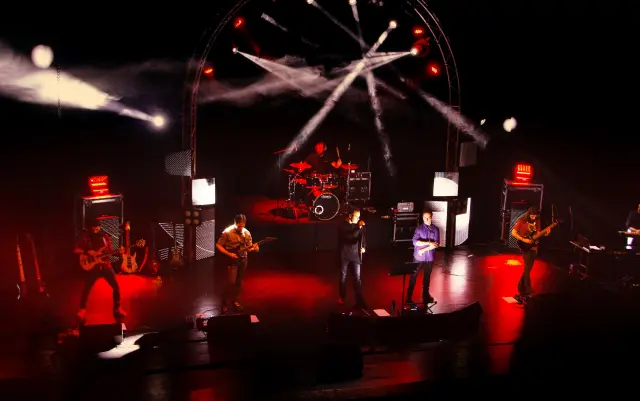
Most touring systems use a balanced mix of fixture categories rather than relying on one type alone.
- beam moving heads for aerial motion and large-scale energy
- wash moving heads for scenic coverage and room continuity
- profile fixtures for key performer visibility and precision
- effect fixtures for accent moments and transitions
Many touring productions rely on moving head lights as the core movement layer, while using led wash moving head fixtures to stabilize the visual environment across different venues.
How Should Professional Buyers Balance Output and Portability?
The best touring fixtures are not always the biggest or most powerful. They are the ones that deliver the right performance for the show while remaining practical to move, install, and maintain.
Professional buyers should compare:
- output versus fixture size and weight
- beam strength versus real venue throw requirements
- road-case efficiency and truck loading practicality
- cooling reliability under repeated operation
- serviceability on tour
In many touring projects, a slightly smaller but more efficient fixture becomes more valuable than a heavier fixture that complicates transport and rigging.
| Selection Factor | Why It Matters on Tour | Typical Risk if Ignored |
|---|---|---|
| Weight | affects trucking and rigging speed | slower load-ins |
| Output | must match venue scale | weak show visuals |
| Standardization | simplifies programming and spares | maintenance complexity |
| Durability | supports repeated transport | higher failure rates |
Why Is Fixture Standardization Important in Touring Projects?
Standardization is one of the most valuable strategies in touring production because it reduces programming complexity and service risk.
When a system uses too many different fixture families, programming becomes slower, patching becomes more fragile, and carrying spare parts becomes more expensive. Standardized fixture groups make cue building faster and simplify crew workflows.
- faster DMX patching and troubleshooting
- easier preprogramming and show file reuse
- simpler spare fixture and spare parts management
- more predictable output consistency across the rig
This is one reason larger tours usually repeat the same fixture families across truss sections whenever possible.
How Should Touring Projects Choose Between Beam, Wash, and Profile Lights?
Each touring fixture type should be selected by function, not by trend.
Beam fixtures are valuable for dynamic movement and high-impact arena visuals. Wash fixtures support stage continuity and prevent the show from feeling visually empty between peak effects. Profile fixtures become especially important when the performance requires stronger performer visibility, scenic detailing, or camera-sensitive precision.
- beam fixtures support large movement scenes
- wash fixtures support atmosphere and scenic balance
- profile fixtures support key performer focus
- effect fixtures should enhance rather than dominate the rig
Many tours also use selective support from strobe light systems or other accent fixtures, but these should not replace the core beam-wash-profile structure.
How Important Is Rigging Strategy When Choosing Fixtures?
Rigging strategy matters because the right fixture can still perform badly if it does not fit the touring truss logic.
Fixtures should be chosen with real rig positions in mind. A fixture that is ideal for rear-truss beam sweeps may not be ideal for front performer coverage. Fixture size, yoke movement clearance, road-case dimensions, and truss loading all influence whether a touring rig remains efficient in practice.
- match fixture dimensions to truss density
- leave enough movement clearance between units
- avoid overloading front truss with heavy fixtures
- consider floor package options for flexible scaling
Good touring rig design helps the same fixture family perform consistently across different venues.
What Are the Most Common Mistakes When Choosing Touring Lights?
The most common mistakes usually come from choosing fixtures for visual ambition without enough attention to touring practicality.
- choosing fixtures that are too heavy for efficient road use
- mixing too many incompatible fixture families
- underestimating venue variation across the tour
- ignoring maintenance and spare support needs
- building a rig that cannot scale down cleanly for smaller venues
One common touring problem is a rig that looks excellent in one large venue but becomes inefficient or visually imbalanced in medium-size stops.
Real Project Example: Improving a Touring Fixture Package
In one touring music production, the initial fixture package included too many heavy beam units and several different fixture families. The show looked strong in larger venues, but the setup time was slow and troubleshooting became increasingly difficult. After reducing fixture variety and rebuilding the system around a more standardized beam, wash, and profile structure, the tour became more efficient. The production lost very little visual impact but gained faster load-ins, cleaner programming, and easier maintenance.
What Should Professional Buyers Verify Before Approval?
Before approving concert stage lights for touring projects, professional buyers should verify:
- whether the fixture package matches the size range of the tour
- whether the system is standardized enough for efficient programming
- whether weight and transport factors are realistic
- whether the support plan for spares and service is strong enough
- whether the rig can scale up and down without major redesign
Touring Stage Lights – FAQs
What are the best concert stage lights for touring projects?
The best touring lights are the fixtures that balance output, portability, standardization, and reliability while fitting the real scale of the venues on the tour.
Why is fixture standardization so important on tour?
It improves programming efficiency, simplifies spare part management, reduces maintenance complexity, and makes the system easier to rebuild across different venues.
What is the biggest mistake when choosing touring concert lights?
The biggest mistake is choosing fixtures only for maximum visual power without considering transport, rigging practicality, and scalability across the tour.
What should professional buyers check before purchasing a touring fixture package?
They should check venue fit, weight, standardization, service support, and whether the system can deliver consistent show quality across different touring conditions.
In conclusion, choosing concert stage lights for touring projects requires balancing visual strength with touring efficiency. The best touring systems are built around standardized, scalable fixture packages that perform reliably in real venues, not only in ideal conditions.
For large-scale movement architecture and fixture role planning, refer to moving head lights.
Concert Laser Lighting Systems for Live Stage Productions
Word Count: 1725 words
Concert laser lighting systems for live stage productions have become one of the most effective tools for creating dramatic visual scale, sharp atmospheric geometry, and memorable high-impact moments in modern concert design. In large stage productions, lasers can add a visual layer that traditional beam, wash, and profile fixtures cannot fully replicate. They cut across space with high precision, create volumetric effects when haze conditions are correct, and add a distinctly modern show language that audiences immediately associate with premium concert experiences.
For professional buyers such as live production companies, stage designers, touring planners, and event contractors, selecting a concert laser lighting system is not only about choosing a bright projector. It requires evaluating control compatibility, beam behavior, safety logic, venue suitability, and how the laser layer will integrate with the rest of the lighting system. When lasers are used strategically, they strengthen the whole stage show. When they are used carelessly, they can feel repetitive, visually disconnected, or operationally risky.
This guide explains how concert laser lighting systems are used in live stage productions, what components are required, how to design strong laser scenes, and what professional buyers should review before building laser-based concert effects into a large production.
What Makes Concert Laser Lighting Systems Different from Standard Fixtures?
Concert laser systems are different because they create highly defined lines, patterns, and volumetric effects with much sharper visual geometry than conventional lighting fixtures.
Traditional moving heads can create strong aerial effects, but laser systems can draw visual structures through the air in a more graphic and immediate way. This makes them especially effective for high-energy sequences, show intros, large drops, and modern electronic or hybrid concert environments. They can also extend the visual field beyond the stage itself and create a stronger link between performer space and audience space.
- laser systems produce extremely sharp visual lines
- they create strong atmospheric geometry in haze-supported conditions
- they can fill large spaces without requiring massive fixture counts
- they are especially effective during musical peaks and transitions
Because of these qualities, many productions include lasers as a major layer inside a larger concert laser light show strategy.
What Are the Core Components of a Concert Laser Lighting System?
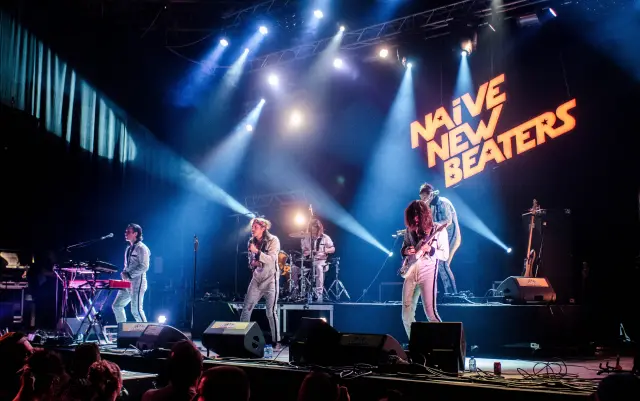
A professional laser system is more than a projector. It includes the hardware, control structure, and safety architecture needed to make the laser layer usable in real production conditions.
- laser projectors for beam and pattern generation
- control interface for cue timing and synchronization
- mounting structure for precise aiming and stable positioning
- safety logic including proper scanning behavior and operational control
- atmospheric support such as haze to reveal the visual structure clearly
Laser systems are often not used alone. They are usually integrated with beam moving head, strobe light, and broader concert movement layers so the stage remains visually complete between laser moments.
How Are Laser Systems Used in Live Stage Productions?
Laser systems are typically used to create high-focus moments rather than constant all-show output.
In professional productions, lasers often appear in show intros, breakdown transitions, dramatic build sections, electronic peaks, or finale moments. They can also be used to support scenic geometry behind the performers or to expand the audience’s sense of the stage width and depth.
- intro sequences with strong atmosphere and anticipation
- drop moments where the room needs instant visual expansion
- bridge sections where spatial geometry adds tension
- finale scenes where full-stage energy is required
When combined correctly, lasers give the stage a modern concert identity without replacing the need for movement and wash structure.
How Should Laser Effects Be Integrated with the Full Concert Lighting System?
Laser effects should be integrated as part of a larger visual hierarchy rather than treated as an independent show on top of the stage.
If lasers run with no supporting movement, wash, or focus logic, the result often feels disconnected. A better approach is to coordinate the laser layer with the rest of the system:
- beam layers support directional energy around the laser moments
- wash layers keep the stage readable before and after laser peaks
- effect layers such as strobes add impact but should not overpower the lasers
- performer focus layers must remain visible when the show demands it
Concert laser scenes usually work best when supported by a stable movement-and-atmosphere base instead of carrying the whole show alone.
| Layer | Relationship to Laser Effects | Main Result |
|---|---|---|
| Beam Layer | supports motion around laser peaks | more dynamic energy |
| Wash Layer | stabilizes stage continuity | better visual balance |
| Focus Layer | keeps performers readable | clearer stage identity |
| Accent Layer | adds rhythm emphasis | stronger peak moments |
What Makes a Good Concert Laser Lighting Design?
A good laser lighting design creates contrast, clarity, and timing discipline.
Many inexperienced systems make the mistake of using lasers too often or too uniformly. This reduces their impact. A better design reserves laser intensity for moments where the show needs a clear visual lift. In addition, the angle and spatial layout of the projectors should support the stage architecture and not fight against it.
- use lasers selectively for higher emotional value
- align laser timing with musical peaks and transitions
- maintain enough stage clarity between laser scenes
- use projector angles that support depth and audience perspective
Restraint is often one of the most important design qualities in laser-based concert systems.
What Are the Most Common Mistakes in Concert Laser Systems?
Most laser system problems come from poor integration and poor scene discipline.
- using lasers too continuously until they lose impact
- running laser scenes without enough haze support
- failing to coordinate lasers with the broader lighting design
- treating lasers as a replacement for stage structure instead of an enhancement
- ignoring practical operational safety and aiming discipline
In real productions, a laser system often becomes much stronger after reducing usage and improving timing.
Real Project Example: Improving a Concert Laser Layer
In one live stage production, the original laser system was programmed to run aggressively across too many songs. The audience reaction was strong at first, but the effect became visually repetitive. The production team restructured the show so that laser moments appeared only during intros, high-energy peaks, and finale sequences. The result was a much more premium show because the laser layer regained contrast and felt intentionally designed rather than constantly active.
What Should Professional Buyers Verify Before Ordering Laser Systems?
Before ordering a concert laser system, professional buyers should verify:
- whether the venue type and show format truly benefit from laser usage
- whether the projector output and beam quality match the production scale
- whether the control system integrates with the main lighting workflow
- whether the production team can support correct laser operation and scene use
- whether the system adds real visual value instead of just novelty
Concert Laser Lighting Systems – FAQs
What are concert laser lighting systems used for in live stage productions?
They are used to create sharp atmospheric geometry, high-impact show moments, and large-scale visual expansion during intros, drops, transitions, and finale scenes.
What is the biggest mistake when using concert laser systems?
The biggest mistake is using lasers too often or without enough integration with the wider lighting design, which reduces their impact and makes the show feel repetitive.
Do laser systems replace moving heads and wash lights in concerts?
No. Laser systems work best as an enhancement layer inside a broader structure that still includes movement, wash, performer focus, and accent effects.
What should professional buyers check before choosing a concert laser system?
They should check whether the venue, control workflow, visual goals, and production scale all justify laser use, and whether the system will add clear value to the full show design.
In conclusion, concert laser lighting systems for live stage productions are most effective when they are integrated, selective, and structurally disciplined. The strongest laser shows are not the most constant ones—they are the ones that use precision and contrast to amplify the whole concert experience.
For practical design integration and scene-level use, refer to concert laser lights.
How to Use Concert Laser Lights in Stage Show Design
Word Count: 1694 words
Using concert laser lights in stage show design requires more than placing projectors around the stage and triggering them during loud musical moments. In professional concert production, laser lighting works best when it is integrated into the visual architecture of the show. It should support stage geometry, reinforce musical structure, and strengthen the audience’s sense of space and immersion. When used correctly, laser lighting can elevate a stage design from functional to unforgettable. When used poorly, it can feel repetitive, distracting, or visually disconnected from the rest of the production.
For professional buyers such as stage designers, show directors, concert planners, and live event contractors, the question is not simply whether to add lasers. The real question is how to use concert laser lights in a way that improves the total production. That means thinking about timing, sightlines, stage depth, performer focus, surrounding fixture layers, and how the laser moments support the emotional structure of the show.
This guide explains how to use concert laser lights in stage show design, how lasers interact with stage architecture, what design patterns work best in live productions, and what professional buyers should review before adding laser-driven visuals into a major concert system.
Why Laser Lights Matter in Stage Show Design
Laser lights matter because they create a kind of visual geometry that traditional fixtures do not produce in the same way.
Where moving heads create motion and wash fixtures create atmosphere, lasers create graphic structure. They can define invisible space, draw audience attention across large volumes, and transform a simple stage into a much more immersive environment. They are especially effective in moments when the show needs to feel larger, sharper, or more futuristic.
- they create strong spatial definition
- they extend visual energy beyond the physical stage
- they add modern, high-precision show language
- they support music peaks and major transitions with strong visual contrast
This is why many production teams include laser scenes inside a broader concert laser light strategy rather than treating lasers as a separate visual add-on.
How Should Concert Laser Lights Fit into Overall Stage Design?
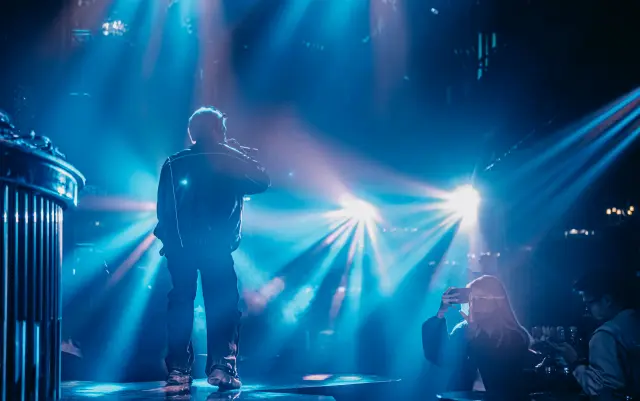
Concert lasers should support the full stage composition, not sit on top of it without purpose.
A stage show usually includes multiple visual layers: performer focus, scenic background, movement beams, wash atmosphere, and accent effects. Laser lights should be integrated into this structure in a way that strengthens the existing design. They are most effective when they reinforce the stage architecture, align with the music, and appear at the right times.
- use lasers to emphasize stage width or depth
- align laser direction with the visual perspective of the stage
- preserve performer readability when laser scenes are active
- ensure the laser layer supports rather than competes with movement and wash layers
In many live productions, this kind of integration works best when the larger rig is still built around categories such as concert moving head light and wash fixtures that provide continuity between laser moments.
What Stage Show Moments Work Best for Laser Lighting?
Laser lighting works best in moments where the show needs a strong visual shift or a dramatic sense of expansion.
Typical high-value moments include:
- opening intros where anticipation is building
- big drops or chorus peaks where the room needs to explode visually
- transitions between songs where the stage identity changes
- electronic or cinematic sections where spatial atmosphere matters more
- finale scenes where the full visual system should feel maximal
Lasers can also work well in slower sections if the design is minimal and intentional, but they usually create the most value when paired with strong musical contrast.
| Show Moment | Laser Use Strategy | Main Result |
|---|---|---|
| Intro | controlled geometric build | anticipation and focus |
| Drop | wide atmospheric burst | maximum scale and energy |
| Transition | directional change and pattern shift | clear visual reset |
| Finale | full-stage integration | memorable climax |
How Should Lasers Be Balanced with Other Concert Fixtures?
Lasers should be balanced with beam, wash, and accent layers so that the stage remains readable and emotionally varied.
If lasers are too dominant, the stage can lose performer clarity and visual depth. If they are too weak, they may not justify their presence in the design. The best balance usually comes when:
- beam layers create motion around laser geometry
- wash layers preserve stage mood and depth
- accent fixtures such as strobes increase contrast carefully
- performer visibility remains protected in key narrative moments
For stronger impact scenes, some productions combine lasers with concert strobe light accents, but this should be used selectively so that both layers retain value.
What Are the Most Effective Laser Design Approaches?
The most effective approaches usually focus on clarity, contrast, and spatial intention.
Some shows use lasers to frame the stage. Others use them to extend the audience space. Some productions use strong symmetrical laser architecture, while others use asymmetry to create tension and movement. The important factor is not the style itself, but whether the style matches the music and stage design.
- symmetrical laser fans create strong stage authority
- audience-directed patterns create immersion
- rear-stage laser geometry adds depth behind performers
- minimal laser scenes can be very effective before larger visual peaks
Strong design usually comes from choosing one clear role for the laser layer in each section rather than trying to use every possible effect at once.
What Are the Most Common Laser Design Mistakes?
Most mistakes come from overuse or poor integration.
- using laser scenes too often so they lose emotional value
- failing to align laser timing with musical structure
- making lasers visually stronger than the performers at the wrong moments
- treating lasers like decoration rather than visual architecture
- ignoring how haze conditions affect real visibility
One of the most common problems is a stage show where the laser layer feels disconnected from the movement and wash logic. The individual laser moments may look impressive, but the overall show feels inconsistent.
Real Project Example: Improving Laser Use in Stage Design
In one large live production, the initial laser plan placed heavy laser content in almost every song. During rehearsals, the system looked strong at first, but the effect quickly became repetitive and started to reduce the impact of the show’s major peaks. The design was revised so that lasers were concentrated in show intro, selected drops, and the finale. The rest of the production relied more on movement and wash development. This created stronger contrast, and the audience response improved because the laser moments regained real value.
What Should Professional Buyers Check Before Approving Laser Use in Stage Design?
Before approving laser integration into a stage show, professional buyers should verify:
- whether the stage format and music style actually benefit from laser scenes
- whether the laser layer is integrated with movement and wash design
- whether performer visibility remains protected
- whether the timing logic preserves contrast over the full show
- whether the laser moments create real design value rather than simple novelty
In some multi-use stage environments, the venue may also need softer visual modes closer to wedding and event lighting when the stage is not operating in full concert mode, which makes contrast planning even more important.
Concert Laser Lights in Stage Design – FAQs
How should concert laser lights be used in stage show design?
They should be used as a structured visual layer that supports stage geometry, musical timing, and audience immersion instead of running constantly without contrast.
What is the biggest mistake when using concert lasers in stage design?
The biggest mistake is overusing laser scenes or failing to integrate them with the wider movement, wash, and performer-focus structure of the show.
Do lasers work best in every song of a live production?
No. Lasers are usually most effective when reserved for intros, drops, major transitions, and finale moments where they add clear visual contrast and scale.
What should professional buyers review before approving laser-based stage design?
They should review timing logic, performer visibility, integration with the wider lighting rig, stage suitability, and whether the laser layer adds real value to the full production.
In conclusion, using concert laser lights in stage show design is most effective when the laser layer is integrated, selective, and aligned with the architecture of the full show. The strongest laser scenes are the ones that amplify the production’s visual storytelling rather than overwhelm it.
For full-system structure and projector-layer strategy, refer to laser lighting systems.

Leave a Reply