
Concert Laser Lighting Systems for Live Stage Productions
Concert laser lighting systems for live stage productions have become one of the most effective tools for creating dramatic visual scale, sharp atmospheric geometry, and memorable high-impact moments in modern concert design. In large stage productions, lasers can add a visual layer that traditional beam, wash, and profile fixtures cannot fully replicate. They cut across space with high precision, create volumetric effects when haze conditions are correct, and add a distinctly modern show language that audiences immediately associate with premium concert experiences.
For professional buyers such as live production companies, stage designers, touring planners, and event contractors, selecting a concert laser lighting system is not only about choosing a bright projector. It requires evaluating control compatibility, beam behavior, safety logic, venue suitability, and how the laser layer will integrate with the rest of the lighting system. When lasers are used strategically, they strengthen the whole stage show. When they are used carelessly, they can feel repetitive, visually disconnected, or operationally risky.
This guide explains how concert laser lighting systems are used in live stage productions, what components are required, how to design strong laser scenes, and what professional buyers should review before building laser-based concert effects into a large production.
What Makes Concert Laser Lighting Systems Different from Standard Fixtures?
Concert laser systems are different because they create highly defined lines, patterns, and volumetric effects with much sharper visual geometry than conventional lighting fixtures.
Traditional moving heads can create strong aerial effects, but laser systems can draw visual structures through the air in a more graphic and immediate way. This makes them especially effective for high-energy sequences, show intros, large drops, and modern electronic or hybrid concert environments. They can also extend the visual field beyond the stage itself and create a stronger link between performer space and audience space.
- laser systems produce extremely sharp visual lines
- they create strong atmospheric geometry in haze-supported conditions
- they can fill large spaces without requiring massive fixture counts
- they are especially effective during musical peaks and transitions
Because of these qualities, many productions include lasers as a major layer inside a larger concert laser light show strategy.
What Are the Core Components of a Concert Laser Lighting System?
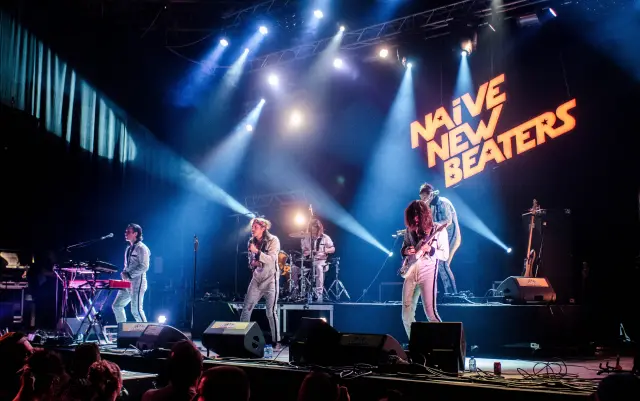
A professional laser system is more than a projector. It includes the hardware, control structure, and safety architecture needed to make the laser layer usable in real production conditions.
- laser projectors for beam and pattern generation
- control interface for cue timing and synchronization
- mounting structure for precise aiming and stable positioning
- safety logic including proper scanning behavior and operational control
- atmospheric support such as haze to reveal the visual structure clearly
Laser systems are often not used alone. They are usually integrated with beam moving head, strobe light, and broader concert movement layers so the stage remains visually complete between laser moments.
How Are Laser Systems Used in Live Stage Productions?
Laser systems are typically used to create high-focus moments rather than constant all-show output.
In professional productions, lasers often appear in show intros, breakdown transitions, dramatic build sections, electronic peaks, or finale moments. They can also be used to support scenic geometry behind the performers or to expand the audience’s sense of the stage width and depth.
- intro sequences with strong atmosphere and anticipation
- drop moments where the room needs instant visual expansion
- bridge sections where spatial geometry adds tension
- finale scenes where full-stage energy is required
When combined correctly, lasers give the stage a modern concert identity without replacing the need for movement and wash structure.
How Should Laser Effects Be Integrated with the Full Concert Lighting System?
Laser effects should be integrated as part of a larger visual hierarchy rather than treated as an independent show on top of the stage.
If lasers run with no supporting movement, wash, or focus logic, the result often feels disconnected. A better approach is to coordinate the laser layer with the rest of the system:
- beam layers support directional energy around the laser moments
- wash layers keep the stage readable before and after laser peaks
- effect layers such as strobes add impact but should not overpower the lasers
- performer focus layers must remain visible when the show demands it
Concert laser scenes usually work best when supported by a stable movement-and-atmosphere base instead of carrying the whole show alone.
| Layer | Relationship to Laser Effects | Main Result |
|---|---|---|
| Beam Layer | supports motion around laser peaks | more dynamic energy |
| Wash Layer | stabilizes stage continuity | better visual balance |
| Focus Layer | keeps performers readable | clearer stage identity |
| Accent Layer | adds rhythm emphasis | stronger peak moments |
What Makes a Good Concert Laser Lighting Design?
A good laser lighting design creates contrast, clarity, and timing discipline.
Many inexperienced systems make the mistake of using lasers too often or too uniformly. This reduces their impact. A better design reserves laser intensity for moments where the show needs a clear visual lift. In addition, the angle and spatial layout of the projectors should support the stage architecture and not fight against it.
- use lasers selectively for higher emotional value
- align laser timing with musical peaks and transitions
- maintain enough stage clarity between laser scenes
- use projector angles that support depth and audience perspective
Restraint is often one of the most important design qualities in laser-based concert systems.
What Are the Most Common Mistakes in Concert Laser Systems?
Most laser system problems come from poor integration and poor scene discipline.
- using lasers too continuously until they lose impact
- running laser scenes without enough haze support
- failing to coordinate lasers with the broader lighting design
- treating lasers as a replacement for stage structure instead of an enhancement
- ignoring practical operational safety and aiming discipline
In real productions, a laser system often becomes much stronger after reducing usage and improving timing.
Real Project Example: Improving a Concert Laser Layer
In one live stage production, the original laser system was programmed to run aggressively across too many songs. The audience reaction was strong at first, but the effect became visually repetitive. The production team restructured the show so that laser moments appeared only during intros, high-energy peaks, and finale sequences. The result was a much more premium show because the laser layer regained contrast and felt intentionally designed rather than constantly active.
What Should Professional Buyers Verify Before Ordering Laser Systems?
Before ordering a concert laser system, professional buyers should verify:
- whether the venue type and show format truly benefit from laser usage
- whether the projector output and beam quality match the production scale
- whether the control system integrates with the main lighting workflow
- whether the production team can support correct laser operation and scene use
- whether the system adds real visual value instead of just novelty
Concert Laser Lighting Systems – FAQs
What are concert laser lighting systems used for in live stage productions?
They are used to create sharp atmospheric geometry, high-impact show moments, and large-scale visual expansion during intros, drops, transitions, and finale scenes.
What is the biggest mistake when using concert laser systems?
The biggest mistake is using lasers too often or without enough integration with the wider lighting design, which reduces their impact and makes the show feel repetitive.
Do laser systems replace moving heads and wash lights in concerts?
No. Laser systems work best as an enhancement layer inside a broader structure that still includes movement, wash, performer focus, and accent effects.
What should professional buyers check before choosing a concert laser system?
They should check whether the venue, control workflow, visual goals, and production scale all justify laser use, and whether the system will add clear value to the full show design.
In conclusion, concert laser lighting systems for live stage productions are most effective when they are integrated, selective, and structurally disciplined. The strongest laser shows are not the most constant ones—they are the ones that use precision and contrast to amplify the whole concert experience.
For practical design integration and scene-level use, refer to concert laser lights.