
Concert Moving Head Lights for Large Scale Stage Events
Concert moving head lights are one of the most important fixture categories in large scale stage events because they combine movement, brightness, precision, and flexibility in a way that static fixtures cannot. In arena concerts, outdoor festivals, touring music events, and large indoor productions, moving head fixtures are often the main tools used to create aerial effects, rhythm-driven sweeps, stage transitions, and visual energy across long throw distances.
For professional buyers such as concert contractors, touring production teams, venue operators, and stage lighting planners, selecting concert moving head lights is not just about choosing a fixture with strong output. The decision affects rigging strategy, cue design, stage zoning, transport efficiency, maintenance cost, and visual consistency across the whole show. In many real projects, poor moving head selection leads to weak beam definition, slow response, unreliable operation, or visual imbalance between movement and stage coverage.
This guide explains how concert moving head lights are used in large scale stage events, how to compare the main fixture types, what system logic creates stronger results, and what professional buyers should verify before specifying moving head fixtures for large productions.
Why Moving Head Lights Matter in Large Stage Productions
Moving head lights matter because they create the motion language of the show.
In large concert environments, audiences expect lighting to react to music, support drops, follow transitions, and extend visual energy beyond the stage itself. Moving head fixtures make that possible by combining pan and tilt motion with beam shaping, color changes, dimming, gobo effects, and zoom behavior. When these fixtures are used correctly, they give the stage direction, rhythm, and scale.
- they create long-distance beam movement for large audience spaces
- they add vertical and horizontal visual motion across stage zones
- they support dramatic transitions between songs or musical sections
- they help define the visual identity of a large live production
This is why most large productions are built around a wider concert moving head light strategy instead of treating moving heads as optional upgrades.
What Types of Concert Moving Head Lights Are Used Most Often?
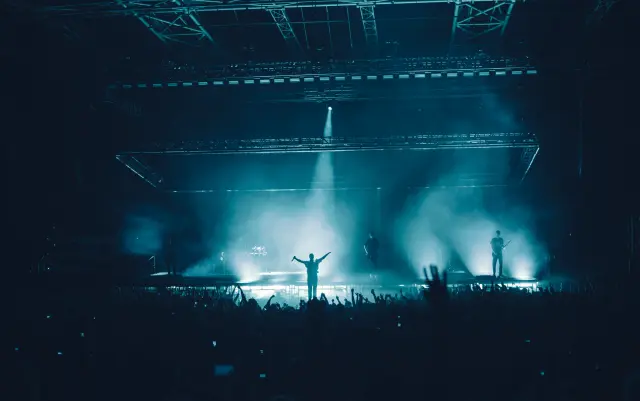
Concert moving head fixtures are usually divided into three main types, and each serves a different role in stage design.
- beam moving heads for sharp aerial effects and long throw visibility
- wash moving heads for wide coverage and color atmosphere
- profile moving heads for precision focus, pattern projection, and controlled framing
In many large stage systems, the visual foundation starts with beam moving head fixtures, which are then balanced by led wash moving head units and more targeted profile layers.
How Do Beam, Wash, and Profile Moving Heads Work Together?
They work together by dividing the visual workload of the stage instead of forcing one fixture type to solve every problem.
Beam fixtures create the strongest large-scale aerial effects and audience sweeps. Wash moving heads provide room color, stage mood, and performer environment. Profile moving heads define precision, sharp edging, and visual framing. In a strong system, these layers complement each other. In a weak system, one layer dominates while the others are missing, which creates imbalance.
| Fixture Type | Main Strength | Most Useful Application |
|---|---|---|
| Beam Moving Head | long throw and sharp aerial energy | drops, sweeps, large crowd effects |
| Wash Moving Head | coverage and color atmosphere | stage depth and visual continuity |
| Profile Moving Head | precision and sharp focus | performer isolation and scenic detail |
When the system also needs more impact during musical peaks, selective support from strobe light fixtures can add rhythm emphasis without replacing the moving head structure.
What Makes a Moving Head Fixture Suitable for Large Stage Events?
A fixture suitable for large stage events must do more than move quickly. It must perform reliably over long distances and long show durations.
- strong output that holds up across large venues
- consistent beam definition even at extended throw distances
- fast and accurate pan/tilt movement
- stable color and dimming behavior under show conditions
- reliable thermal management for long operation hours
For touring and arena-scale projects, durability and repeatability matter as much as raw visual intensity.
How Should Moving Head Lights Be Positioned on Large Stages?
Moving head positioning should follow stage zoning and beam geometry, not only visual symmetry.
Large-scale stage events usually benefit from a layered rig that includes front truss, mid truss, rear truss, side ladders, and sometimes floor packages. Each position creates a different kind of motion language. Front positions are better for key focus and controlled sweeps. Mid and rear positions create depth and crossing beam structure. Floor positions add dramatic low-angle energy.
- front positions support visible performer framing
- mid truss positions create central movement architecture
- rear positions create silhouette and stage depth
- side ladders expand the stage horizontally
- floor packages support impact scenes and dramatic tension
A strong position plan allows moving heads to work with the stage instead of fighting the stage geometry.
How Many Moving Head Lights Are Usually Needed?
The correct number depends on stage scale, venue depth, and the complexity of the performance design.
Small theater-scale concerts may use a limited number of beam and wash moving heads effectively if the stage design is compact. Medium touring productions usually require more layered movement structure. Arena-scale events often need multiple rows of movement fixtures across different truss lines to preserve visual scale from all audience angles.
| Production Scale | Typical Moving Head Strategy | Main Goal |
|---|---|---|
| Theater / Medium Hall | compact beam + wash combination | clarity and controlled depth |
| Touring Stage | layered beam + wash + profile setup | flexibility and repeatability |
| Arena / Festival Stage | multi-line moving head architecture | maximum visual scale and audience coverage |
What Are the Most Common Mistakes with Concert Moving Head Lights?
Most mistakes happen when buyers focus on power or quantity without enough attention to system balance.
- too many beam fixtures and not enough wash support
- choosing moving heads that are too weak for the throw distance
- using profile units where beam impact is required, or the reverse
- poor rigging layout that limits pan/tilt effectiveness
- ignoring fixture weight and maintenance practicality in touring systems
One common failure is building a rig that looks aggressive in previsualization but feels visually narrow when seen from real audience angles in a large venue.
Real Project Example: Fixing a Large Stage Moving Head Design
In one large outdoor stage project, the original design used a large number of beam fixtures but very limited wash support. The aerial looks were strong during drops, but the stage felt visually thin between high-energy moments. The production team revised the system by adding more wash moving heads across the rear and side positions while keeping the beam architecture largely intact. The result was a fuller stage image, better continuity between songs, and stronger camera visuals without rebuilding the whole rig.
What Should Professional Buyers Verify Before Ordering?
Before ordering concert moving head lights, professional buyers should verify:
- whether output and throw match the venue scale
- whether the fixture type matches its intended role
- whether the rigging plan supports effective movement angles
- whether the fixtures are practical for touring or repeated operation
- whether control and maintenance workflows remain manageable
Concert Moving Head Lights – FAQs
What are concert moving head lights used for in large stage events?
They are used to create aerial movement, directional sweeps, musical transitions, and large-scale visual energy across the stage and audience space.
Which moving head type is most important for concert stages?
Beam moving heads are often the most visually dominant, but wash and profile moving heads are also essential for creating balance, coverage, and precision.
What is the biggest mistake when choosing moving head lights for concerts?
The biggest mistake is overinvesting in one moving head type, usually beams, without enough support from wash or profile layers.
What should professional buyers check before specifying moving head fixtures?
They should check throw distance performance, rigging suitability, fixture role, long-term reliability, and how the fixtures fit into the full concert lighting system.
In conclusion, concert moving head lights for large scale stage events should be selected as part of a layered system, not as isolated power tools. The best results come from matching fixture type, stage role, throw requirements, and visual balance across the whole production.
For touring fixture selection and project-level comparison, refer to touring stage lights.