
Church Lighting Design Guide for Stage and Worship Production
Church lighting design is no longer limited to basic visibility. Modern worship environments require lighting systems that support in-person services, live streaming, worship music, stage production, and volunteer-friendly operation — all while maintaining a consistent and professional appearance.
However, many churches still struggle with flat stage visuals, poor streaming quality, difficult lighting operation, or systems that become outdated after only a few years. In most cases, the problem is not the fixtures themselves, but the overall lighting design strategy.
If you are planning or upgrading a church stage lighting project, this guide explains how professional churches design lighting systems that are scalable, practical, and visually effective.
What Professional Church Lighting Design Really Means
Professional church lighting design is not about using more lights — it is about building a balanced lighting structure that supports worship production in real-world conditions.
A properly designed system should achieve:
- Clear visibility on stage
- Consistent camera exposure for live streaming
- Flexible atmosphere for different worship styles
- Easy operation for volunteers and technical teams
Common mistake: designing lighting only for the audience in the room while ignoring online viewers and camera performance.
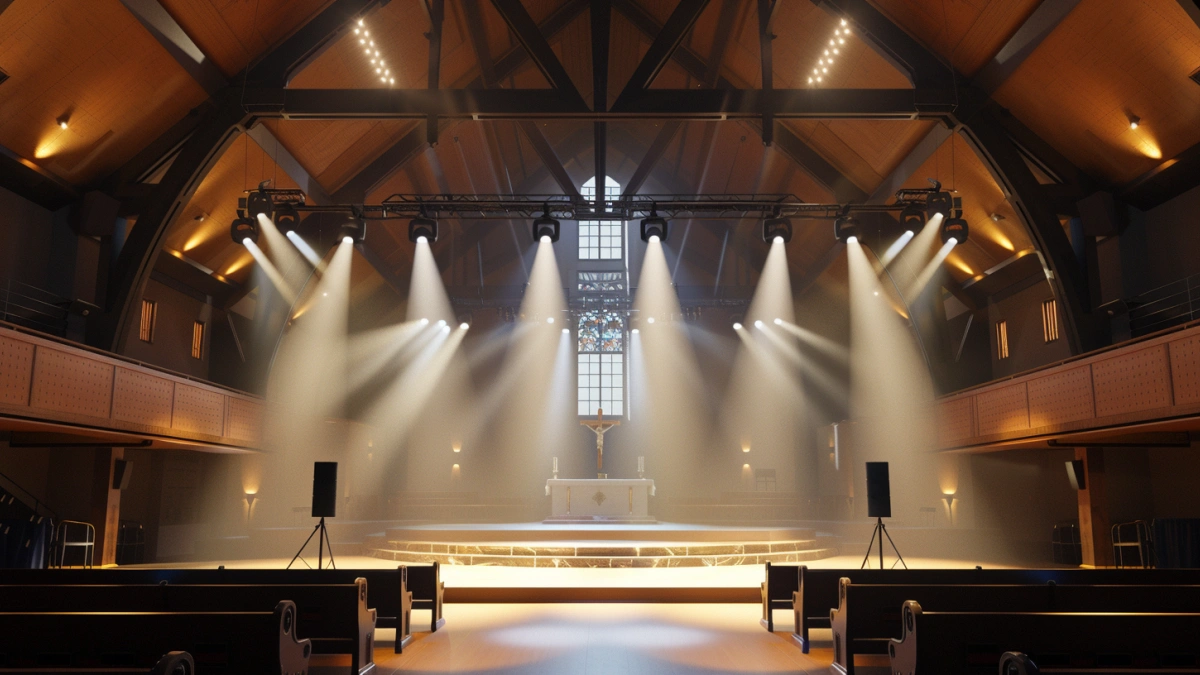
The 4-Layer Lighting Design Structure Used in Professional Churches
Modern church lighting systems are usually designed using a layered approach.
1. Key Lighting (Visibility Layer)
This is the primary front lighting used to illuminate speakers and worship leaders.
Best practice:
- Install lights at 30°–45° angles
- Use soft intensity to avoid harsh shadows
- Balance left and right coverage evenly
Without proper key lighting, no amount of effects or background lighting can fix poor visibility.
2. Wash Lighting (Coverage Layer)
Wash lighting creates even stage coverage and supports overall visual balance.
Fixtures such as wash moving head are commonly used because they provide wide beam coverage and flexible color control.
Common issue: uneven wash distribution leading to bright and dark spots on stage.
Solution: use overlapping beam coverage instead of isolated fixture placement.
3. Back and Accent Lighting (Depth Layer)
Depth lighting separates subjects from the background and improves stage dimension.
This layer becomes especially important for live streaming because cameras flatten visual depth.
Best setup:
- Backlights behind speakers
- Wall wash lighting on background surfaces
- Soft side lighting for worship bands
4. Atmosphere and Effect Lighting (Creative Layer)
This layer adds emotional and visual impact during worship moments.
Fixtures such as concert moving head light can be used for subtle movement and beam effects.
Important: effect lighting should support worship, not dominate the service.
Lighting Design Strategies Based on Worship Style
Traditional Worship Spaces
Traditional worship environments usually benefit from:
- Warm color temperatures
- Minimal movement effects
- Balanced front lighting
The goal is clarity and comfort.
Modern Worship Environments
Modern worship stages often require:
- Dynamic color transitions
- Layered background lighting
- Controlled movement effects
The goal is engagement while maintaining focus on worship.
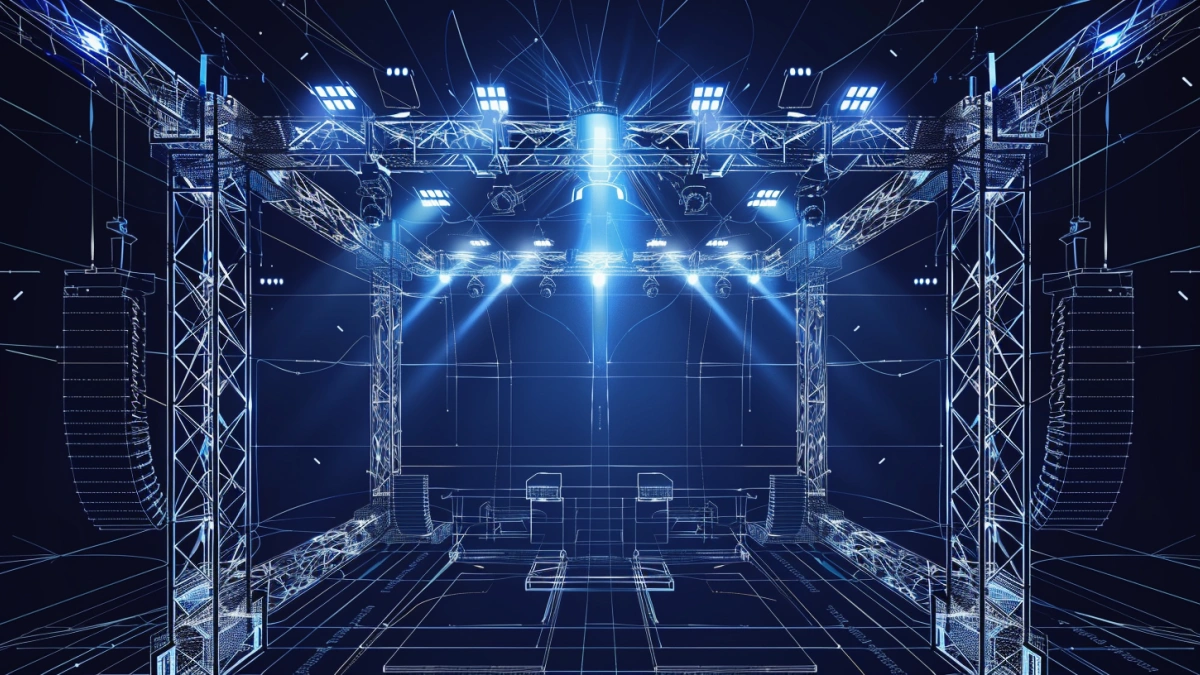
How to Design Church Lighting for Live Streaming
Lighting that looks good in person may look completely different on camera.
Most common streaming problems:
- Overexposed faces
- Dark backgrounds
- Uneven skin tones
- Flickering caused by incompatible fixtures
Professional solutions:
- Use soft front lighting
- Keep color temperature consistent
- Balance stage and background brightness
- Always test lighting through cameras before services
Lighting should be designed for both the congregation and online viewers.
Practical Lighting Design Examples by Church Size
Small Church Design
- 4–6 wash fixtures
- 2–4 front lights
- Simple background lighting
Focus: clarity and simplicity
Medium Church Design
- 8–12 wash fixtures
- 4–6 front lights
- Backlighting and atmosphere layers
Focus: balanced worship production
Large Church Design
- 12–20 wash fixtures
- 6–10 front lights
- Advanced programming and layered effects
Focus: immersive worship and professional streaming
Common Church Lighting Design Mistakes
1. Too Much Focus on Effects
Problem: flashy visuals but poor visibility
Fix: prioritize key and wash lighting first
2. Flat Stage Appearance
Problem: no visual depth
Fix: add backlighting and layered background lighting
3. Difficult Volunteer Operation
Problem: overly complex programming
Fix: create simple presets and repeatable scenes
4. Poor Lighting for Cameras
Problem: good in person, bad on video
Fix: design specifically for camera exposure
Equipment Selection Strategy (Where Most Budgets Are Wasted)
Many churches overspend because they buy equipment without a complete design plan.
Better approach:
- Invest first in front and wash lighting
- Add atmosphere fixtures later
- Choose scalable control systems
Additional fixtures such as concert strobe light should only be used if they support the worship environment appropriately.
👉 Build a Lighting Design That Supports Worship and Production
The best church lighting design is not the most expensive one — it is the one that consistently supports worship, streaming, and weekly operation.
Focus on:
- Layered lighting structure
- Balanced visibility and atmosphere
- Simple and scalable control systems
- Designs that work for both people and cameras
If your church is planning streaming-focused setups, this guide explains the next step in detail: lighting for live streaming .
FAQs
What is church lighting design?
It is the process of planning lighting systems for worship, visibility, and production.
What is the most important lighting layer?
Key lighting for clear visibility.
How do churches improve stage depth?
By using backlighting and layered lighting design.
Should churches use moving lights?
Yes, but only in moderation and with purpose.
How can lighting improve live streaming?
Balanced lighting improves camera exposure and video quality.
What is the biggest design mistake?
Prioritizing effects over visibility and structure.