
Concert Stage Lighting Setup for Festival Performances
Festival stage lighting is one of the most complex and demanding areas in live event production. Unlike indoor concerts, festival performances take place in open environments with large audiences, variable weather conditions, and long viewing distances. This means that lighting systems must be designed not only for visual impact, but also for scale, reliability, and flexibility.
For professional buyers, building a successful festival lighting setup is not simply about using more fixtures. It requires a structured approach that integrates rigging, fixture selection, power distribution, and control systems. Most high-level productions are designed as part of a complete concert lighting system, where every component works together to deliver consistent performance.
What Makes Festival Lighting Different from Standard Concert Setup
The biggest difference between festival lighting and traditional stage lighting is scale. Festival stages are larger, audiences are farther away, and ambient light is much stronger. This requires lighting systems with higher output and wider coverage.
In addition, festivals often involve multiple performances in a single day. This means lighting systems must be flexible enough to adapt to different artists while maintaining a consistent visual structure. Unlike touring concerts, where lighting is pre-programmed for a single show, festival setups must support a wide range of performance styles.
Another key factor is environmental exposure. Outdoor stages are affected by wind, humidity, and temperature changes. Equipment must be durable and stable, with rigging systems designed to handle external forces. These factors make festival lighting one of the most challenging applications in the industry.
How to Design a Festival Lighting Layout for Maximum Coverage
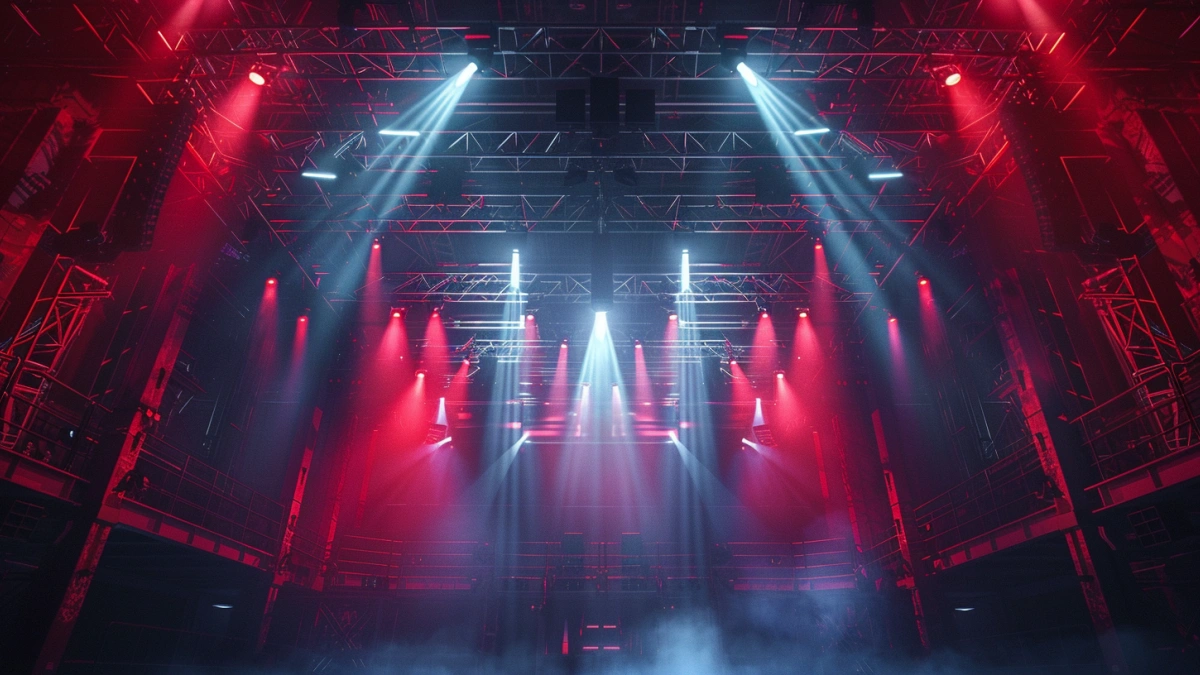
A well-designed lighting layout is essential for achieving both visibility and visual impact. In large festival stages, multiple truss layers are used to create a balanced system. Front trusses are positioned to provide clear illumination of performers, ensuring that the audience can see facial expressions and stage details even from a distance.
Overhead trusses play a key role in creating dynamic effects. These positions allow fixtures to project beams into the audience, adding depth and scale to the show. Side trusses are often used to introduce cross-lighting, which enhances contrast and creates a more immersive visual experience.
Fixtures such as concert moving head light units are typically placed on higher trusses to maximize beam reach. Their ability to produce sharp, long-distance beams makes them essential for large outdoor environments.
At the same time, wash moving head fixtures are used to provide consistent stage coverage. Proper spacing and positioning ensure that the entire stage is evenly illuminated without dark spots.
Recommended Lighting Setup for Festival Stage Projects
For professional buyers, understanding typical equipment configurations is critical when planning festival lighting systems. While exact numbers depend on stage size, a standard medium-to-large festival setup often includes a combination of beam, wash, strobe, and laser fixtures.
A typical configuration may include 24 to 48 beam fixtures positioned across overhead and side trusses to create dynamic movement and long-range effects. Around 16 to 32 wash fixtures are used to provide base lighting and color coverage across the stage. To enhance high-energy moments, 8 to 16 concert strobe light units are installed to emphasize drops and transitions.
For large-scale visual impact, additional concert laser light systems are often integrated. These fixtures create spatial effects that extend beyond the stage, reaching into the audience and enhancing immersion.
This type of layered setup ensures that lighting can adapt to different performance styles while maintaining strong visual consistency.
Power Distribution and System Stability
Power management is one of the most critical aspects of festival lighting. Large numbers of high-output fixtures require significant power, and improper distribution can lead to system failures.
Professional setups use dedicated power distribution systems to ensure stable operation. Load balancing is essential to prevent overload on individual circuits. Backup systems are also commonly used to ensure uninterrupted performance in case of power issues.
In addition to power, structural stability must be considered. Ground-supported truss systems are often used for outdoor festivals, providing a stable base for lighting equipment. These systems must be engineered to handle both the weight of fixtures and environmental forces such as wind.
Common Mistakes in Festival Lighting Setup
One of the most common mistakes is underestimating the scale of the event. Using insufficient fixtures can result in weak lighting that fails to reach the audience. Another issue is poor layout design, which can lead to uneven coverage and reduced visual impact.
Overcomplicating the system is also a frequent problem. While it may seem beneficial to use more effects, too many elements can create a chaotic visual experience. A balanced approach is essential for maintaining clarity and impact.
Finally, insufficient planning for environmental conditions can lead to equipment failure. Proper preparation and equipment selection are critical for outdoor events.
Real Project Example
In a large outdoor music festival, the initial lighting setup relied heavily on wash fixtures, resulting in strong visibility but limited visual impact. After redesigning the system to include additional beam and strobe fixtures, the production team achieved a more dynamic and engaging show.
The addition of beam lighting created movement and energy, while strobe effects enhanced key musical moments. This demonstrates how proper fixture balance can significantly improve overall performance.
What Professional Buyers Should Focus On
When planning festival lighting systems, buyers should focus on scalability, reliability, and flexibility. The system must be able to adapt to different performance styles and venue sizes.
Durability is also essential, especially for outdoor events. Equipment should be designed to withstand environmental conditions while maintaining consistent performance.
Finally, ease of setup and operation should be considered. Efficient systems reduce installation time and improve overall workflow, making them more suitable for large-scale productions.
FAQs
How many lights are needed for a festival stage?
Medium festival stages typically use 40–100 fixtures depending on size and design.
What is the best lighting setup for outdoor festivals?
A combination of beam, wash, strobe, and laser fixtures provides balanced performance.
How do you calculate power requirements?
Total fixture wattage is calculated and distributed across multiple circuits with safety margins.
What is the biggest mistake in festival lighting?
Underestimating scale and using insufficient fixture output.