
Best Concert Lighting for Stage Performances | Setup Guide
Choosing the best concert lighting for a professional stage performance requires more than selecting the brightest fixtures or the highest wattage. A reliable system must support performer visibility, camera exposure, musical timing, visual depth, fast programming, safe rigging, and consistent operation throughout rehearsals and live shows. The correct fixture mix also changes according to stage dimensions, throw distance, audience size, production style, indoor or outdoor conditions, and whether the equipment will be installed permanently or transported between venues.
For event production companies, concert planners, lighting rental businesses, system integrators, distributors, and project contractors, the goal is not to buy isolated fixtures. The goal is to build a coordinated concert lighting system in which beam, wash, profile, strobe, laser, control, and rigging components perform specific jobs without competing with each other.
This guide explains what defines professional concert stage lights, which fixture types are essential, how to plan a balanced setup, how requirements change by venue size, and what commercial buyers should evaluate before choosing equipment or a supplier.

Who This Concert Lighting Guide Is For
This article is written for professional buyers and teams that need to evaluate a complete system rather than a single decorative light. It is especially relevant to:
- event production companies planning concerts, festivals, and touring shows
- stage lighting rental companies building flexible equipment inventories
- concert organizers comparing equipment for a specific venue or production
- lighting designers and technicians preparing fixture plots and control workflows
- system integrators delivering permanent or semi-permanent stage installations
- distributors and wholesalers evaluating product ranges, consistency, and after-sales support
What Defines the Best Concert Lighting?
The best concert lighting is not a single fixture category. It is a coordinated system that delivers the required visual result under real operating conditions. A fixture may look powerful in a showroom but still be unsuitable if its beam is too narrow for the venue, its color output is inconsistent across units, its movement is difficult to program, or its cooling system cannot support long operating hours.
Professional concert lights should be evaluated across six core areas:
- Optical performance: usable brightness, beam quality, color mixing, zoom range, edge control, and throw distance
- Control performance: DMX channel options, dimming behavior, movement resolution, cue response, and console compatibility
- Mechanical reliability: pan and tilt accuracy, housing strength, fan design, rigging points, and touring durability
- Camera performance: flicker management, stable output, suitable color rendering, and repeatable white balance
- System scalability: the ability to combine multiple fixtures, universes, trusses, controllers, and future additions
- Serviceability: access to spare parts, maintenance information, firmware support, technical assistance, and warranty procedures
For a larger production, these factors should be evaluated as part of a complete concert lighting system rather than as isolated product specifications.
What Types of Concert Lighting Equipment Are Essential?
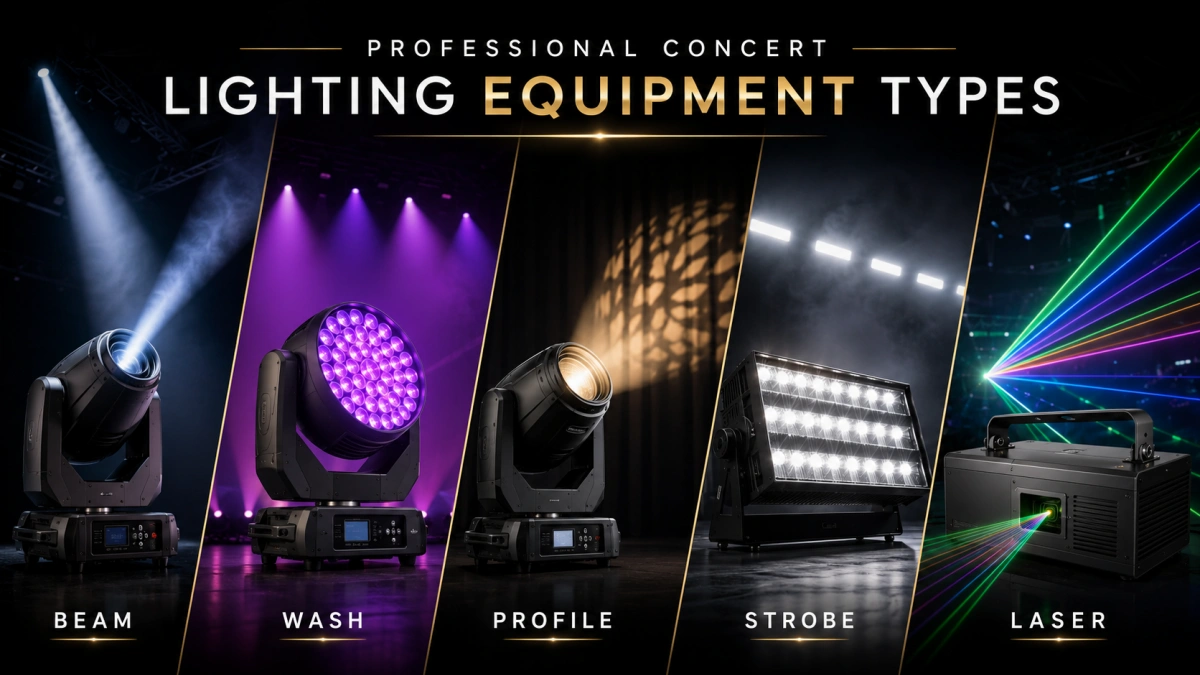
A professional stage normally uses several lighting layers. Each fixture family has a different role, and the best result comes from combining those roles intentionally.
| Fixture Type | Primary Function | Typical Concert Use | Key Buying Considerations |
|---|---|---|---|
| Beam Moving Head | Narrow aerial beams and long-throw effects | Music drops, fan effects, sweeps, large visual moments | Beam intensity, movement speed, prism, focus, lamp or LED source |
| Wash Moving Head | Wide color coverage | Stage atmosphere, performer background, transitions | Zoom, color mixing, even field, output consistency |
| Profile Moving Head | Precise framing and performer illumination | Key light, scenic isolation, broadcast-friendly focus | Framing system, focus, zoom, color quality, edge control |
| Strobe and Blinder | High-energy rhythmic accents | Climaxes, audience interaction, beat-driven effects | Pixel control, flash behavior, thermal stability, dimming |
| Laser System | Long-distance graphic and aerial effects | Large visual scenes, festivals, special moments | Output class, control method, scanning performance, safety requirements |
| Follow Spot | Manual performer tracking | Lead singer, guest entrance, moving performer | Throw distance, operator position, dimming, iris and color controls |
Beam Moving Head Lights for Aerial Impact
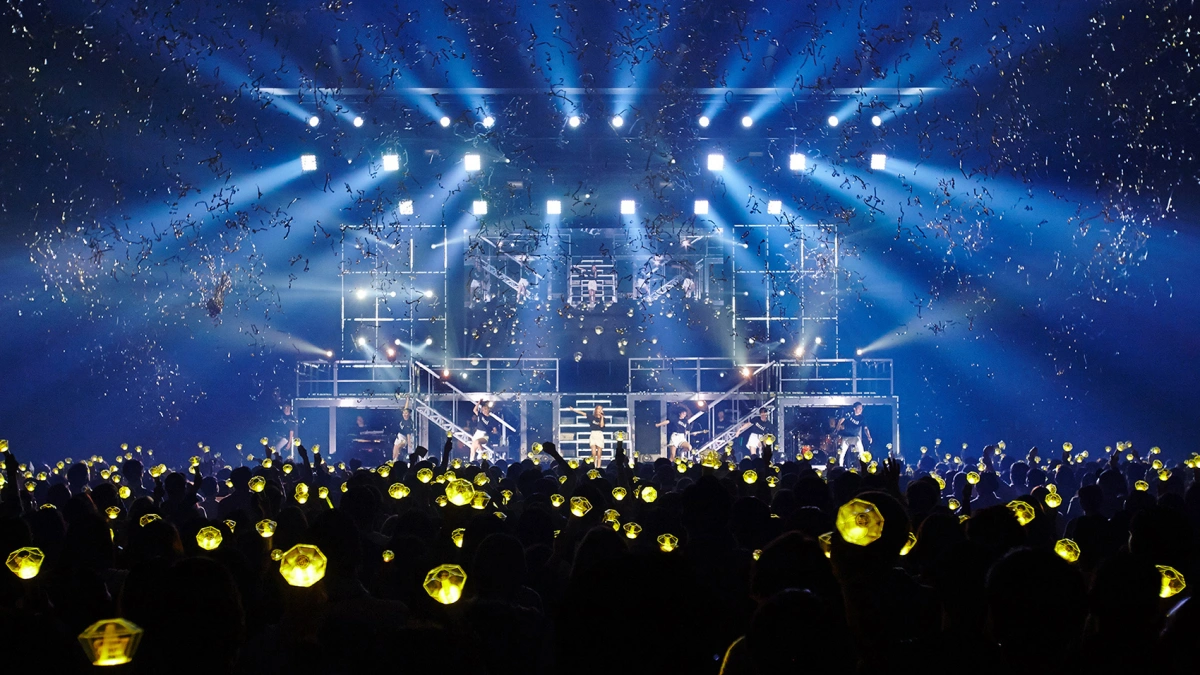
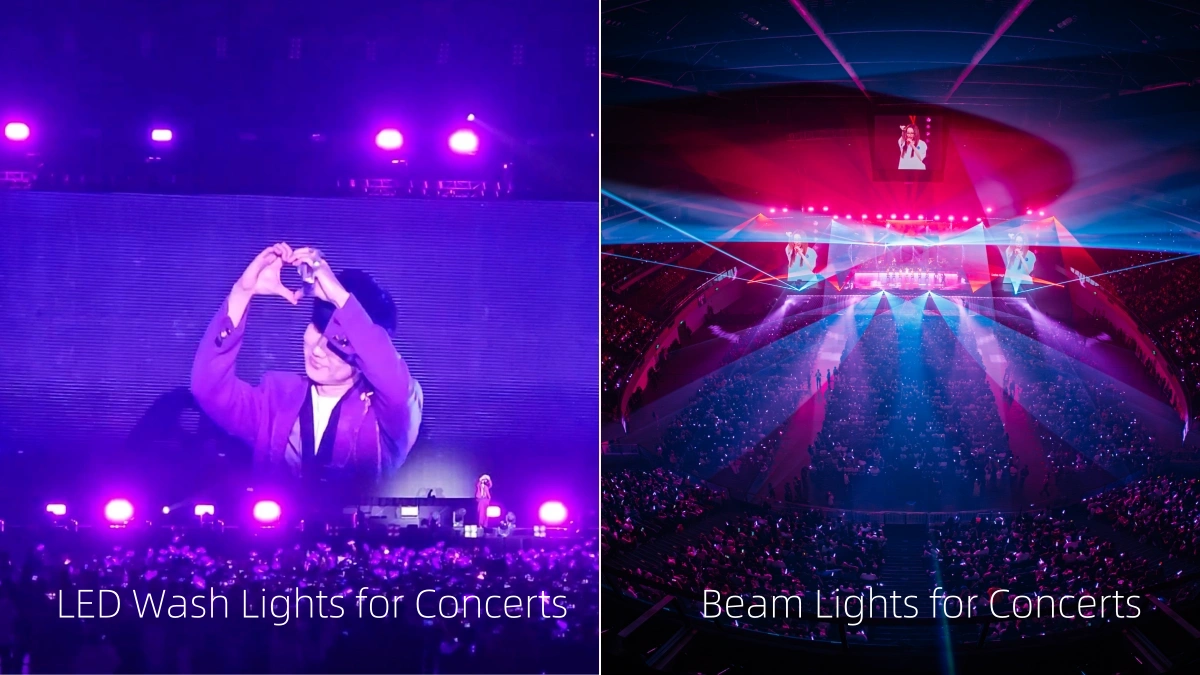
Beam moving heads are one of the most recognizable elements of modern concert lighting. Their narrow, concentrated output creates visible shafts through haze and allows designers to produce fans, circles, chases, crossing patterns, and long-distance sweeps. They are particularly effective on large stages where the visual effect must remain readable from the back of the venue.
Beam fixtures should not be selected only by wattage. Buyers should also compare optical efficiency, focus consistency, prism options, movement resolution, pan and tilt accuracy, gobo quality, and the amount of light that remains usable at the required throw distance.
For product-level comparison, review professional beam moving head lights by source power, optical system, waterproof rating, and intended venue size.
Wash Lighting for Color Coverage and Visual Continuity
Wash lighting creates the color foundation of a concert stage. It fills scenic surfaces, performers, band positions, and background areas with a broad and usually softer field of light. While beam fixtures create dramatic lines, wash fixtures prevent the stage from becoming visually empty between effect cues.
Professional wash lights should provide even color mixing, useful zoom, smooth dimming, and consistent output across all units. For television or livestream production, color behavior and flicker performance become especially important because the camera may reveal inconsistencies that are less noticeable to the audience.
A balanced show normally uses wash lighting throughout most songs, with changes in hue, intensity, and direction supporting the emotional movement of the performance.
Profile Lights for Precision and Performer Visibility
Profile moving heads are used when the production needs defined edges, controlled spill, framing, or precise illumination of a performer, scenic object, podium, instrument area, or stage zone. They are especially valuable in concerts that include live broadcast, IMAG screens, guest speakers, theatrical segments, or complex scenic designs.
Buyers should evaluate zoom, focus, framing accuracy, color quality, and low-level dimming.
Strobe, Blinder, and Laser Effects
Effect lights add energy and punctuation. Strobes can emphasize rhythmic peaks, blinders can connect the stage with the audience, and lasers can produce large aerial or graphic effects. These products are most effective when reserved for selected moments rather than used continuously.
For strobe systems, professional buyers should evaluate flash output, pixel segmentation, dimming smoothness, channel modes, and thermal stability. Relevant product options can be reviewed under concert strobe lights.
Laser systems require additional planning because output, scanning behavior, mounting position, control, and local safety rules can affect how and where they may be used. For suitable equipment categories, see concert laser lights.
How to Choose the Right Concert Stage Lights
Fixture selection should begin with the project requirements, not with a product catalog. Before comparing models, collect information about the stage, venue, show format, control system, installation method, and production schedule.
1. Start With the Stage Dimensions and Throw Distance
Record the stage width, depth, trim height, truss positions, performer zones, audience distance, and the location of front-of-house control. These measurements determine whether the project needs narrow beams, wide washes, long-throw profiles, additional side light, or more fixtures distributed across several positions.
2. Define the Visual Jobs Each Fixture Must Perform
Separate the design into practical functions:
- performer visibility and camera exposure
- full-stage color coverage
- background and scenic lighting
- aerial movement and beam effects
- audience-facing accents
- special moments such as introductions, drops, solos, and finales
This method prevents the common mistake of buying too many fixtures from one category while leaving important functions uncovered.
3. Compare Beam Angle, Zoom, and Optical Efficiency
A narrow beam can travel farther and appear more intense, but it cannot replace a wide wash. A larger zoom range adds flexibility, especially for rental companies that use the same inventory across different stages. Buyers should compare usable output at realistic distances rather than relying only on source wattage.
4. Confirm Control Compatibility
Check the available DMX modes, channel counts, movement resolution, dimming curves, RDM support where required, and compatibility with the current lighting console. A fixture that consumes many channels may require additional universes, nodes, network planning, and programming time.
5. Evaluate Touring and Maintenance Requirements
Touring equipment is frequently installed, removed, transported, and exposed to vibration. Consider fixture weight, handles, rigging points, housing strength, service access, fan replacement, spare parts, flight-case design, and whether multiple units can be maintained efficiently.
Concert Lighting Setup by Venue Size
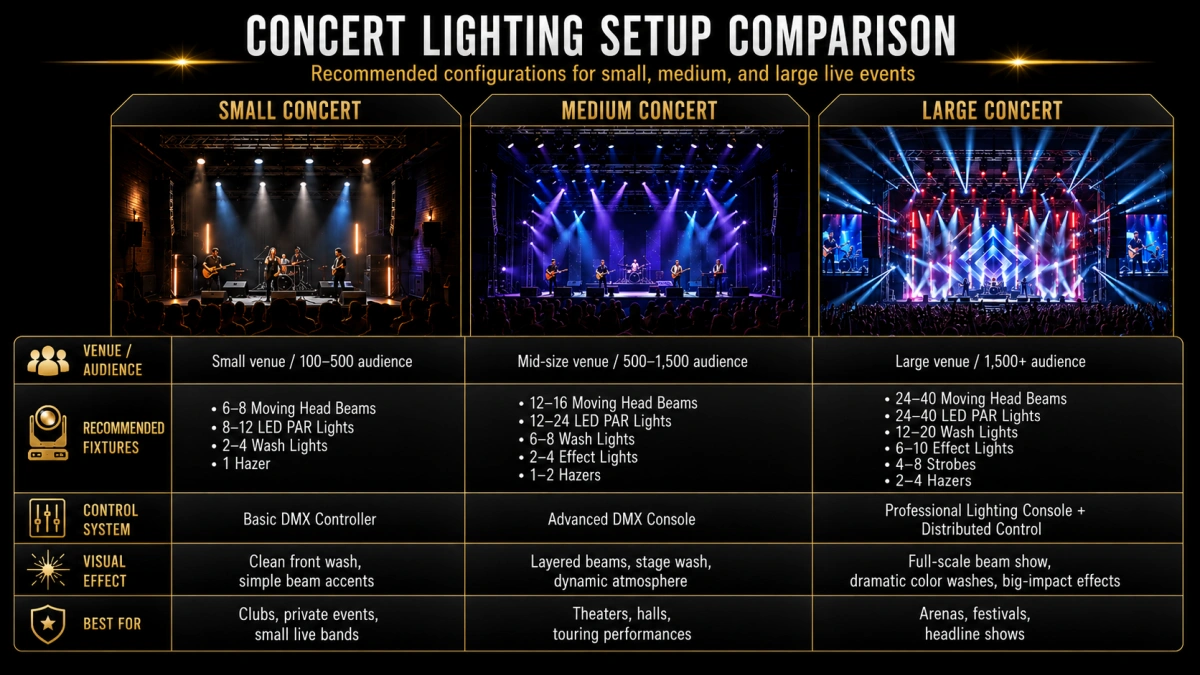
The following configurations are planning references rather than fixed bills of materials. Final quantities should be confirmed through a lighting plot, photometric requirements, stage dimensions, creative direction, rigging limits, and local safety standards.
| Project Scale | Typical Fixture Mix | Control Level | Planning Priority |
|---|---|---|---|
| Small club or band stage | 4–8 wash fixtures, 2–6 moving heads, optional strobes or blinders | Compact DMX console or software controller | Performer visibility, simple color scenes, fast setup |
| Medium live event | 8–16 beam or hybrid moving heads, 8–20 wash fixtures, profiles, strobes | Multi-universe console with programmed cue stacks | Balanced coverage, movement, scenic depth, camera support |
| Large concert or festival | Multiple beam, wash, profile, strobe, blinder, laser, and follow-spot systems | Networked console system with nodes, backup, and advanced programming | Long throw, redundancy, scalability, weather planning, rigging coordination |
Small Concert or Band Stage
For a compact stage, the first priority is clear performer visibility and even color coverage. A practical starting point may include wash fixtures for front, side, or back coverage, a small number of moving heads for movement, and one effect category such as strobe or blinder. Too many narrow beams can make a small stage feel visually crowded.
Medium Live Event
A medium concert usually benefits from separated lighting layers. Profiles or front wash fixtures provide key light, overhead wash fixtures create color, and beam or hybrid moving heads add depth and movement. Strobes and blinders can be positioned for musical accents. The control system should have enough capacity for cue-based programming, fixture groups, palettes, effects, and future additions.
Large Festival or Stadium Production
Large outdoor and arena productions require stronger coordination between lighting design, rigging, power, video, special effects, safety, and broadcast teams. The equipment list may include several truss lines, floor packages, side towers, long-throw follow spots, weather-protected fixtures, networked control, backup consoles, and redundant signal paths.
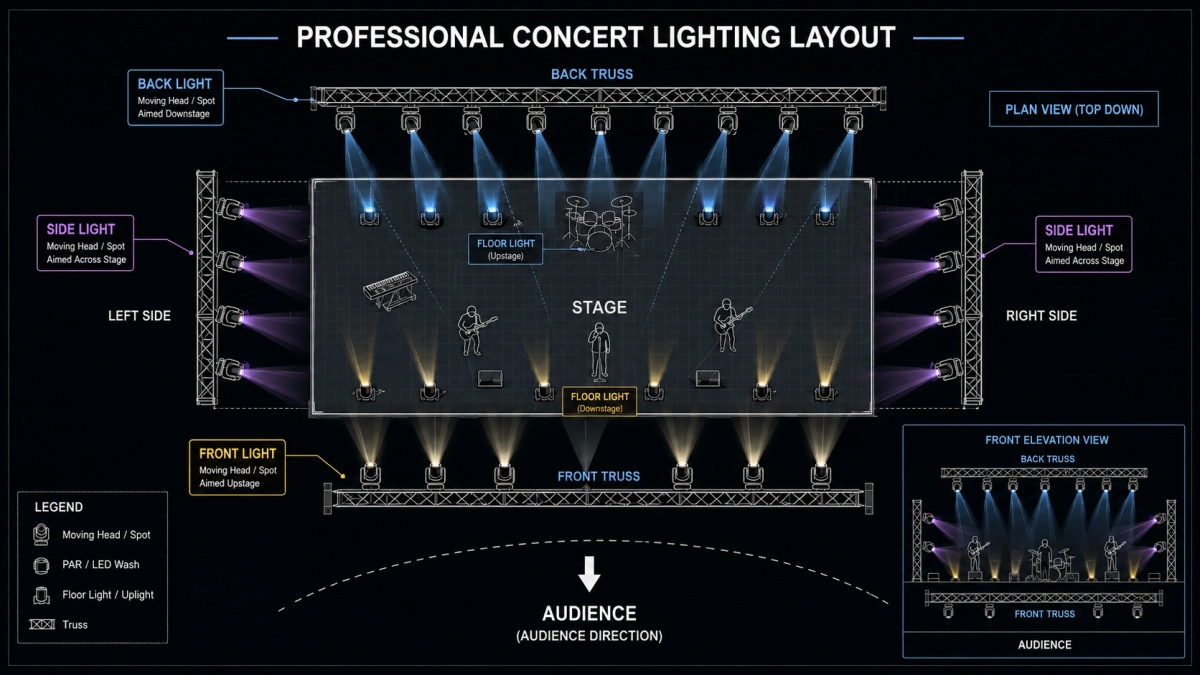
Fixture Positioning and Lighting Layers
A professional setup uses fixture position to create depth and separation. Placing all lights on one front truss may illuminate the stage, but it rarely creates a complete concert look.
Front Lighting
Front light supports facial visibility and camera exposure. It should be positioned to minimize harsh shadows and glare while maintaining suitable angles for performers. Profiles, Fresnels, or controlled wash fixtures may be used depending on the venue and production style.
Back Lighting
Back light separates performers from the background and creates silhouettes, color layers, and visible beam paths. Moving heads and wash fixtures are commonly placed on overhead or rear trusses for this purpose.
Side and Floor Lighting
Side fixtures add shape to performers and can create low-angle movement that differs from overhead effects. Floor-mounted moving heads, battens, strobes, and wash fixtures are often used to frame drum risers, scenic structures, and stage edges.
Audience and Aerial Effects
Audience-facing effects should be programmed carefully to create interaction without causing visual fatigue. Beam fans, blinders, strobes, and selected laser effects are most effective when timed to the music and used with sufficient contrast between scenes.
Concert Lighting Control Systems
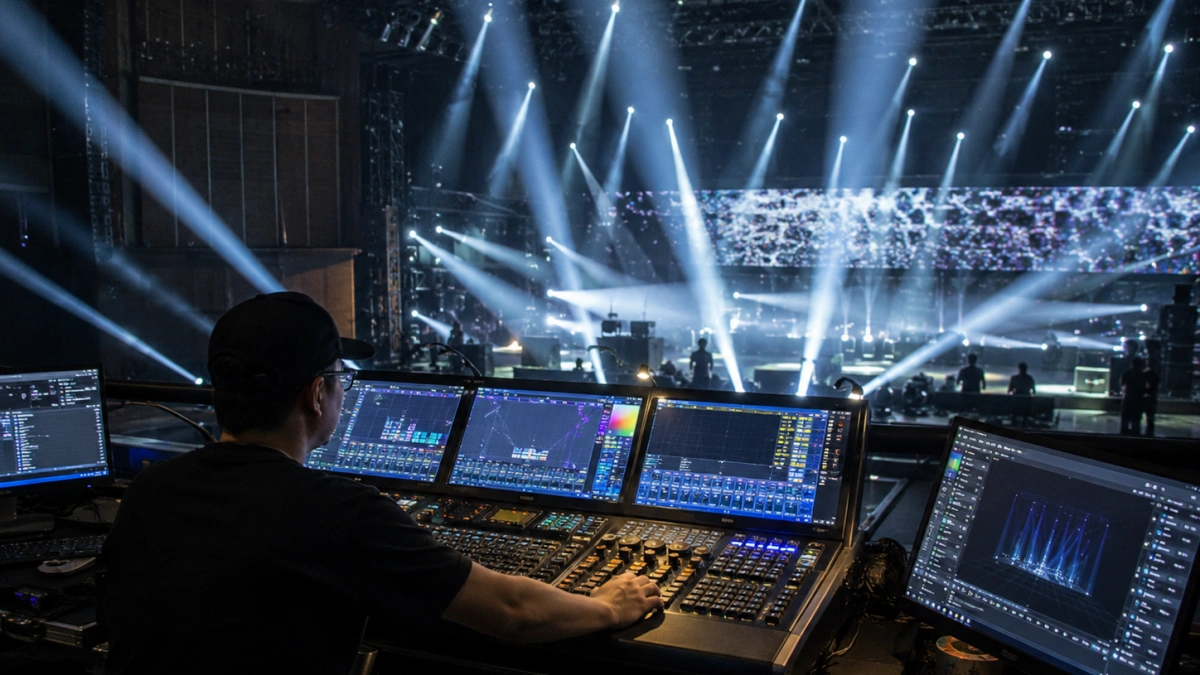
A concert lighting system is only as usable as its control workflow. DMX512 remains a common fixture-control protocol, while larger systems may distribute multiple universes through network nodes and lighting-control networks. The console organizes fixtures, positions, colors, beam parameters, dimming, effects, cue lists, and playback controls.
Before purchasing fixtures, confirm:
- how many DMX channels each operating mode requires
- how many universes the final system will use
- whether the console fixture library supports the selected products
- whether network nodes, splitters, opto-isolators, or wireless links are required
- how backup control and signal redundancy will be handled
- whether the team needs timecode, MIDI, audio, or media-server integration
Indoor, Outdoor, and Touring Concert Lighting Requirements
Indoor Concerts
Indoor venues offer more control over weather and ambient light but may have lower ceilings, limited rigging points, restricted power, and strict sightlines. Flexible zoom and controlled spill are valuable near walls, LED screens, and audience areas.
Outdoor Festivals
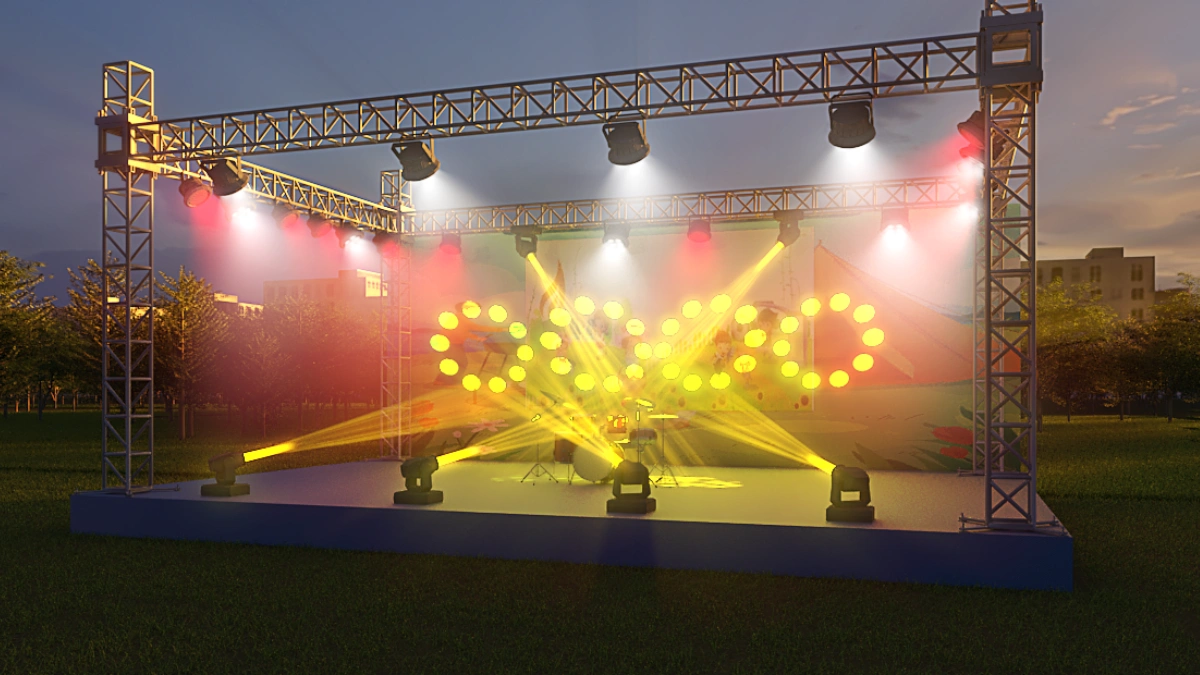
Outdoor stages may require longer throw, weather-resistant housings, protected connections, secure rigging, and planning for wind, rain, dust, and temperature. Waterproof ratings must be considered together with correct installation.
Touring Productions
Touring teams need fixtures that can be packed, transported, installed, and serviced repeatedly. Weight, cases, connectors, setup time, spare parts, and cross-unit consistency are critical.
Common Mistakes When Choosing Concert Lighting
- Selecting by wattage alone: source power does not show optical efficiency, beam quality, color performance, or realistic throw.
- Using too many beam fixtures: a stage may have strong aerial effects but poor performer visibility and insufficient color coverage.
- Ignoring camera requirements: flicker, uneven white balance, or uncontrolled spill can reduce livestream and broadcast quality.
- Underestimating DMX capacity: high-channel fixture modes can quickly increase universe, node, and console requirements.
- Mixing inconsistent products: visible differences in color, movement, and dimming can make programming and maintenance more difficult.
- Ignoring service and spare parts: a low purchase price may not compensate for long downtime or difficult repairs.
- Forgetting rigging and transport: fixture weight, case dimensions, clamps, cables, and labor affect the total project cost.
Project Example: Improving an Outdoor Festival Lighting System
Consider an outdoor festival setup that initially relies mainly on high-output beam moving heads. The beam effects are visible from a long distance, but performers appear underexposed between musical drops, the scenic background lacks color, and camera images show large differences between effect moments and normal performance scenes.
A more balanced upgrade would begin by separating the lighting functions:
- retain beam moving heads for aerial movement and long-throw effects
- add wash fixtures for stage color and background coverage
- add profile fixtures for lead performers and controlled key light
- use strobes or blinders only for selected musical accents
- reprogram cues so transitions maintain visual continuity
The lesson is that every lighting function must be covered and connected through coherent programming.
What Should Professional Buyers Evaluate?
For commercial projects, product selection should include both technical and supplier evaluation. A fixture can meet the optical requirement but still create operational problems if units are inconsistent, documentation is incomplete, spare parts are unavailable, or delivery schedules cannot support the project.
Technical Evaluation Checklist
- usable brightness and optical quality at the required distance
- beam angle, zoom range, focus, prism, gobos, and framing where applicable
- color consistency across multiple fixtures
- dimming behavior and camera performance
- pan and tilt accuracy, noise, speed, and repeatability
- DMX modes, channel maps, RDM or network requirements
- power consumption, connector type, and electrical planning
- fixture weight, dimensions, rigging hardware, and case requirements
- maintenance access, spare parts, firmware, and technical documentation
Wholesale and Project Supplier Checklist
- consistent specifications across batch production
- pre-shipment testing and quality-control records
- OEM or private-label support when required
- clear lead times for samples, production, and repeat orders
- packaging suitable for international transport or rental use
- availability of spare parts and after-sales technical support
- experience supporting distributors, rental companies, and project contractors
Professional buyers should request videos, control-channel information, photometric data where available, packaging details, warranty terms, and a clear quotation that separates fixtures, cases, accessories, spare parts, and shipping.
How to Build a More Reliable Concert Lighting Package
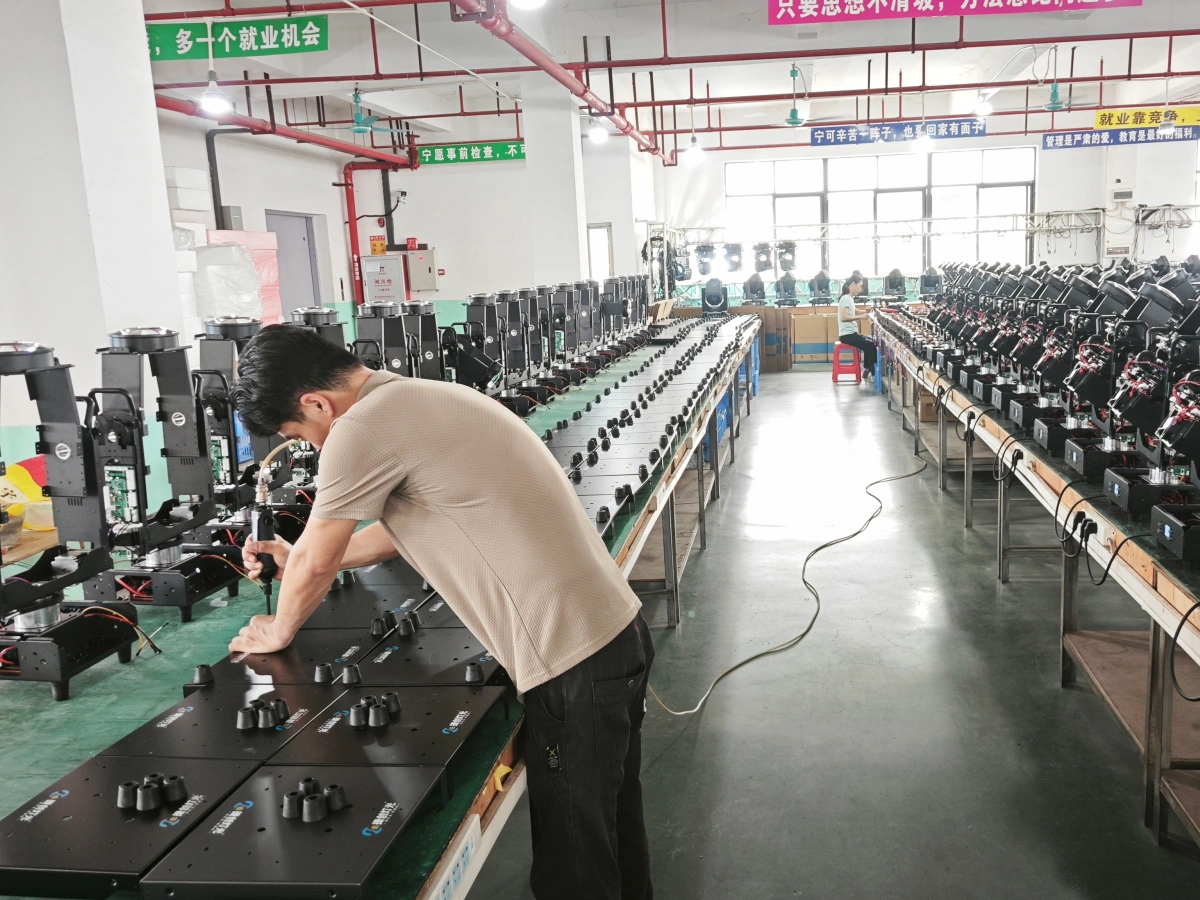
A reliable purchasing package should be organized around system functions rather than a random list of fixtures. Begin with the required key light and wash coverage, then add beam and effect layers, control equipment, signal distribution, rigging accessories, power cables, safety hardware, cases, and spare parts.
Rental inventories benefit from compatible fixture families, consistent connectors, repeatable channel modes, and shared spare parts. Permanent projects should also prioritize service access, installation conditions, cable routes, future expansion, and operator training.
Related Concert Lighting Guides
- How to Set Up Stage Lighting for Bands and Live Events
- How to Use Laser Stage Lighting in Professional Systems
- Types of Concert Stage Lighting Equipment Used in Tours
Concert Lighting FAQs
What are the best concert lights for professional stage performances?
The best system normally combines several fixture types rather than relying on one product. Wash lights provide color coverage, profile fixtures support performer visibility, beam moving heads create aerial movement, and strobes, blinders, or lasers add selected effects. The correct combination depends on stage size, throw distance, camera requirements, music style, rigging positions, and the available control system.
How many lights are needed for a concert stage?
There is no fixed number because requirements change with stage dimensions, trim height, lighting positions, visual goals, and fixture output. A small band stage may use a compact wash and moving-head package, while a festival may use several trusses and multiple fixture categories. Build a lighting plot first, assign each fixture a specific function, and confirm coverage before finalizing quantity.
Why are beam moving head lights important in concerts?
Beam moving heads create narrow, visible aerial effects that remain readable over longer distances. They are useful for sweeps, fans, crossing patterns, musical drops, and large visual moments. However, they do not replace wash or profile lighting. A professional system combines beam effects with stage coverage and performer illumination so the show remains visually balanced between high-energy cues.
Do concerts need wash lighting?
Yes. Wash lighting provides broad color coverage and helps maintain visual continuity throughout a performance. It can illuminate performers, scenery, band areas, backdrops, and stage architecture. Without enough wash coverage, the stage may look dark or uneven between beam and strobe effects. Zoom range, even color mixing, dimming, and camera performance are important selection factors.
What is the role of profile lighting in a concert?
Profile fixtures provide controlled illumination with defined edges. They are used for lead performers, guest speakers, scenic areas, instruments, and camera-friendly key light. Framing shutters can limit spill onto LED screens or unwanted stage areas. Profile lights are especially useful for televised concerts, theatrical concert formats, and productions that require precise lighting zones.
What control system is used for concert lighting?
Many concert systems use DMX512 for fixture control, with larger productions distributing multiple universes through network nodes and lighting-control networks. A professional console manages intensity, color, movement, beam parameters, cue lists, effects, and playback. Console capacity should be planned together with channel counts, fixture libraries, signal distribution, backup control, and integration requirements.
What should buyers check before ordering concert stage lights?
Buyers should compare optical performance, color consistency, dimming, movement accuracy, channel modes, power requirements, fixture weight, rigging hardware, maintenance access, spare parts, packaging, warranty, and supplier support. For bulk orders, request sample evaluation or test evidence and confirm that production units will match the approved specification.
Can concert lighting packages be customized for a project?
Yes. A project package can be configured around venue size, stage layout, application, budget, fixture preferences, control requirements, installation conditions, and transport needs. OEM branding, packaging, accessories, flight cases, spare parts, and product combinations may also be discussed for wholesale or project orders. Final recommendations should be based on complete project information rather than keyword-level product selection.
Plan a Professional Concert Lighting Package
Share your venue size, stage dimensions, project type, required fixture categories, quantity range, installation conditions, and destination country. JC LIGHT can review the requirements and prepare a suitable product and quotation proposal for distributors, rental companies, and concert project buyers.
Professional Stage Lighting Solutions for Modern Venues
Concerts, nightclubs, churches, theaters, weddings and live events. Get professional lighting fixture recommendations, layout planning and fast quotation support from JC LIGHT.
💬 Get Lighting Solution on WhatsAppIn conclusion, the best concert lighting for professional stage performances is a coordinated system that combines visibility, color coverage, movement, precision, effects, control, and reliable operation. Buyers should begin with the venue and production requirements, assign a clear function to every fixture category, and evaluate both technical performance and supplier support before placing an order.