
Concert Light Effects Guide for Professional Music Events
Concert light effects are not simply visual enhancements—they are the core drivers of emotional impact, rhythm perception, and audience engagement in modern professional music events. In large-scale concerts, festivals, touring productions, and arena shows, the difference between an average stage and a high-end production is almost always defined by how effectively light effects are designed and executed.
For professional buyers such as lighting contractors, event production companies, rental suppliers, and stage designers, building an effective lighting system requires more than choosing powerful fixtures. It requires structuring a complete concert light effects system where every layer—beam, wash, profile, and effects—works together to support the music and stage design.
What Are Concert Light Effects in Professional Systems?
Concert light effects refer to dynamic lighting actions used to emphasize rhythm, transitions, and high-impact moments. Unlike static lighting layers, effects are not continuously active. They are triggered at specific points in the show to create contrast and intensity.
In professional stage design, effects typically include:
- high-speed strobe bursts during drops
- beam sweeps across audience zones
- laser spatial effects for depth
- color changes aligned with emotional transitions
- gobo projection for scenic texture
These effects are not standalone—they depend on a structured lighting foundation.
—Complete Lighting System Structure (Engineering Logic)
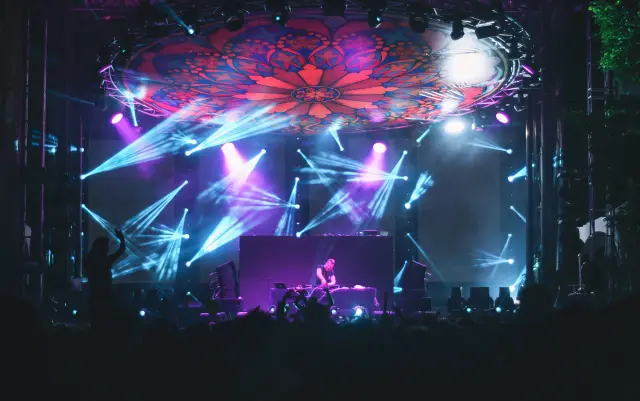
A professional concert lighting system is built in layered architecture:
1. Movement Layer (Primary Energy)
Movement is typically created using beam moving head fixtures. These fixtures provide long-throw aerial effects, audience sweeps, and dynamic motion across large venues.
Typical configuration:
- Medium stage: 12–24 units
- Large stage: 24–60 units
- Position: truss + floor + side ladders
2. Coverage Layer (Visual Base)
The coverage layer ensures visibility using wash moving head fixtures.
- Provides color wash and atmosphere
- Ensures performers remain visible
- Balances beam intensity
3. Focus Layer (Precision Lighting)
Precision lighting is achieved using profile moving head.
- Used for spotlighting performers
- Gobo projection for stage visuals
- Framing and edge control
4. Impact Layer (Effects Core)
The effect layer relies heavily on strobe light systems.
- Used during drops and peaks
- Creates rhythm synchronization
- Enhances audience energy
How to Structure Effects with Music (Show Programming Logic)
Lighting effects must follow music structure. Without timing discipline, effects lose impact.
| Music Phase | Lighting Behavior |
|---|---|
| Intro | Minimal movement, slow fades |
| Build | Increasing beam movement |
| Drop | Full strobe + beam + color impact |
| Break | Reduced output for contrast |
| Finale | All layers combined |
Equipment Configuration for Different Event Scales
Small Concert (500–1000 people)
- Beam: 8–12 units
- Wash: 6–10 units
- Strobe: 2–4 units
Medium Event (1000–5000 people)
- Beam: 16–30 units
- Wash: 12–20 units
- Strobe: 6–10 units
Large Festival / Arena
- Beam: 40–80 units
- Wash: 30–60 units
- Strobe: 10–30 units
Common Mistakes in Effect System Design
- continuous effect usage (no contrast)
- over-reliance on strobe
- lack of beam/wash balance
- poor programming timing
Real Project Case
In a 10,000-capacity outdoor concert, initial design used strobe effects across 70% of the show. After redesign:
- strobe reduced to 30% usage
- beam movement increased
- color transitions improved
Result: higher audience engagement and better visual clarity.
—What Should Professional Buyers Evaluate?
- fixture output vs venue size
- control system compatibility
- fixture durability for touring
- ease of programming
Concert Light Effects – FAQs
How do professional buyers choose lighting effects systems?
They evaluate system integration, fixture output, control compatibility, and scalability for different event sizes.
How many effect fixtures are needed for large concerts?
Large concerts typically require 10–30 strobe units combined with beam and wash layers.
What is the biggest mistake in lighting effects?
Overusing effects without timing structure reduces visual impact and audience engagement.
How should effects be programmed for concerts?
Effects should follow music structure, with peaks during drops and reduced output during breaks.
For laser system design, see laser light show setup.