
Nightclub Lighting Systems for Professional DJ Performances
Nightclub lighting systems for professional DJ performances are designed to do more than create bright effects over a dance floor. In modern nightlife venues, lighting is a performance tool, a branding tool, and a business tool. It shapes how the venue feels, how the audience responds to the music, and how the DJ is perceived as the center of the room. When a nightclub lighting system is designed correctly, the result is not just stronger visuals. The result is a more immersive entertainment experience and a more commercially competitive venue.
For professional buyers such as venue owners, venue operators, project contractors, and lighting integrators, a nightclub lighting system should be treated as a complete project rather than a collection of products. The most successful systems are built with clear lighting logic: beam fixtures for movement, wash fixtures for spatial coverage, effect fixtures for energy peaks, and booth lighting for focus. Control structure, rig layout, maintenance access, and fixture consistency are just as important as brightness or feature lists.
This guide explains how nightclub lighting systems are designed for professional DJ performances, how the main fixture categories work together, what configuration logic creates stronger visual results, and what professional buyers should check before specifying a system for a real club or entertainment venue.
What Makes Nightclub Lighting Systems Different from General Event Lighting?
Nightclub lighting systems are different because they are built for continuous operation, music-driven visual rhythm, and immersive spatial atmosphere.
Unlike temporary event lighting, a nightclub system often runs for long hours, repeats performance cycles every week, and must keep visual quality consistent across changing scenes. It also needs to support the business model of the venue. A premium nightclub usually needs a stronger visual identity than a small live bar, and a dance-focused venue needs a different lighting balance than a booth-centered lounge.
- nightclub systems prioritize energy, immersion, and rhythm
- the DJ booth must remain visually important throughout the performance
- fixtures need to perform reliably in haze-heavy and heat-heavy environments
- control systems must support dynamic, repeatable programming
- maintenance access matters because the system is used frequently
That is why serious venues often build around fixture categories such as beam moving head and led wash moving head instead of relying on decorative effects alone.
What Are the Core Layers in a Professional Nightclub Lighting System?
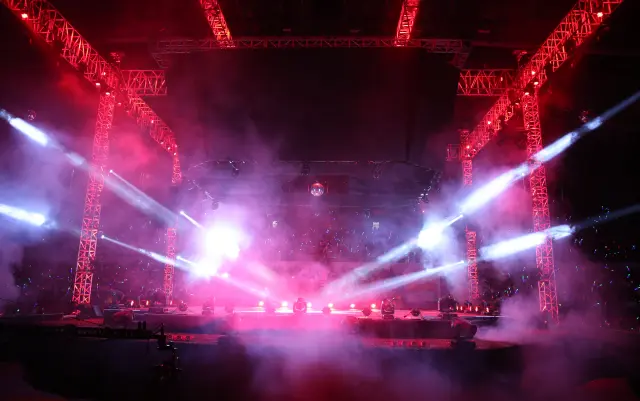
A professional nightclub lighting system is usually built in layers, not as one flat group of fixtures. Each layer solves a different visual problem.
- movement layer creates aerial motion and visual rhythm
- wash layer gives the room color, body, and continuity
- booth layer defines the DJ as a focal point
- accent layer handles strobe peaks, matrix flashes, and transitions
- background layer gives the room depth and reduces visual flatness
In professional club lighting design, the goal is to make all of these layers support one another instead of competing for attention.
How Do Beam, Wash, and Effect Fixtures Work Together?
Beam, wash, and effect fixtures should be chosen and positioned by role. A nightclub system becomes much stronger when each fixture type is used for a specific function.
Beam fixtures provide movement, direction, and aerial structure. They are often the most visually aggressive part of the system and are used to shape the energy of the room.
Wash fixtures connect the venue visually. They color walls, ceiling zones, and crowd space so the room feels complete between beam moments. Without wash lighting, even expensive nightclub systems often feel visually empty.
Effect fixtures such as matrix, strobe, and booth background units create rhythm accents and identity. They should enhance key moments rather than replace the main lighting structure.
| Fixture Layer | Main Role | Typical Placement |
|---|---|---|
| Beam | Movement and aerial effects | dance floor and ceiling zones |
| Wash | Coverage and atmosphere | perimeter, walls, stage support |
| Effect | Peaks and accents | booth background and feature zones |
Many venues also integrate laser light to intensify peak scenes, especially in haze-supported dance environments.
How Should Lighting Zones Be Structured Across the Venue?
Professional nightclub lighting systems work best when the venue is divided into functional visual zones.
The dance floor usually carries the highest-intensity movement layer. The booth zone functions as the visual anchor. Rear and perimeter zones create depth and continuity. VIP, side wall, or lounge zones may require softer support layers that keep the room connected without distracting from the main performance focus.
- dance floor zone for movement, energy, and immersion
- DJ booth zone for performer visibility and identity
- rear ceiling zone for depth and crossing beam structure
- perimeter wash zone for color continuity
- accent zones for matrix or strobe moments
This zoning logic is one reason professional buyers often add background matrix light behind or around the DJ booth instead of concentrating every fixture over the dance floor.
What Configuration Works Best for Different Nightclub Sizes?
The best nightclub lighting system depends on venue scale, ceiling height, and operating style.
Small nightclub: A compact system with 4–6 moving heads, 4–6 wash fixtures, one booth background layer, and a limited number of accent effects usually works better than overloading the room with too many units.
Medium nightclub: A balanced layout with 6–10 moving heads, 6–10 wash fixtures, one booth identity layer, and selective effect fixtures usually creates a more premium and immersive result.
Large nightclub: A multi-zone structure with front, rear, booth, and perimeter layers is typically required. In these venues, beam direction, signal segmentation, and maintenance access become major planning priorities.
| Venue Size | Recommended Structure | Main Objective |
|---|---|---|
| Small Club | compact beam + wash + booth layer | energy without overcrowding |
| Medium Club | beam + wash + booth + accent effects | balanced atmosphere and movement |
| Large Club | multi-zone layered system | immersive professional nightclub experience |
Where the venue also hosts private bookings or mixed-use events, some operators want the system to support flexible modes closer to wedding hall lighting design during non-nightclub operation.
Why Do Nightclub Lighting Systems Often Fail in Real Projects?
Most nightclub lighting systems fail because they are built around products instead of built around a visual strategy.
- too many beam fixtures and not enough wash support
- poor booth lighting that makes the performer disappear
- fixture placement based on symmetry instead of function
- weak DMX planning in multi-fixture systems
- maintenance access ignored during installation
- effect-heavy systems that feel exciting for five minutes but exhausting over a full night
One of the most common problems is a visually strong dance floor with weak room continuity. The audience sees motion, but the venue still feels incomplete because the system lacks atmosphere and depth.
How Does Better Lighting Design Improve DJ Performance?
Better lighting design makes the performance easier to read and the venue easier to experience. The DJ becomes more visible, the room gains structure, and scene changes feel more intentional.
When nightclub lighting systems are designed well:
- music drops feel stronger because the system has contrast
- the booth remains visible without overpowering the room
- audience attention is guided naturally
- the venue looks better in video, photography, and social content
This is why nightclub lighting should be treated as performance infrastructure, not only venue decoration.
Real Project Example: Improving a Nightclub Lighting System
In one medium-sized nightclub project, the first system design relied almost entirely on beam effects above the dance floor. The beams were bright and active, but the room looked thin and the DJ booth had weak visual presence. After redesigning the system, the venue added wash lighting to the perimeter and a matrix background behind the booth. The final result was not just brighter. It was more immersive, easier to program, and visually more premium for both audience and venue marketing content.
What Should Professional Buyers Check Before Ordering?
Before specifying nightclub lighting systems, professional buyers should check more than fixture specs.
- fixture consistency across units and batches
- DMX compatibility with the chosen control structure
- thermal performance during long runtime
- whether the system includes booth, wash, and effect balance
- service access and practical maintenance needs
- whether the supplier understands nightlife applications, not just general event sales
Nightclub Lighting Systems – FAQs
What is the best nightclub lighting system for professional DJ performances?
The best system usually combines moving beam fixtures, wash lighting, booth background lighting, and controlled effect fixtures in a layered structure.
What should professional buyers prioritize when selecting nightclub lighting systems?
They should prioritize system balance, DMX compatibility, fixture consistency, maintenance practicality, and whether the system matches the venue’s real operating style.
Why do nightclub lighting systems feel weak even when they use strong fixtures?
This usually happens when the system lacks wash coverage, booth focus, or layered design logic, causing the room to feel disconnected despite strong beam output.
How can a nightclub improve lighting performance without replacing the entire system?
Adding missing wash layers, improving booth background lighting, and reorganizing fixture placement often improves the system significantly without a complete replacement.
In conclusion, nightclub lighting systems for professional DJ performances should be designed as layered visual systems, not simple fixture collections. The best results come from balanced structure, reliable control, booth integration, and long-term operational logic.
For booth-focused system planning, refer to design.