
Stage Lighting for Church Services Setup Guide for Beginners
Setting up stage lighting for church services is one of the most common challenges for churches starting or upgrading their worship environment. Many setups fail not because of budget limitations, but because of incorrect lighting structure, poor positioning, or misunderstanding how lighting works with cameras.
If you are planning stage lighting for church, this guide will walk you through a practical, real-world setup process — focusing on what actually works in worship environments.
What Most Churches Get Wrong About Lighting Setup
Before setting up any lights, it is important to understand the most common mistakes:
- Placing lights directly in front (causing flat lighting)
- Ignoring camera exposure for live streaming
- Using too few fixtures for stage coverage
- Lack of background lighting
Fixing these issues is the foundation of a good lighting setup.
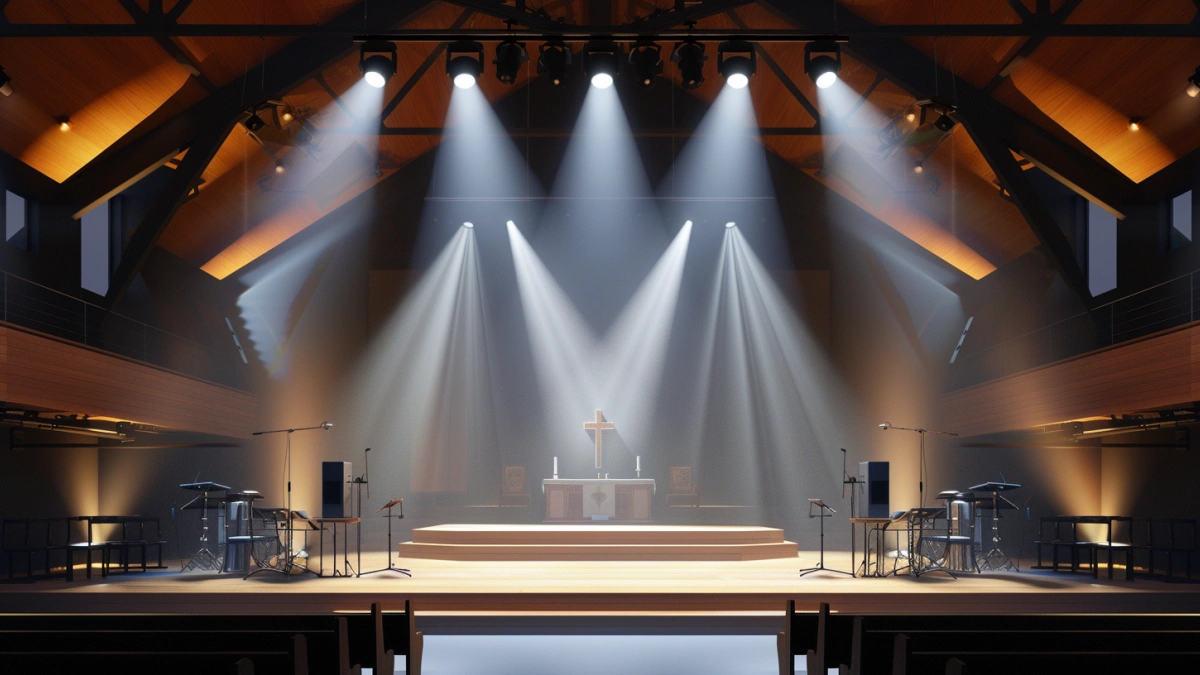
Step-by-Step Church Lighting Setup Guide
Step 1: Define Your Stage and Purpose
Start by identifying your stage size and primary use:
- Small church (1–5 meters stage width)
- Medium church (5–10 meters)
- Large church (10m+ with live streaming)
This determines how many lights you need and how they should be positioned.
Step 2: Install Proper Front Lighting
Front lighting is the most critical part of any church setup. Without it, speakers appear dark or shadowed.
Best Practice:
- Position lights at 45° angles
- Avoid direct flat lighting
- Use soft intensity for natural appearance
Step 3: Add Wash Lighting for Coverage
Even stage coverage is essential. Fixtures like wash moving head provide consistent lighting across the stage.
Without wash lighting, your stage will have uneven brightness and visible dark spots.
Step 4: Add Background and Depth Lighting
This is where many beginner setups fail. Without background lighting, the stage looks flat and unprofessional.
Solution:
- Add backlights or side lights
- Use color to create depth
Step 5: Add Simple Effects (Optional)
Subtle effects can enhance worship atmosphere. Fixtures like concert moving head light should be used carefully to avoid distraction.
Step 6: Connect and Control the System
Your lighting system should follow a simple structure:
Controller → DMX → Fixtures
Keep the system easy to operate, especially if volunteers are managing it.
Recommended Setup by Church Size
Small Church Setup
- 4–6 wash lights
- 2–4 front lights
- Basic controller
Medium Church Setup
- 8–12 wash lights
- 4–6 front lights
- 2–4 effect lights
Large Church Setup
- 12–20 wash lights
- 6–10 front lights
- Multiple effect layers
- Advanced control system
How to Optimize Lighting for Live Streaming
Lighting for cameras is different from lighting for people. A setup that looks good in person may look overexposed or uneven on video.
Key adjustments:
- Reduce harsh brightness
- Balance front and background light
- Test with camera before services
If your church is planning streaming setups, you should also read this guide: church stage lighting systems .
Common Setup Problems and How to Fix Them
1. Uneven Lighting Across Stage
Cause: Poor fixture placement
Fix: Add more wash lights and adjust angles
2. Shadows on Speakers
Cause: Incorrect front lighting
Fix: Adjust angle and add additional front lights
3. Overexposed Camera Image
Cause: Lighting not designed for video
Fix: Lower intensity and balance exposure
👉 Build a Simple and Effective Church Lighting Setup
The best setup is not the most complex one — it is the one that works consistently every week.
Focus on:
- Proper positioning
- Balanced lighting layers
- Simple control system
With the right approach, even beginner setups can achieve professional results.
FAQs
What is stage lighting for church services?
It is a lighting system designed for worship and visibility.
How many lights does a church need?
Small churches need 6–12 fixtures, larger setups need more.
What is the most important light?
Front lighting for clear visibility.
Do churches need moving lights?
Optional, mainly for atmosphere.
How to improve live streaming lighting?
Balance brightness and test with cameras.
What is the biggest setup mistake?
Poor positioning and lack of coverage.