
Complete DJ Lighting Setup for Nightclubs and Events
A complete DJ lighting setup for nightclubs and events is not simply a collection of lights placed on a truss. It is a structured system made up of fixture layers, control logic, rigging design, signal flow, and programming strategy. In professional nightlife and event environments, the quality of the complete setup affects how immersive the venue feels, how stable the system remains during operation, and how easily the team can expand or maintain the installation later.
For professional buyers such as nightclub owners, venue investors, event operators, lighting contractors, and system integrators, a complete DJ lighting setup should be judged by performance in real operating conditions. It should work during long nights, adapt to different event intensities, support performer visibility, and remain practical to install and service. A setup that looks impressive on paper can still fail if it lacks wash continuity, booth identity, structured DMX planning, or reliable rigging.
This guide explains what a complete DJ lighting setup includes, how to organize the main technical and visual layers, what fixture combinations work best for different venue scales, and what professional buyers should verify before approving a system for nightclub or event use.
What Is Included in a Complete DJ Lighting Setup?
A complete DJ lighting setup includes the visual layers, technical control structure, and physical support required for the system to operate as one unit.
At minimum, a serious setup usually includes:
- movement fixtures for energy and directional motion
- wash fixtures for atmosphere and room color
- effect fixtures for peaks and transitions
- focus or booth lighting for performer visibility
- a DMX control layer for organized scene execution
- rigging or truss structure for safe fixture placement
- power and signal distribution that supports stable operation
In real nightlife systems, these elements are most effective when they are planned as part of a full dj lights strategy rather than chosen independently.
What Fixture Types Are Usually Needed in a Complete Setup?
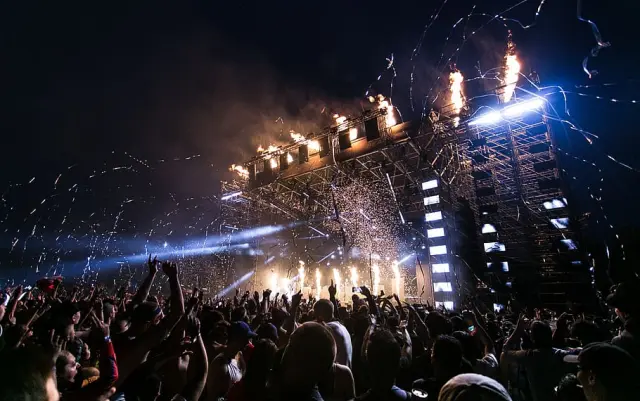
A complete setup usually combines several categories of fixtures, each with a defined role.
- moving beam fixtures for aerial movement and visual energy
- wash fixtures for room coverage and color continuity
- effect fixtures such as strobe, matrix, or texture layers
- booth or focal fixtures for performer visibility and identity
- accent fixtures for selective peak moments
In many professional venue projects, these systems are built using categories such as dj moving head lights, dj led lights, dj laser lights, and background matrix light.
How Should a Complete DJ Lighting Setup Be Layered?
A complete setup should be layered visually so the room does not feel flat or over-concentrated in one area.
The most common and effective structure includes:
- movement layer to create beam sweeps and visual intensity
- wash layer to keep the room visually connected
- booth or stage layer to maintain performer focus
- accent layer to support peaks, drops, and transitions
- background layer to give the room texture and depth
When these layers are missing or imbalanced, the room may still be bright, but it will rarely feel complete.
| Layer | Main Purpose | Typical Result |
|---|---|---|
| Movement | energy and aerial motion | dynamic nightclub feel |
| Wash | coverage and atmosphere | room continuity |
| Focus | booth or performer visibility | clear visual center |
| Accent | peaks and transitions | controlled intensity |
How Does a Complete Setup Change by Venue Type?
Different venues require different versions of a complete setup.
Small nightclub venues usually need compact but efficient systems. Overloading the room with too many fixtures often reduces quality instead of improving it. A compact movement layer, a wash layer, and booth support usually provide a better result.
Medium venues often benefit from stronger booth support, more perimeter wash, and selective effect layers. These venues usually offer the best balance between budget and visible upgrade potential.
Larger clubs and event spaces typically require a multi-zone setup that divides movement, wash, booth, and rear support into structured layers. Rigging logic becomes more important, as does DMX segmentation.
Hybrid nightlife and private-event spaces may also need softer operation modes closer to wedding banquet lighting when the room is not running in full nightclub mode.
What Rigging and Layout Logic Is Needed for a Complete Setup?
A complete lighting setup is not complete without proper rigging and fixture placement.
The rig should allow the system to create visual depth, not just hold fixtures overhead. Dance floor movement usually benefits from crossed beam angles, the booth benefits from a dedicated background layer, and the room perimeter often needs enough wash support to avoid dead zones.
- keep beam fixtures positioned for full movement range
- avoid clustering all intensity directly above the booth
- place wash fixtures where they support the whole room
- leave maintenance access for service and adjustment
- match truss or rig height to beam spread and venue scale
A complete setup that ignores rigging logic often becomes harder to maintain and weaker in real operation.
How Should DMX Control Be Organized in a Complete Setup?
A complete DJ lighting setup needs a structured DMX plan that matches the physical and visual layout.
Fixtures should usually be grouped by function instead of simple installation order. That means movement fixtures, wash fixtures, booth fixtures, and accent fixtures should each have clear addressing logic and programming roles. This makes scene programming faster and more adaptable.
- group fixtures by role and zone
- document channel modes and addresses clearly
- keep booth and accent layers independently controllable
- plan for future expansion where appropriate
A complete setup is not only about what is visible in the room. It is also about what is controllable in the console.
What Are the Most Common Mistakes in “Complete” DJ Lighting Setups?
Many systems are called complete even though they are missing one or more essential layers.
- too much beam output with almost no wash support
- no clear booth lighting strategy
- effect fixtures added without scene logic
- DMX planning done after installation instead of before
- weak service access and poor cable organization
- fixture count chosen for marketing impact instead of venue need
One common problem is a setup that technically has many fixtures but still feels incomplete because the layers are unbalanced.
Real Project Example: Completing an Incomplete Nightclub Setup
In one venue project, the original “complete setup” consisted mostly of movement fixtures and a few accent effects. The dance floor had energy, but the room lacked atmosphere and the DJ booth had no real visual authority. After reworking the design, the venue added a wash layer to the perimeter and a background layer behind the booth. The total fixture count increased only slightly, but the visual result improved dramatically. The room finally felt structured, the performer became more visible, and the venue looked much stronger in video and event photography.
What Should Professional Buyers Verify Before Approving a Complete Setup?
Before approving a complete DJ lighting setup, professional buyers should verify that the design is actually complete in both technical and visual terms.
- does the setup include movement, wash, focus, and accent logic?
- does the rigging support correct fixture function?
- does the DMX structure match the scene complexity?
- can the system handle both low-energy and peak-energy operation?
- is the setup practical to install, maintain, and expand?
Buyers should also confirm whether the venue needs only nightclub operation or a more flexible event-based system with multiple scene identities.
Complete DJ Lighting Setup – FAQs
What should be included in a complete DJ lighting setup for nightclubs and events?
A complete setup should include movement, wash, focus, and accent layers, plus DMX control, rigging, signal distribution, and a layout that matches the real venue.
What is the biggest mistake in a complete nightclub lighting setup?
The biggest mistake is calling a system complete when it lacks wash support, booth focus, structured control logic, or proper rigging for the intended venue.
How do professional buyers know if a lighting setup is truly complete?
They should verify whether the design includes all major visual layers, whether the DMX structure is organized, and whether the rigging and maintenance logic are practical for real operation.
Can one complete DJ lighting setup support both nightclub use and events?
Yes, if the system is designed with layered flexibility, programmable contrast, and enough control structure to support both high-energy nightclub scenes and softer event modes.
In conclusion, a complete DJ lighting setup for nightclubs and events should be judged by how well all its layers work together. The strongest systems are complete not because they contain many fixtures, but because movement, wash, focus, accent, control, and rigging all support one coherent performance environment.
For broader system structure across fixed venues and live applications, refer to lighting systems.