
How to Set Up Church Stage Lighting Systems for Worship Spaces
Setting up church stage lighting systems is not just about installing lights — it is about building a structured system that delivers consistent visibility, supports live streaming, and creates an engaging worship atmosphere. Many churches invest in lighting equipment but still struggle with poor results because the system is not designed correctly.
If you want a reliable church stage lighting systems setup, you need to understand how lighting components work together as a complete system — not as individual fixtures.
What a Complete Church Lighting System Includes
A proper church lighting system consists of multiple layers:
- Lighting control system (console or controller)
- DMX signal distribution
- Lighting fixtures (front, wash, effects)
- Power and cabling infrastructure
Each part must work together to ensure stable operation and consistent lighting output.
Step 1: Define Your Church Lighting Requirements
Before purchasing equipment, you must define your requirements based on:
- Stage size
- Worship style (traditional or modern)
- Live streaming needs
- Volunteer operation level
This step prevents overspending and ensures the system matches your actual needs.
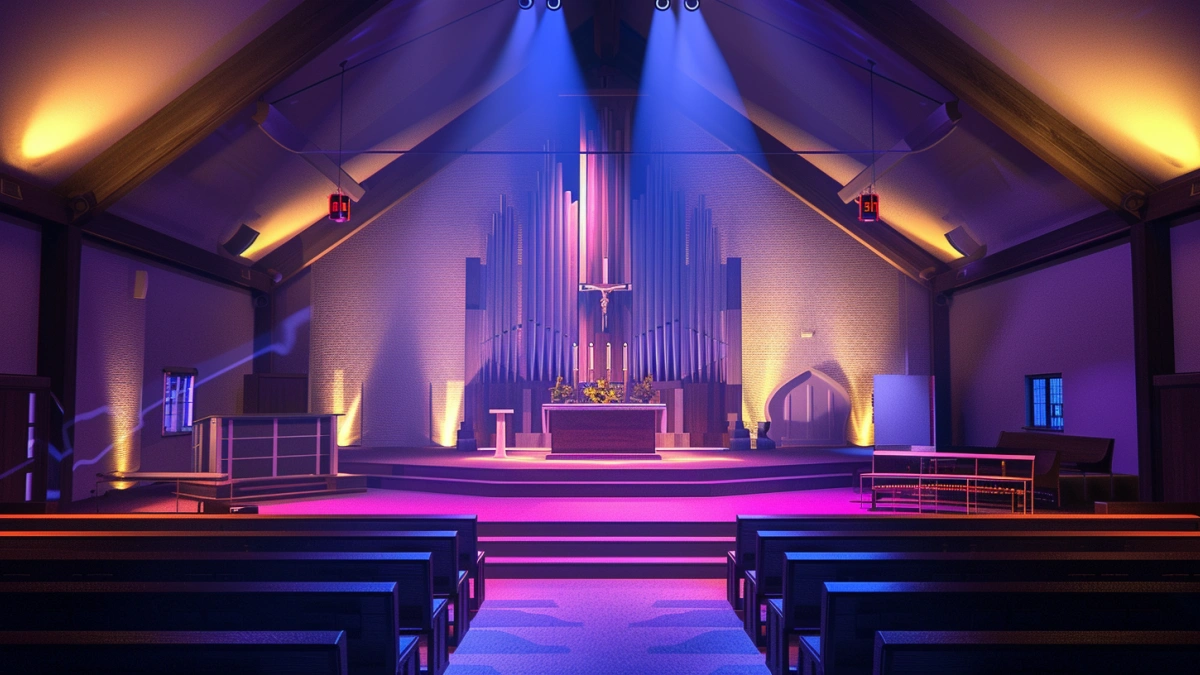
Step 2: Design the Lighting Layout (Critical Step)
The layout determines how effective your lighting system will be.
Front Lighting Layout
Front lights must be positioned at 30°–45° angles to eliminate shadows on speakers.
Wash Lighting Layout
Fixtures such as wash moving head should be evenly distributed to cover the entire stage.
Effect Lighting Layout
Subtle effects using concert moving head light add depth and atmosphere.
Common mistake: placing all lights in one direction, resulting in flat lighting.
Step 3: Build the DMX Control System
The DMX system is the backbone of your lighting setup.
Basic structure:
Controller → DMX → Fixtures
For larger systems, network-based control may be required.
Common problem: signal loss due to long cable runs.
Solution: use DMX splitters and proper distribution.
Step 4: Select the Right Fixtures
Choosing the correct fixtures is critical for system performance.
- Front lights for visibility
- Wash lights for coverage
- Effect lights for atmosphere
Additional elements such as concert strobe light or concert laser light should be used carefully to avoid distraction.
Step 5: Setup for Live Streaming Compatibility
Modern churches often require streaming-ready lighting.
Key adjustments:
- Reduce harsh brightness
- Balance color temperature
- Test lighting with camera systems
Lighting must look good both in person and on video.
Recommended System Setup by Church Size
Small Church (Budget Setup)
- 4–6 wash lights
- 2–4 front lights
- Basic controller
Medium Church (Balanced System)
- 8–12 wash lights
- 4–6 front lights
- 2–4 effect lights
Large Church (Advanced System)
- 12–20 wash lights
- 6–10 front lights
- Multiple lighting layers
- Advanced control system
Common System Setup Problems and Solutions
1. Uneven Lighting
Cause: poor fixture placement
Solution: redesign layout and add coverage
2. Hard Shadows on Stage
Cause: incorrect front lighting angles
Solution: reposition lights to 45°
3. Difficult Operation
Cause: complex system design
Solution: simplify control and use presets
👉 Build a Scalable Church Lighting System
The goal is not just to install lighting — it is to build a system that can grow with your church.
Focus on:
- Flexible system design
- Expandable control structure
- Simple operation for volunteers
If you need a complete system design strategy, read this guide: lighting system design .
FAQs
What is a church lighting system?
A structured setup including console, DMX, and fixtures.
How many lights are needed?
Depends on church size and stage layout.
What is DMX in church lighting?
A control protocol for lighting systems.
Can small churches build good lighting systems?
Yes, with proper design.
What is the biggest setup mistake?
Poor layout planning.
Do churches need advanced lighting systems?
Only for large or complex setups.